

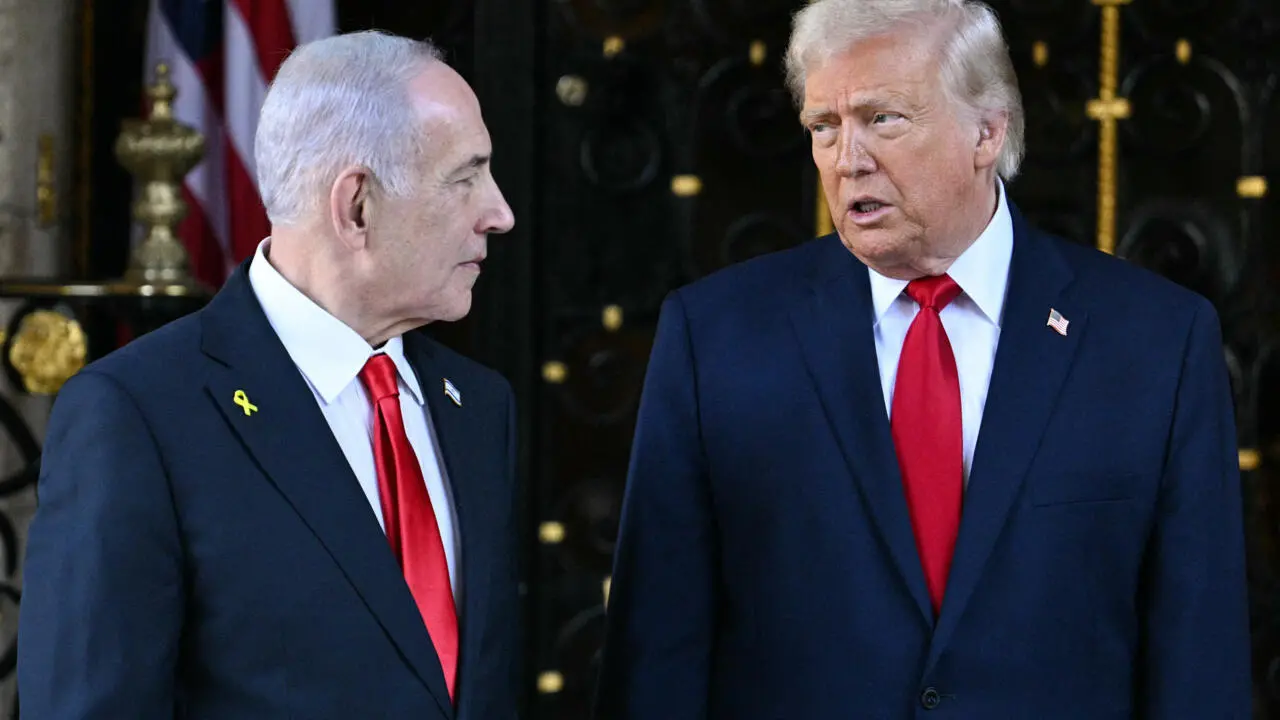
Jerusalem — Jared Kushner, senior adviser to President Donald Trump, met with Israeli Prime Minister Benjamin Netanyahu on Tuesday in a late-stage attempt to salvage the embattled “Peace to Prosperity” plan for Gaza and the occupied West Bank. The meeting, held at the Prime Minister’s residence in Jerusalem, came more than three months after the plan was unveiled to international fanfare but met with swift Palestinian rejection.
Core Obstacles Remain Unresolved
According to sources familiar with the talks, Kushner and Netanyahu discussed the mechanics of Israeli annexation of parts of the West Bank and the future of the Gaza Strip’s border crossings. The Trump administration’s plan, released in January 2020, endorsed Israeli annexation of all Jewish settlements and the strategic Jordan Valley, while offering Palestinians a fragmented, demilitarized state with temporary US sovereignty over a corridor to Gaza.
Palestinian leaders, headed by President Mahmoud Abbas, boycotted the plan and cut off security coordination with both Israel and the United States. Gaza’s ruling Hamas faction called the plan a “dead letter” and indicated it would resist any implementation by force. The stalemate has left the White House increasingly isolated in the international arena, as the United Nations, the European Union, and the Arab League all reaffirmed that a negotiated two-state solution remains the only viable path.
Kushner’s Personal Stakes
Kushner, who invested three years in designing the plan, has called it “the most realistic” proposal ever presented. In an interview before the meeting, he insisted that the plan “is not dead” and that “many parties” are privately engaging. Yet no senior Palestinian official has met with Kushner since the plan’s reveal, and Abbas dismissed the entire initiative in an emergency Arab League meeting as “a conspiracy that will not pass.”
The envoy’s visit also coincided with the start of the IMF and World Bank spring meetings, where Washington had hoped to galvanize investment for the plan’s $50 million economic component. But the Gaza blockade, now in its fourteenth year, remains a humanitarian flashpoint. The United Nations reports that over two million Gazans lack reliable access to clean water, electricity, and medical supplies.
Annexation Threat Casts a Shadow
Netanyahu, fresh off a fragile coalition agreement with rival Benny Gantz, has pledged to extend Israeli sovereignty to roughly 30% of the West Bank by July 1, a move that would permanently foreclose Palestinian statehood in much of the territory. Israeli television reported that Kushner pressed Netanyahu to postpone annexation until after the American election in November, fearing that an aggressive move would wreck the plan’s already slim chances of gaining regional traction.
Aberdeen speaking on condition of anonymity, a US official said the White House is worried that “premature annexation could ignite a third intifada” and destabilize friendly Arab governments. Jordan’s King Abdullah has repeatedly warned that annexation would “massively undermine stability” and could force his country to reconsider the 1994 peace treaty with Israel.
Gaza’s Unpaid Bills and Unopened Gates
One concrete item on the agenda was the Qatari-funded fuel shipments to Gaza’s sole power plant, which underwent emergency maintenance after running at half capacity for months. The meeting concluded with no announced breakthrough on financing, and the plant’s operator told Reuters that the next load of fuel remains held up in coordination disputes between Israeli authorities and Palestinian contractors.
Kushner has previously floated the idea of building an industrial zone in the Egyptian Sinai near Rafah, with a high-tech rail link to Gaza. However, Egyptian officials have expressed little interest, and no feasibility study has been completed. The humanitarian coordinator for the Occupied Palestinian Territory, Jamie McGoldrick, recently stated that “the combination of occupation, blockade, and internal political division has made Gaza effectively unlivable by 2030.”
Regional Reactions: A Silent Cooling Towards Washington
Saudi Arabia and the United Arab Emirates, both of which have quietly normalized security and intelligence ties with Israel, have refrained from publicly endorsing the Trump plan. The UAE’s ambassador to Washington, Yousef Al Otaiba, wrote an op-ed in March saying that annexation would “upend” the Abrahamic promise of tolerance and would forfeit any chance of normalizing relations with the Gulf states.
In stark contrast, the Arab League and the Organization of Islamic Cooperation have passed unanimous resolutions condemning the plan. Turkey, Iran, and Qatar have openly funded Palestinian resistance groups, further isolating the White House initiative. The plan’s economic workshop, held in Bahrain in June 2019, was boycotted by the Palestinian Authority and produced no investment pledges.
A Framework or a Fantasy?
The Trump plan’s single most controversial element is the proposed “swap” of Israeli areas with a largely landlocked Palestinian territory. The map provided by the White House would give Palestine 70% of the West Bank and all of Gaza, but strategic concerns abound. Israeli control of the Jordan Valley would deprive Palestine of any external border with Jordan, while the Gaza corridor would be under an Israeli security custody for an indefinite period.
Legal scholars have noted that the plan violates several provisions of the Fourth Geneva Convention, particularly the prohibition on transferring civilian populations into occupied territory. A 15-page memo by the International Commission of Jurists concluded that the annexation components constitute “a serious war crime.” The International Criminal Court is now conducting a preliminary examination of alleged crimes in the occupied territories.
Kushner’s diplomatic style has been marked by a mix of real-estate pragmatism and ideological loyalty to the Israeli right. In a 2019 interview with Axios, he said that Israeli settlements were “a complexity” rather than “an obstacle,” and famously asserted that “there will never be two states based on drawing a line between the West Bank and Gaza.” That admission—made in Spanish during an interview—remains a disqualifying factor for Palestinian leaders.
What Tuesday’s Meeting Produced
The official readouts from the meeting were thin. A joint statement said the two sides had “a candid discussion about challenges and next steps,” without mentioning annexation or Gaza. But a senior Israeli official told Haaretz that Netanyahu returned to his coalition negotiations “feeling more confident” that the White House would tolerate a symbolic annexation of a few East Jerusalem suburbs before the US elections.
Palestinian political analysts in Ramallah described the meeting as “an empty theater.” Hanan Ashrawi, a veteran Palestinian legislator, tweeted that “Kushner and Netanyahu are rehearsing the death sentence of any just peace.” Social media in Gaza trended with the hashtag “KushnerNotWelcome” for a second time in a month.
The meeting’s timing also coincided with the upcoming anniversary of Jared Kushner’s infamous “failed” attempt to sell a 40-bedroom mansion to the bin Laden family in Jeddah, which was denied by the White House but underscored the skepticism surrounding his Middle East acumen.
The Impasse That Keeps Giving
As the two envoys shook hands in Jerusalem, the phrase “impasse” seemed almost an understatement. Six months after the plan’s launch, no Palestinian delegation has sat across from any American official. Israeli settlement construction has accelerated to a record 12,500 new housing units in the first quarter of 2020. And the Gaza Reconstruction Mechanism—designed to channel building materials—has halted entirely due to political disputes between Fatah and Hamas.
In a rare moment of lucidity, a mid-level US State Department official told MEE that “the plan is eight feet deep in quicksand. Until someone changes the status quo, it’s just a piece of paper.” That change might come from an unlikely source: Egypt. Cairo has signaled a willingness to broker a long-term ceasefire between Israel and Hamas if the White House drops its demand that the PA be the sole governing entity in Gaza. Such a deal could temporarily break the humanitarian stranglehold but would not address the core political issues.
Kushner is expected to travel to Doha later this week, where he will meet with Qatari emir Sheikh Tamim bin Hamad Al Thani to discuss funding for reconstruction. But his itinerary pointedly does not include Ramallah or Gaza City. The Palestinians have been told to wait. They have been waiting since 1948.
Source:France 24 News