

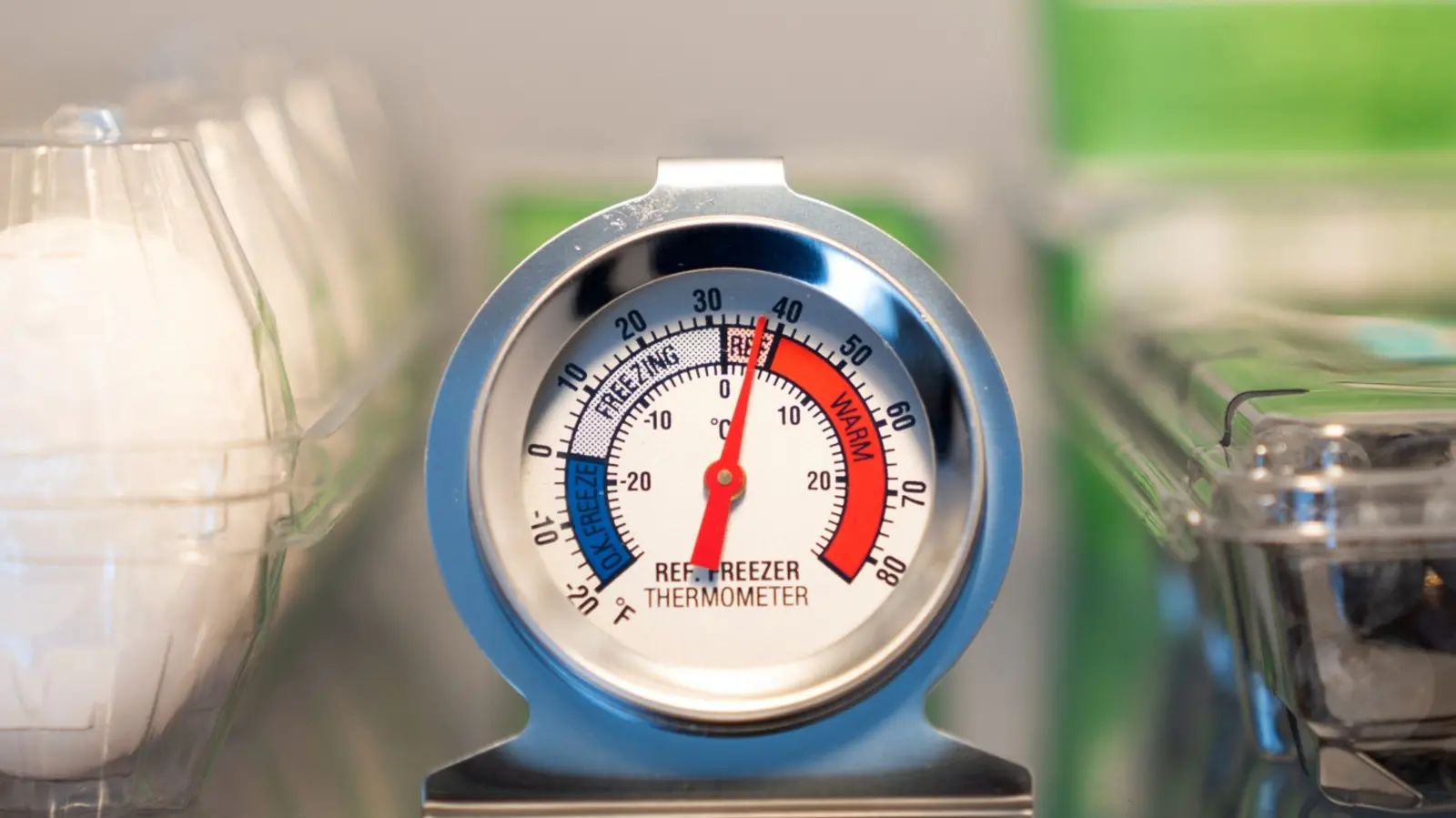
Official information regarding food safety from organizations like the United States Department of Agriculture (USDA) and the U.S. Food and Drug Administration (FDA) forms the basis of the "40-degree rule for refrigerators." The rule provides an easy way to remind people that 40 degrees Fahrenheit is the upper threshold of safe food storage temperatures inside their refrigerator. This threshold is critical because bacteria that cause foodborne illnesses grow most rapidly in the temperature danger zone between 40°F and 140°F. By keeping your refrigerator at or below 40°F, you significantly slow down the multiplication of harmful pathogens such as Salmonella, E. coli, and Listeria.
While the FDA says that you should keep your fridge at 40 degrees Fahrenheit or below, it's best to keep temperatures inside the refrigerator above the freezing mark. Experts, including Consumer Reports, agree that an internal refrigerator temperature around 37 degrees is ideal to curb the growth of harmful bacteria in stored foods, reduce the risks of damage caused by freezing, and limit electricity use. At 37°F, food stays cold enough to inhibit bacterial growth while avoiding the formation of ice crystals that can degrade texture and flavor in items like fruits, vegetables, and dairy products. Additionally, running a refrigerator slightly above freezing minimizes energy consumption, as the compressor doesn't have to work as hard to maintain a lower temperature.
Dialing in that perfect 37-degree setting inside your refrigerator can be difficult and often requires some trial and error. Many of the best-ranked major brand refrigerators offer models with digital controls that allow setting precise internal temperatures. These digital displays typically show the current and target temperatures, making adjustments straightforward. Other models often use less reliable methods, like numbered dials, lighted bars, or snowflakes, requiring the user to consult the owner's manual to determine which setting is colder versus warmer. Ultimately, these methods rarely correspond to a real temperature value. For example, a dial numbered 1 through 5 might list 3 as the recommended setting, but the actual temperature could vary widely depending on the external environment, the amount of food stored, and how often the door is opened.
How to follow the 40-degree rule for refrigerators
Whether your refrigerator has digital temperature controls or not, you shouldn't simply set the temperature and hope for the best. The phrase "trust, but verify," popularized by the late President Ronald Reagan, applies in this case. Relying solely on the built-in thermostat is risky, as these sensors can drift over time or be located in a spot that doesn't reflect the average temperature of the entire compartment. Hot spots near the door or cold spots near the freezer vent can lead to inconsistent cooling.
A simple thermometer, found in a two-pack on Amazon for $7.99, is a cheap way to monitor the temperature inside your refrigerator and freezer. These basic analog or digital thermometers can be placed on a shelf or hung from a rack to give you a real-time reading. For consistent temperature monitoring, consider something like the GoveeLife WiFi refrigerator thermometer two-pack, priced at $55.99 on Amazon at the time of writing. Both products are currently on sale, so their prices may change slightly over time. WiFi-enabled thermometers offer the advantage of sending alerts to your smartphone if the temperature rises above 40°F, allowing you to take action before food spoils. Some models even track historical data, helping you identify patterns or potential issues.
Once you have the tools to monitor your refrigerator's temperature, you'll want to keep an eye on it periodically. Many of us keep our homes cooler in the winter and warmer during the summer months to lower our heating and cooling costs. Fluctuations in the ambient air temperature inside your home can affect the temperature inside your refrigerator. For instance, on a hot summer day, the refrigerator's compressor may run more frequently to compensate for the warmer kitchen air, potentially causing the internal temperature to drop lower than intended. Conversely, during winter, the compressor may run less, leading to a slight rise in temperature. Frequent door openings also introduce warm air, so it's wise to minimize opening the fridge door and to ensure it closes properly.
Refrigerators kept outside of a climate-controlled area, even those that are considered "garage-ready," can struggle to maintain safe internal temperatures in hot environments. They may also fail to protect their contents from freezing when external temperatures drop below 32 degrees Fahrenheit. In these situations, monitoring the refrigerator's internal temperature is critical. Garage-ready models often have heavier insulation and more robust compressors, but they still have limits. Most are designed to operate in ambient temperatures between 0°F and 110°F. If your garage regularly exceeds these ranges, you may need to invest in a dedicated outdoor refrigerator or use a cooler for temporary storage.
Tips for safe food storage
The FDA also has another rule for safe food storage, known as the "two-hour rule," which relates to how long certain food items can be kept outside of the fridge. The two-hour timer applies to groceries, leftovers, restaurant take-out, and doggie bags, while marinated foods should always sit in the refrigerator. If any of the listed items must sit in the car or anywhere with temperatures above 90 degrees Fahrenheit, your time is cut in half to just one hour. This rule is based on the same principle as the 40-degree rule: bacteria multiply rapidly in the danger zone. Perishable foods left out too long can become unsafe to eat, even if they look and smell fine.
If you live far from your preferred grocery store, or you're packing a picnic lunch for a road trip, you may consider incorporating an ice chest or cooler into your setup. It might even be worth switching to an electric cooler if you'd rather not have the hassle and potential mess associated with buying and using ice to keep your food cool. Electric coolers plug into your car's 12V outlet and use a thermoelectric or compressor system to maintain a set temperature, often as low as 0°F. They are ideal for long trips because they don't require ice and can keep food safely cold for days. However, they can be expensive and rely on your vehicle's battery, so it's important to plan accordingly.
Leftovers from home-cooked meals also fall under the 2-hour rule. However, refrigerating large quantities of hot food presents some special challenges. Placing a container filled with hot foods like soup, pasta, casseroles, or other dishes into your refrigerator can warm adjacent items to unsafe temperatures and leave the center of that container sitting in the danger zone for hours, even inside the fridge. While some people may attempt to cool their leftovers on a kitchen counter to combat that scenario, the FDA recommends dividing the leftovers into smaller containers and getting them into the refrigerator before the two-hour window closes. Shallow containers allow food to cool more quickly because they have a larger surface area-to-volume ratio. Stirring food occasionally during cooling can also help. For very large quantities, such as a pot of chili, you can place the pot in a sink filled with ice water and stir until the temperature drops before transferring it to the fridge.
Beyond temperature control, proper food storage involves arranging items strategically. Raw meats should always be placed on the bottom shelf to prevent juices from dripping onto other foods. Dairy and eggs should be stored in the main body of the fridge rather than the door, where temperatures fluctuate more. Fruits and vegetables should be kept in separate drawers, as many fruits emit ethylene gas that can accelerate spoilage in vegetables. Regularly check expiration dates and use the FIFO (first in, first out) method to ensure older items are used before newer ones. A clean refrigerator also helps reduce bacterial cross-contamination; wipe up spills immediately and do a deep clean every few months.
The 40-degree rule is a simple but powerful guideline for maintaining food safety in your home. By understanding the science behind it and implementing practical monitoring and storage techniques, you can protect your family from foodborne illnesses, reduce food waste, and save money on groceries. Remember that the refrigerator is a preservation tool, not a magical solution—active management is required to keep your food fresh and safe.
Source:SlashGear News