

Rising global temperatures are pushing more households to seek relief from summer heat. According to the National Oceanic and Atmospheric Administration (NOAA), the year from April 2025 to March 2026 was the warmest ever recorded. That worrying trend has driven more American homes to install air conditioning. Around 93% of occupied U.S. housing stock now has air conditioning, up 6% from 2009 and 35% from 1993. While most of that growth is in built-in systems, portable air conditioners have also seen a major sales jump. The U.S. market for portable air conditioners was worth $1.97 billion in 2024 and is expected to reach $2.49 billion by 2030.
Portable units are attractive because they do not require expensive installation, they can be moved, and they work well in rooms without window-mounted AC. Yet they are not a perfect solution. They are useful in the right situation, but they have real drawbacks. From running costs to noise, effectiveness to appearance, here are five downsides of portable air conditioners.
Key Facts
- Portable air conditioners can use about twice as much energy as modern window units.
- A 7,000 BTU portable unit cools only about 150 square feet, while a 14,000 BTU unit covers up to 450 square feet.
- Portable air conditioners can produce noise between 50 and 75 dBA, roughly the same as a washing machine.
- Many portable ACs need regular water drainage, sometimes every eight hours.
- The vent hose and floor footprint make them less portable than their name suggests.
1. Portable air conditioners cost more to run than other types
Portable air conditioners are convenient, but they can be expensive to operate. Compared to other forms of air conditioning, these machines are far less efficient. Manufacturers can tweak designs to improve efficiency, but they face a basic physical hurdle. An air conditioner has to work harder to cool a warmer room, and a portable unit produces heat that stays inside the same room. In other words, the unit uses some of its energy to offset the heat it is generating. The same problem applies to the ventilation hose, which can radiate heat back into the space.
There is also a phenomenon called negative pressure. A portable air conditioner draws air from the room it is cooling, which lowers the air pressure in that room compared to its surroundings. Hot air from adjacent rooms or outside then rushes in through gaps to equalize the pressure. This makes the unit work even harder. The result is that portable air conditioners can use around twice as much energy as a modern window air conditioner. Placement can help, but the fundamental inefficiency remains.
2. Cooling efficiency
Higher energy bills might be acceptable if the portable unit kept the room perfectly cool. However, that is not always the case. Portable units can work well enough in small rooms, but they struggle with larger open areas or multiple rooms. A portable air conditioner with a 7,000 BTU rating is only suitable for about 150 square feet. A 14,000 BTU unit is good for rooms up to 450 square feet. These numbers matter, but the ratings themselves can be misleading.
Air conditioning cooling capacity is often measured in British Thermal Units, or BTUs. Window units have been regulated by federal standards for decades, but portable air conditioners only became subject to similar regulations in 2025. This means some portable models have adjusted their stated BTU ratings to meet new rules, while older models may still show misleading figures. The test conditions for portable units are also less demanding than for window units. As a result, a 10,000 BTU portable air conditioner will generally provide less cooling than a 10,000 BTU window unit. When it comes to raw cooling power, window units win.
3. Portable air conditioners can be noisy
Having the cooling equipment inside the room is not only bad for energy efficiency, it is also bad for peace and quiet. Even when a portable unit cools a room well, it can be surprisingly loud for daily use. Window and split air conditioning units keep most of their mechanical noise outside. Portable units house the compressor, fan, and ducting entirely in the room. That is fine for a workshop or garage, but not ideal for a bedroom.
All air conditioners produce some noise, and levels vary by brand and model. According to International Noise Awareness Day, air conditioners produce noise in the 50 to 75 dBA range, about the same as a washing machine. Prolonged exposure to noise above 70 dBA can damage hearing. Although these figures apply to air conditioners in general, portable units are widely considered among the noisiest. If you need silence for sleep, work, or study, a portable AC may not be the best choice.
4. Drainage
Air conditioners do more than cool the air; they also act as dehumidifiers. Even in cooling mode, all refrigerant-based air conditioners remove some moisture from the air. That water has to go somewhere. Many portable air conditioners need to be drained regularly. This is easy to forget, and many models have automatic shut-off systems that turn the unit off when the water tank is full. That can be uncomfortable if you wake up in the middle of the night to find the room has become hot again.
Some modern portable air conditioners are designed to be self-evaporating, but even these may need regular draining depending on humidity and temperature. For example, a 14,000 BTU portable unit with a smart self-evaporating system can still need the water tank emptied every eight hours in certain conditions. Filter cleaning is another maintenance task. While filter cleaning is required for all air conditioners, portable units need extra attention because they are placed directly in the living space. Regular maintenance is essential to keep them running efficiently.
5. Aesthetics and portability
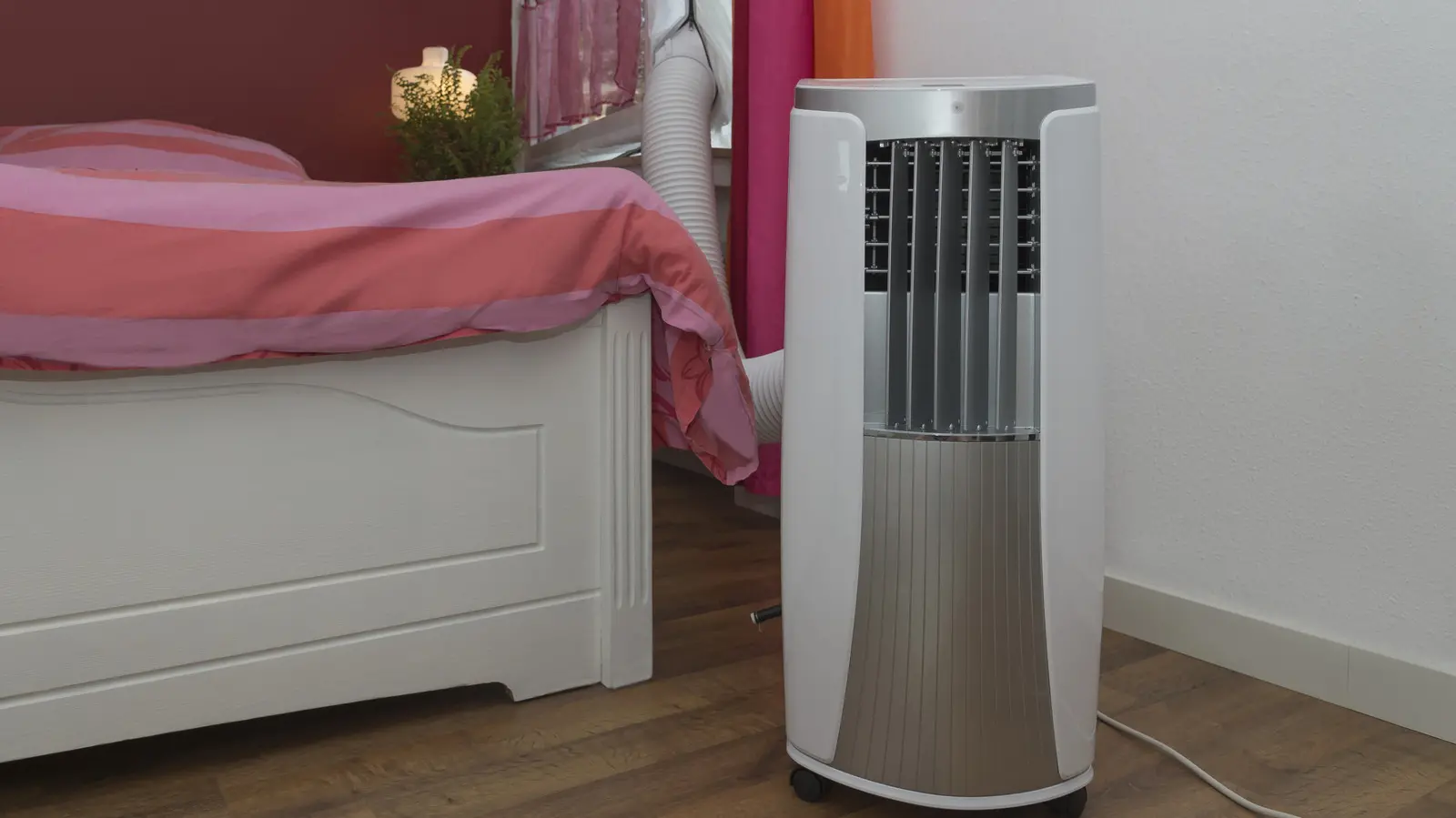
Portable air conditioners are easier to set up than fixed systems, but they still require some installation. Every portable refrigerant-based unit needs a vent to expel hot air, which means running a large flexible hose from the unit to a window kit or similar outlet. This changes how portable they really are. Once the hose is attached, the unit is effectively tethered to the window. Moving it to another room means repeating the entire setup process. That is fine if you only want to cool one space, but it is less convenient if you planned to roll it from the living room to the bedroom each night.
The vent hose also makes it hard to blend a portable air conditioner into your home decor. The units themselves are not huge, but they are heavy and take up valuable floor space. They cannot be tucked discreetly into a corner because they need clearance from the wall for airflow. This leaves you with a large appliance in the room, a vent hose winding toward the window, and a power cable snaking along the floor. For many people, that trade-off is acceptable in a workshop or rental apartment, but it is not ideal for a beautifully designed living room.
Portable air conditioners can still be an effective way to cool a room without expensive installation, but the downsides are real. Higher energy costs, lower cooling efficiency, noise, drainage needs, and limited portability all deserve careful consideration before making a purchase.
Source:SlashGear News