

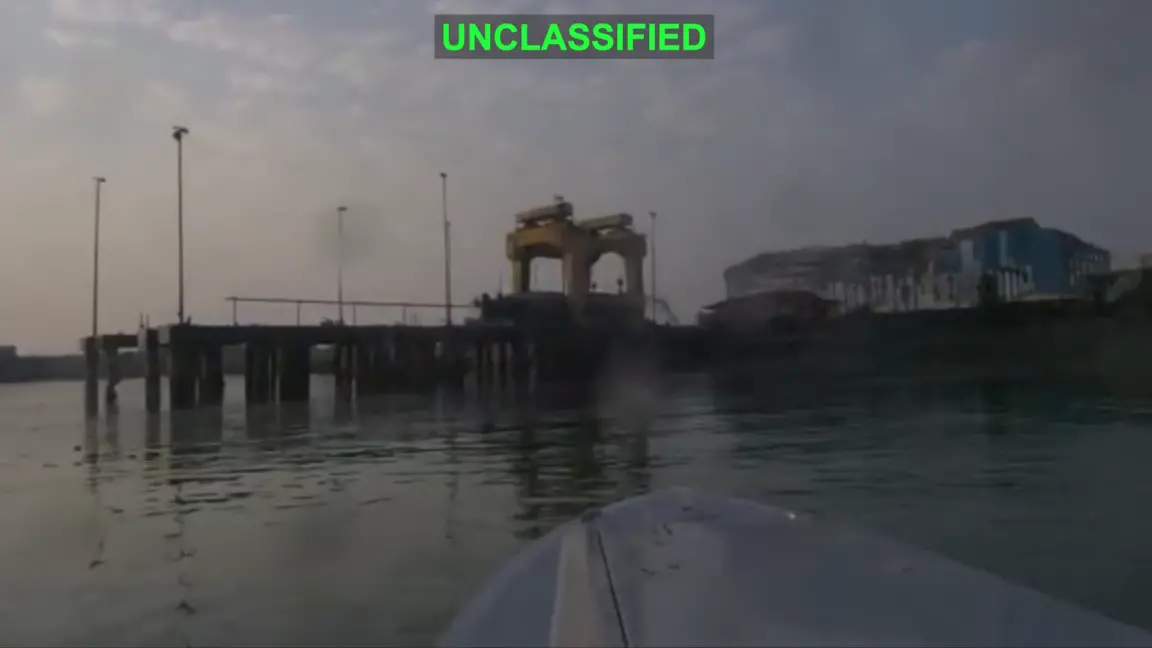
For the first time in its history, the US military has deployed explosive-laden drone boats in combat, attacking an Iranian midget submarine and naval port. This unprecedented use of kamikaze sea drones by the United States comes nearly a decade after Iranian and Houthi forces first demonstrated such weapons. The strike, carried out on July 12, 2026, targeted Iran’s Bandar Abbas Naval Base and a Ghadir-class midget submarine suspended from a gantry. The US Central Command confirmed that these were the first sea drone combat operations for American forces.
First Use of Kamikaze Drone Boats
The US military shared video footage showing three “one-way attack surface drones” approaching their targets at low speed before detonating. According to USNI News, the drone boats made an uncontested approach to the submarine and ship maintenance facility. The technology employed was the Saronic Corsair autonomous surface vessel, developed by Saronic Technologies, a defense company based in Austin, Texas. These vessels are 24 feet long, capable of carrying up to 1,000 pounds of payload over 1,000 nautical miles at speeds exceeding 34 knots. They can operate autonomously for long-range navigation, patrols, and loitering, and were equipped with explosives for this specific strike.
This is the second notable use of US drone boats during the ongoing conflict that began with US and Israeli attacks on Iran on February 28, 2026. Earlier, on June 8, a Corsair sea drone rescued two US Army helicopter pilots after their AH-64 Apache was shot down by an Iranian Shahed drone off the coast of Oman. The dual roles of surveillance and direct action highlight the versatility of these unmanned systems.
Historical Context of Drone Boat Violence
The United States is far from the first nation to field exploding drone boats. The Houthi faction in Yemen struck the Royal Saudi Naval frigate Al Madinah on January 30, 2017, using an uncrewed remote-controlled boat developed with Iranian technical assistance. That attack marked the first confirmed use of such weaponry. Since then, the Ukrainian military has pioneered the use of drone boats in asymmetric naval warfare following Russia’s full-scale invasion in February 2022. Ukraine, lacking a traditional navy, has used explosive drone boats to strike Russian warships and tankers, forcing the Russian Black Sea Fleet to retreat. Ukrainian forces have also achieved milestones such as shooting down helicopters with missile-equipped drone boats and deploying small drones as surface platforms.
Most recently, a Ukrainian drone boat conducted an unprecedented amphibious operation by deploying an armed ground robot onto contested coastal territory. These developments have demonstrated the cost-effectiveness and tactical value of unmanned surface vessels, which the US military is now adopting at a larger scale.
Strategic Implications of the US Strike
The decision to use kamikaze drone boats reflects a broader shift in US military strategy toward asymmetric warfare. The US has also deployed one-way aerial attack drones, such as the LUCAS drone inspired by Iranian Shahed designs, for the first time in this conflict. The war with Iran has been costly for US forces, with dozens of expensive hunter-killer Reaper drones lost, collectively worth over $1 billion. This has prompted the military to pursue cheaper, more expendable systems.
The Corsair drone boats are part of a new generation of low-cost, autonomous platforms designed to overwhelm adversaries with mass and persistence. Unlike traditional warships, these vessels can be produced rapidly and deployed in swarms, complicating enemy defenses. The attack on Bandar Abbas also demonstrates the ability to strike high-value targets like midget submarines, which are difficult to track and engage with conventional forces.
Experts note that the use of drone boats could escalate further as President Donald Trump ramps up military operations against Iran following the collapse of a supposed ceasefire. The strikes coincided with broader attacks by US fighter aircraft and warships, indicating an integrated approach combining manned and unmanned platforms. The success of the drone boat attack may lead to increased investment in naval drone programs, including larger vessels capable of carrying missiles or conducting electronic warfare.
Technical details of the Corsair system include autonomous navigation, power management for extended loitering, and modular payloads. Saronic Technologies has highlighted the vessel’s ability to operate without direct human control, making it suitable for dangerous missions. The Pentagon’s interest in such systems has grown as rival nations develop their own drone fleets. China and Russia have also experimented with unmanned surface vessels, but the US combat debut sets a new precedent.
The humanitarian and legal implications of autonomous weapons remain a topic of debate. While the Corsair boats were used in a pre-programmed strike, their autonomy raises questions about accountability and compliance with international law. The US military has stated that human operators oversee all engagements, but the trend toward autonomy is clear.
The July 12 strike may also influence naval tactics globally. Adversaries will need to develop countermeasures against low-cost drone swarms, such as electronic jamming, directed energy weapons, and improved radar. Meanwhile, the US is likely to expand its unmanned fleet, with plans to integrate drone boats into carrier strike groups and amphibious operations. The era of drone boats has begun, and the US military is now both a producer and consumer of this revolutionary technology.
The rescue of Army pilots in June underscores the dual-use nature of these platforms. In that operation, a Corsair boat detected the downed pilots using onboard sensors and provided a stable platform for extraction before a helicopter arrived. This capability for surveillance, communication relay, and logistics support makes drone boats valuable beyond direct attacks.
As the war with Iran continues, the US military will refine its use of unmanned systems. The successful deployment of kamikaze drone boats opens the door to more frequent and sophisticated operations. Whether this leads to a permanent shift in naval warfare or remains a niche tactic depends on both technological advances and the evolving conflict landscape.
Source:Ars Technica News