

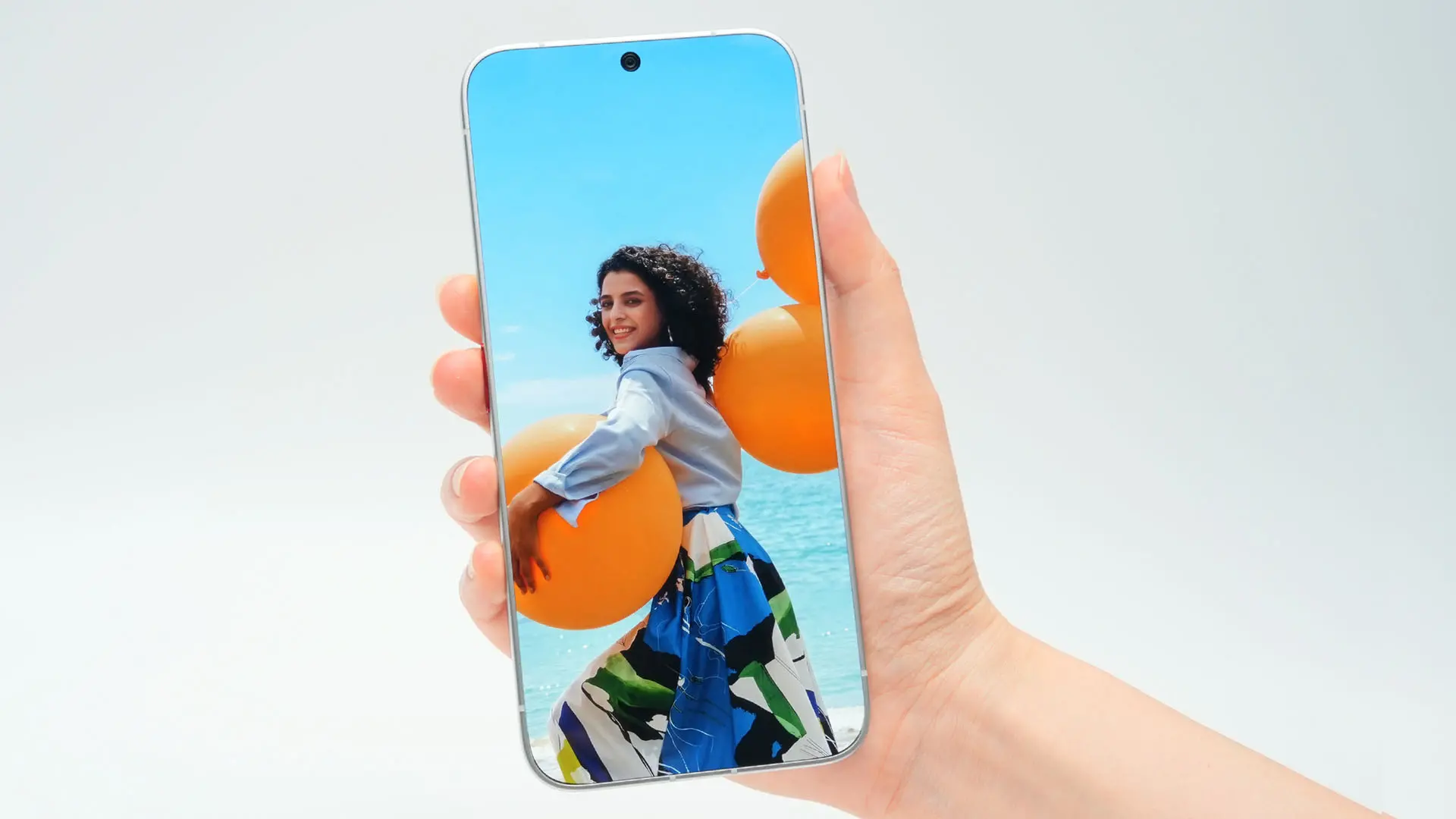
Smartphone displays have undergone a remarkable evolution over the past decade. What once were chunky frames surrounding small screens have gradually given way to edge-to-edge panels with barely-there borders. Yet even the most premium devices on the market today still feature a slight black outline around the display — a compromise that many users have learned to accept but few truly love. TECNO, however, is aiming to change that. The company has just revealed a concept phone with what it calls a true 0mm bezel, meaning the display runs completely to the edge of the device with no visible border whatsoever.
The announcement comes at a time when bezel reduction has become a key battleground for smartphone makers. From the early days of thick plastic surrounds to the modern era of ultra-slim bezels, manufacturers have consistently pushed the boundaries of screen-to-body ratios. TECNO’s latest concept is a bold statement: it believes the future of smartphones lies in eliminating the bezel entirely, not just shrinking it further.
The quest for a bezel-less display
For years, smartphone enthusiasts have dreamed of a device that is almost entirely screen. The so-called “bezel-less” phone has been a recurring theme in concept renders and fan-made designs, but real-world constraints have always limited how far manufacturers could go. Front-facing cameras, sensors, and antennas require some form of accommodation, and the display panel itself needs a structural frame to hold it in place. Traditional bezels also provided a convenient area for the phone’s touch controller and display driver circuits.
In recent years, companies have managed to shrink bezels significantly. The introduction of punch-hole cameras removed the need for large top bezels. Under-display fingerprint sensors eliminated the chin on many models. Foldable screens pushed the concept of flexible displays into the mainstream. But even the most advanced devices still retain a thin black border around the active area, often necessary for structural integrity and to prevent accidental touches at the edges.
TECNO’s new concept phone appears to have overcome these obstacles through a combination of engineering and design innovations. The company has not released detailed technical specifications, but it has confirmed that the device uses advanced internal stacking, structural engineering, and a new screen packaging technique. These three elements together allowed the company to virtually eliminate the bezel while maintaining the phone’s structural rigidity and functionality.
Advanced internal stacking and screen packaging
One of the main challenges in creating a truly bezel-less phone is the need to route display cables and circuits beyond the visible panel area. In most smartphones, the display’s driver IC and flexible printed circuit board (FPCB) are folded under the panel, taking up some space. This limits how close the screen can get to the physical edge. TECNO’s “advanced internal stacking” likely refers to a redesign of these internal components, allowing them to sit more compactly within the chassis, freeing up space for the display to extend further outward.
The “new screen packaging technique” is another critical piece of the puzzle. Traditional display panels are laminated with a frame or an encapsulating border to protect the edges and provide a mounting point. TECNO appears to have developed a packaging method that allows the panel to be sealed at the very edge, with no additional frame. This technique reportedly enables the display to be installed flush with the outer surface of the phone, creating a seamless appearance.
What a 0mm bezel means for daily use
Beyond the obvious visual appeal, TECNO claims that a bezel-less display offers practical benefits in everyday scenarios. A completely uninterrupted view makes watching videos, scrolling through social media, and playing games more immersive. With no bezel to break the line of sight, the content on the screen truly takes center stage. This effect is particularly noticeable on vibrant wallpapers or full-screen video content, where the lack of a border enhances the perception of depth.
Another advantage is the opportunity to fit a larger display into a chassis of the same dimensions. Since the bezel consumes no space, every millimeter of the front is used for the screen. TECNO notes that users can enjoy a more massive display without making the phone itself any bigger. This is meaningful for those who prefer compact devices but still want a large screen experience.
The company also mentions that it has optimized cameras, touch sensitivity, sound, and UI interactions for the concept phone. This suggests that TECNO is not simply building a display gimmick; it is thinking holistically about how bezel-less design affects the entire user experience. For instance, edge rejection (the ability to ignore accidental touches near the screen’s edge) becomes even more critical when there is no physical bezel to grip. TECNO appears to have developed solutions for these challenges.
Comparison with the iPhone 17 Pro
To emphasize the impact of its design, TECNO shared a photo that places its concept phone side-by-side with what appears to be the iPhone 17 Pro. In that comparison, the absence of bezels on the TECNO device is striking. While the iPhone 17 Pro already has relatively slim bezels, it still has a visible black outline that frames the display. The TECNO concept, by contrast, shows a screen that runs right to the edge, making the physical frame virtually indistinguishable from the display itself. The visual difference is subtle in a static image, but TECNO says it is far more noticeable in person and significantly improves the viewing experience.
Technological challenges and possible limits
While the concept is impressive, translating such a design into a mass-produced consumer product poses significant challenges. Durability is a major concern: a display with no bezel has no protective ridge to absorb shocks if the phone is dropped. The glass must be strengthened, and the frame must be engineered to protect the screen without a visible border. TECNO likely uses advanced glass or ceramic materials, but the company has not specified details about drop protection.
Another issue is how to attach the display to the chassis without glue seams showing. The packaging technique must ensure that no adhesive oozes out from under the panel. In addition, the phone’s structural rigidity depends on the internal frame, which may need to be redesigned since the display now carries more mechanical responsibility.
There is also the question of repairability. Bezel-less displays can be harder to replace because there is no easy access point to pry the screen off. TECNO has not commented on how this affects serviceability.
TECNO’s commitment to innovation
TECNO’s move into bezel-less technology is part of a broader strategy to establish itself as an innovator in the smartphone market. Historically, TECNO has focused on emerging markets, offering affordable devices with impressive features. This concept phone, however, signals a desire to challenge the global market leaders with distinctive design language. The company says its 0mm bezel display will become a unique identity for the brand and help it stand out from the competition.
The concept phone also reflects TECNO’s investment in core technologies. The company asserts that it has developed optimized cameras, touch sensitivity, sound, and UI interactions specifically for this device. These advancements could eventually trickle down to mainstream TECNO devices, benefiting a wider audience. Even if the exact bezel-less display does not appear in a commercial product immediately, the engineering techniques and design principles are likely to influence future models.
Industry context: who else is chasing zero bezels?
TECNO is not alone in pursuing a bezel-less future. Several other smartphone makers have experimented with similar concepts. In earlier years, companies like Xiaomi and Vivo showcased prototype phones with very high screen-to-body ratios, but they always retained a tiny bezel. Some manufacturers have attempted “waterfall” displays that curve around the edges, creating the illusion of no bezel from the front, but those still have a visible frame when viewed from the side.
Under-display camera technology has been another avenue to reduce bezels, as it removes the need for a punch-hole or notch. But no major smartphone brand has yet achieved a true 0mm bezel on a shipping product. TECNO’s concept, if it can be commercialized, would place the company at the forefront of this design direction.
The path from concept to production is often long, and not every concept phone reaches store shelves. However, these early demonstrations serve as valuable testing grounds for new technologies and user responses. TECNO will likely gather feedback at IFA 2026, which could help refine the design before any potential launch.
What to expect at IFA 2026
TECNO will officially showcase its new concept phone at IFA 2026 ShowStoppers, an event scheduled for September in Berlin. The company is expected to provide more details about the technologies involved and perhaps demonstrate the device’s capabilities hands-on. Industry experts will be watching closely to see whether TECNO can deliver a working hardware demonstration that lives up to the promotional images. The event will also be an opportunity for TECNO to gauge consumer and press reactions, which is often a deciding factor for whether such a concept advances to a commercial product.
The announcement has already generated significant buzz among early technology blogs and social media commentators. Many are skeptical about how such a design will hold up in daily use, while others are excited about finally seeing a smartphone that truly looks like a slab of glass. TECNO has not announced a release date or pricing for a commercial version, suggesting that the concept is still in its experimental stage.
Broader implications for the smartphone industry
If TECNO succeeds in mass-producing a 0mm bezel phone, it could force other brands to accelerate their own bezel-elimination efforts. The relentless pursuit of higher screen-to-body ratios has been a defining trend in smartphone design, and each new milestone sets a new bar. A true bezel-less display would be a significant selling point, especially for consumers who value aesthetics and immersion.
However, it remains to be seen whether consumers are willing to trade off practicality for a few millimeters of extra screen. Cases would need to be redesigned, and the glass would be more susceptible to edge damage. Some users prefer a small bezel to provide a place to grip the phone without accidentally touching the screen. TECNO’s optimizations for touch sensitivity and UI interactions may address those concerns, but real-world testing will be essential.
Another aspect is the cost. Advanced manufacturing techniques often come with a premium price. TECNO’s target market is typically price-sensitive, so the company may need to balance innovation with affordability. Alternatively, TECNO could introduce this design on a high-end flagship first, then gradually bring it to mid-range devices as production costs decrease.
Looking ahead
TECNO’s 0mm bezel concept phone is more than just a technical showcase; it represents a vision for the future of mobile devices. By eliminating the last physical barrier between the display and the world, TECNO is redefining what a smartphone can look like. The concept is a bold statement from a company often considered a challenger rather than a leader. If successful, it could reshape consumer expectations and force the rest of the industry to reply.
The next few months will be crucial. As IFA 2026 approaches, more images and videos may surface, providing a clearer picture of the device’s design and functionality. For now, we know that TECNO has taken a significant step toward making the bezel-less smartphone a reality. Whether it ships or remains a concept, this innovation underscores an important truth: the boundaries of smartphone design continue to expand, even as the borders around our displays disappear.
Source:Android Authority News