

Smartwatches have become ubiquitous, but not everyone wants or needs all the features of a full-fledged wrist computer. The Fitbit Air, priced at $100, takes a step back by ditching the screen entirely. It is a small, minimalist fitness tracker that focuses on health monitoring without the distractions of notifications, apps, or a display. However, this simplicity comes with a catch: Google, which now owns Fitbit, has built a new health platform around its generative AI, and the presence of this chatty AI is hard to ignore.
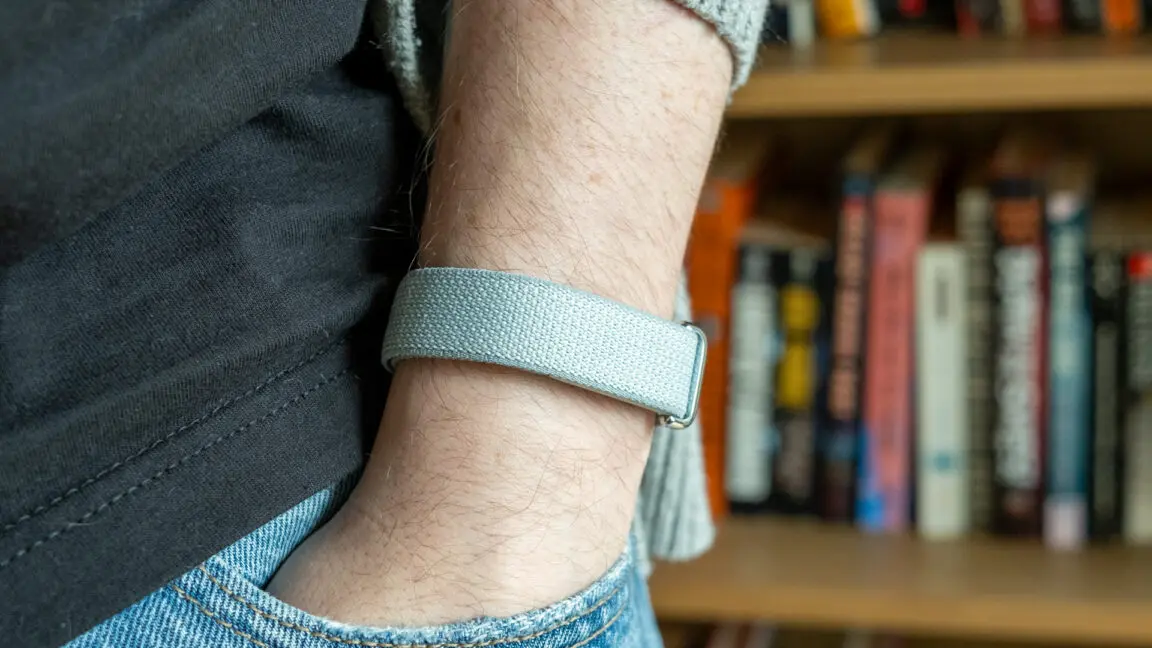
The Fitbit Air is essentially a small puck of health sensors that you can forget you are wearing. It has no speaker, no screen, and only a single LED on the side to indicate battery level. Double-tapping the tracker shows you its battery status, and that is about the extent of on-device interaction. The vibration motor is strictly for alarms—it cannot sync with phone notifications, which makes sense given the lack of a display. This simplicity is actually a selling point for those who want to track their health without the constant buzz of a smartwatch.
The device comes with one of three band options: the standard Performance Band, made from a durable polyester yarn with velcro pads and a metal loop; the Active Band, which is silicone and costs $35 extra; and the Elevated Band, a polyurethane option for $50. The Performance Band is comfortable but absorbs moisture, making it less ideal for swimming or heavy workouts. The Active Band hides the Air puck more effectively and looks sportier, but paying half the cost of the tracker for a band feels steep. Third-party bands are currently scarce, though the simple snap-in design means future options could emerge.
Despite its minimalism, the Fitbit Air packs most of the sensors found in high-end smartwatches. It tracks steps, heart rate, blood oxygen, and skin temperature, though it lacks an ECG. These raw stats feed into secondary metrics like readiness score, sleep phases, and all-day stress monitoring. The data quality appears to be solid, with sleep tracking aligning well with perceived rest and the readiness score often reflecting subjective energy levels. The battery lasts a full week on a charge, which is remarkable for a device this small.
During workouts, the Air uses its sensors to automatically detect activities and logs them in the Google Health app. However, because there is no screen, you have to check the app for live stats, which can be inconvenient during a session. The revamped app is decent and offers most expected features, but longtime Fitbit users will notice the loss of some capabilities like blood pressure tracking and custom meal creation. Google has promised updates to address these gaps, but for now, the app feels like a work in progress.
The main point of divergence is the AI Health Coach, which is a core part of the premium subscription that comes free for the first three months with the Air. This Gemini-powered AI is designed to provide summaries, suggestions, and encouragement based on your wearable data. In theory, this could be useful—an AI tuned for health data, grounded in real metrics, that can offer guidance. In practice, the Coach is verbose and often misses the mark.
It tends to generate grandiose praise for hitting goals and overly chipper pep talks when you fall short. The summaries of sleep, workouts, and daily activity take up a lot of space in the app, often stating the obvious: maybe go for a light walk after a strenuous workout. The AI can also hallucinate, inventing workouts from a few extra steps or briefly elevated heart rate, and it sometimes claims data doesn't exist when it's clearly visible elsewhere. You can teach the Coach about your life—like having a baby or a pet that wakes you up—and it will adjust its insights accordingly, but the underlying issue remains: the AI always has something to say, and it says too much.
Google clearly wants the Coach front and center to drive adoption of Gemini, but it often detracts from the experience. Free users get a denser, more information-rich interface without the wordy AI. You can opt out of the premium subscription, but many Google One plans include Health Premium, making the AI default. Turning it off is possible but requires digging into settings: Profile > Your data in Google Health > Feature Control > Google Health Coach and flipping the toggle. Even then, an "Ask Coach" button remains, tempting you back.
For those who want a straightforward, screenless fitness tracker, the Fitbit Air is a solid choice. It is comfortable, accurate, and reasonably priced at $100—far more affordable than a Whoop, which requires a minimum $200 annual subscription. But the premium AI coach adds little value beyond noise. The bottom line is that the hardware delivers, but the software experience can be improved by turning off the chatty assistant.
Source:Ars Technica News