

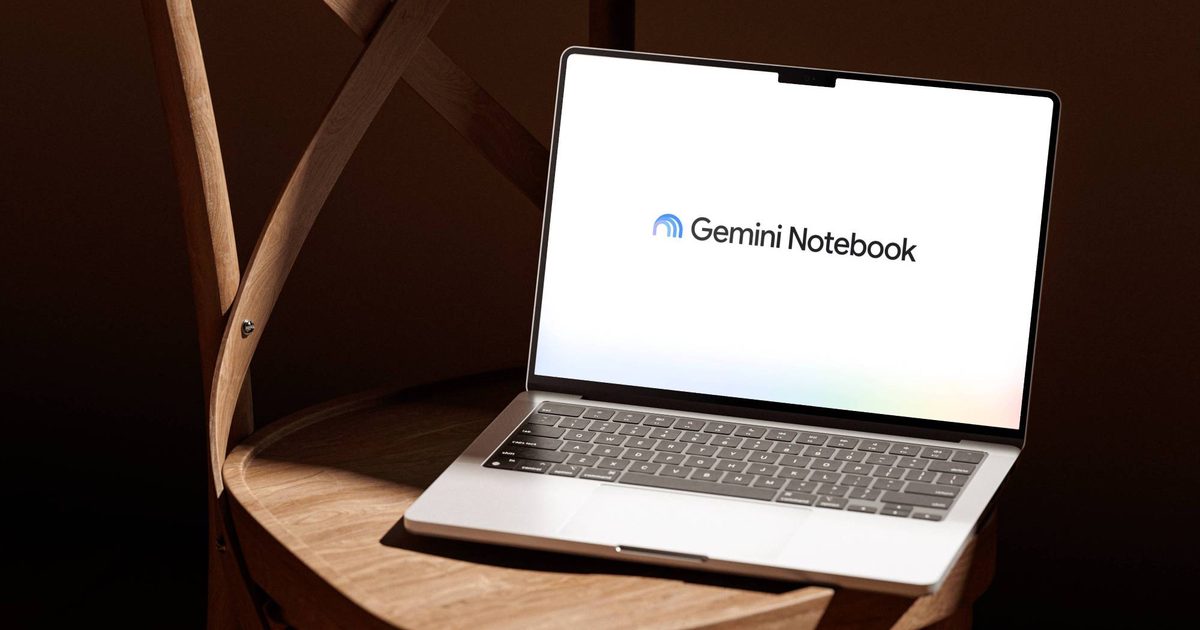
Google is officially retiring the NotebookLM name, replacing it with the more cohesive Gemini Notebook brand. This rebranding marks another step in the company's effort to unify its artificial intelligence offerings under the Gemini umbrella, which already includes the Gemini chatbot, Gemini for Workspace, and the Gemini API. The change comes alongside a significant expansion of the tool's most powerful features, which were previously locked behind the top-tier Google AI Ultra subscription.
NotebookLM first launched in 2023 under the codename Project Tailwind during Google I/O. Initially conceived as an AI-powered research assistant that could analyze documents and answer questions based on user-uploaded content, the tool quickly gained traction among academics, journalists, and knowledge workers. Over time, Google added features such as source-grounded summaries, podcast-style audio overviews, and the ability to generate study guides. The tool's ability to anchor responses to specific sources helped reduce hallucinations and made it a favorite for fact-based research.
The latest upgrade, which rolled out to some users in late 2024, introduces a dedicated cloud computing environment for each notebook. This environment enables the AI to write and execute code directly against the user's uploaded materials. Previously, NotebookLM could only analyze text and generate human-readable summaries or questions. With the new code execution capability, users can now ask the AI to perform data analysis, run statistical tests, generate charts, and even build interactive visualizations. The update also expands the range of exportable outputs to include PDFs, spreadsheets, slide decks, and complex data visualizations, transforming the tool from a simple note-taking assistant into a full-fledged data processing platform.
Under the hood, the upgrade also moves NotebookLM onto a new reasoning engine. Google has not disclosed the exact architecture, but the enhanced reasoning model is designed to handle multi-step queries, chain-of-thought prompting, and logical deduction over large document sets. This allows the AI to draw connections between disparate sources, identify contradictions, and synthesize insights that were previously beyond its reach. For example, a user analyzing a stack of financial reports could ask Gemini Notebook to identify trends across multiple quarters, compare metrics, and produce a summary table — all within the same notebook.
With the rebranding to Gemini Notebook, Google is now extending these advanced capabilities to subscribers of the Google AI Pro plan. Previously, the code execution and advanced output features were restricted to Google AI Ultra subscribers and select Workspace business accounts. The expansion will roll out gradually over the coming weeks, starting with the web version of Gemini Notebook. Mobile support and API access have not been announced yet, but industry observers expect them to follow eventually. Google has remained silent on whether the free tier will ever gain access to these features. The current free version continues to offer source-grounded Q&A, audio overviews, and basic summaries, but without code execution or the full range of export options.
The integration of Gemini Notebook into the broader Gemini ecosystem goes beyond just a name change. In April 2024, Google enabled notebook access from within the main Gemini app, allowing users to pull saved research and sources directly into chat conversations. This made it easier to transition from casual Q&A to deep document analysis without switching tools. Now, Google has announced plans to make notebooks accessible through AI Mode in Search, though no timeline has been provided. This would allow users to trigger research sessions from search queries, automatically creating or opening notebooks based on the topic they are exploring. Such integration could blur the lines between search, research, and productivity tools, positioning Gemini Notebook as a central hub for information work.
The decision to fold NotebookLM into the Gemini brand also reflects a broader strategic shift at Google. The company has been consolidating its AI products under a single identity to simplify messaging and build brand recognition. Gemini now encompasses the conversational AI, the multimodal model family, and a growing suite of enterprise tools. By renaming NotebookLM, Google signals that the research tool is no longer an experimental side project but a core part of its product lineup. This could lead to faster development cycles, deeper integration with Google Docs and Sheets, and more aggressive marketing.
For existing NotebookLM users, the transition should be seamless. Google has confirmed that all existing notebooks, data, and shared links will carry over to the new Gemini Notebook branding. The user interface remains largely the same, with the logo and top-level navigation updated to reflect the new name. Users on the Google AI Pro plan who have not yet seen the upgrade should check their settings or wait for the gradual rollout. For those on the free tier, the upgrade may eventually arrive, but Google is likely prioritizing paying subscribers to justify the subscription cost.
The competition in the AI research assistant space is heating up. Microsoft offers Copilot with document grounding for Microsoft 365 subscribers. OpenAI's ChatGPT has a code interpreter and custom GPTs that can analyze uploaded files. Anthropic's Claude also supports large file uploads and long-context windows. With Gemini Notebook's code execution and multi-format output, Google is positioning its tool as a serious contender for power users who need both analysis and content creation. The ability to generate slide decks and spreadsheets directly from research material could give it an edge in enterprise workflows, where such integrations are highly valued.
Looking ahead, Google is likely to expand Gemini Notebook's capabilities further. Rumors suggest the company is working on real-time collaboration features, allowing multiple users to work on the same notebook simultaneously. There is also speculation about native integration with Google Calendar and Gmail, enabling the AI to pull in meeting transcripts or email threads for context-aware analysis. As the tool matures, it may also support multimodal inputs beyond text, such as images, audio recordings, and video transcripts, further blurring the line between research assistant and productivity suite.
For now, the rebranding and feature expansion represent a significant milestone in Google's AI strategy. By making advanced research tools more accessible to Pro subscribers, the company is testing the waters for a broader rollout while maintaining exclusivity as a differentiator for its paid plans. Whether the free tier will ever see these features remains an open question, but the direction is clear: Google wants Gemini Notebook to be the go-to tool for anyone who needs to turn information into insights.
Source:Digital Trends News