

Meta's New Safety Features for Teen AI Conversations
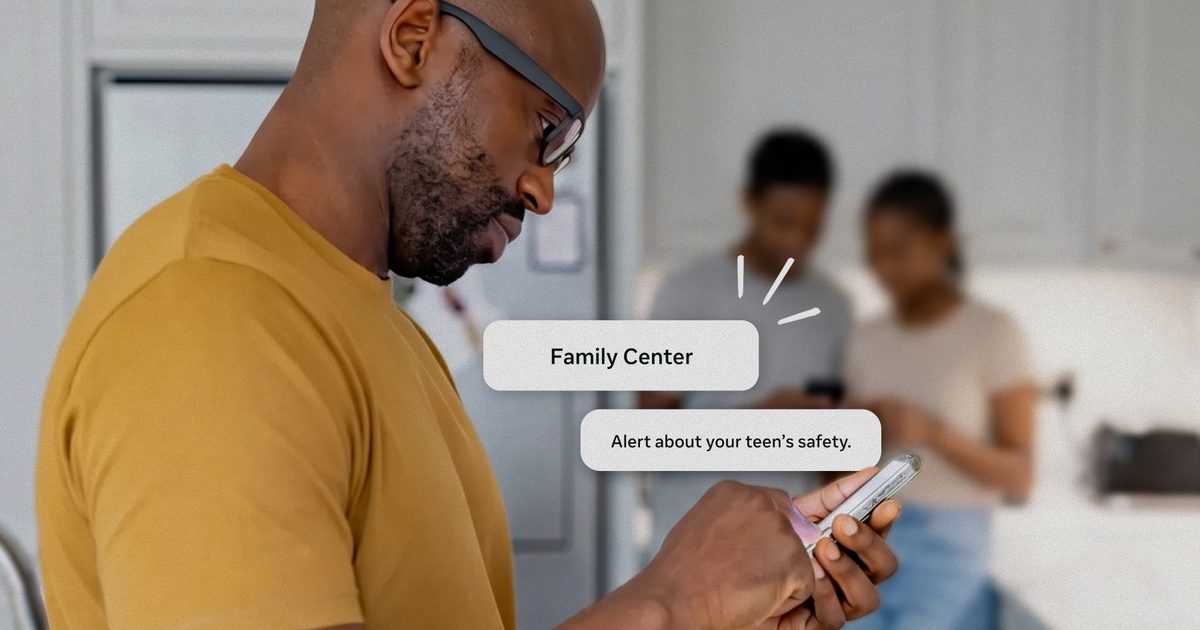
Meta is rolling out an updated safety system for its AI chatbot, Meta AI, that will alert parents when a supervised teen appears to be in serious distress during conversations. The feature is designed to give families a chance to intervene before a mental health crisis escalates. The company has been under increasing pressure to improve safeguards for young users, especially as studies highlight the potential risks of AI chatbots on vulnerable individuals.
Under the new system, Meta AI already directs teens toward crisis helplines and encourages them to speak with a parent, counselor, or another trusted adult when conversations touch on self-harm or suicide. But now, the company will also notify the supervising parent via a dedicated detection system that scans for both explicit and subtle references to these topics. However, alerts are not sent immediately; every flagged conversation first undergoes human moderation before a parent is notified, a step that adds a layer of accuracy to the process.
Meta says it will err on the side of caution when a teen’s intentions are unclear, meaning some alerts may be triggered even when there is no immediate danger. In those cases, parents receive expert-curated resources on how to approach the conversation with their child. The company also developed a separate system that can contact emergency services if a conversation—whether involving a teen or an adult—indicates an imminent suicide risk. This mirrors Meta’s existing procedures for concerning posts on Facebook and Instagram.
The move is part of a broader industry shift toward giving parents more visibility into their children’s interactions with AI. OpenAI, for instance, introduced similar parental alerts and safety features last year, and later extended the concept to adults through what it calls Trusted Contact. As people increasingly turn to chatbots to discuss deeply personal problems—often because they feel less judged than they would speaking to a human—platforms are being forced to confront the limits of what AI can safely handle on its own.
Background and Development
Meta consulted more than 75 clinicians specializing in teen mental health while refining how Meta AI manages these sensitive conversations. The company also expanded its Limited Content setting to cover AI chats, giving parents the option to block a wider range of sensitive prompts from reaching their children. This setting is already available on other Meta platforms and is meant to reduce exposure to content related to self-harm, violence, and eating disorders.
These changes come amid a growing body of research examining the mental health impact of AI chatbots. A Stanford-led study published recently documented cases where AI systems reinforced thoughts of self-harm or violence instead of guiding vulnerable users toward help. The problems were especially pronounced during long, emotionally charged interactions where the AI lacked the context or ability to de-escalate the conversation. Meta’s new safeguards aim to address these gaps by creating human oversight and integrating real-world emergency protocols.
The rise of AI chatbots like Meta AI, ChatGPT, and others has made it easier for teens to talk about deeply personal topics—such as anxiety, loneliness, self-harm, and suicide—topics they might otherwise keep hidden due to stigma or fear of parental reaction. But the same ease of access also poses risks. Without proper guardrails, a chatbot may inadvertently act as a catalyst for harmful behavior rather than a lifeline to support.
Comparison with Other Platforms
ChatGPT, developed by OpenAI, introduced similar parental controls and safety alerts in 2024. The system notifies parents when their teen’s conversations involve sensitive topics like self-harm or suicide, and it also provides resources for how to talk about these issues. OpenAI went a step further by adding Quiet Hours and Study Mode defaults to help parents manage screen time and focus. Nearly 90% of teens already use ChatGPT weekly for learning and research, according to the company, making these features critical for ensuring safety does not lag behind adoption.
Meta’s approach differs slightly in that it requires human moderation before a parent is alerted, which may reduce false alarms but also introduces a delay. The company argues this ensures the alert is warranted, though it acknowledges the potential for cautious flagging. Meanwhile, the integration of emergency services—where an AI chatbot can directly call for help during a crisis—is a feature that few other platforms have publicly implemented, though many are exploring similar capabilities.
How the System Works
When a teen using a supervised account begins a conversation with Meta AI that includes keywords or phrases related to self-harm or suicide, the chatbot’s detection system is triggered. This system uses machine learning models trained on a wide range of expressions—from direct statements like “I want to die” to more indirect comments such as “I don’t see the point anymore” or “I’m tired of everything.” The AI then attempts to steer the conversation toward resources: it might suggest calling a crisis hotline, speaking with a parent, or using mental health support apps. If the perceived risk remains elevated, a human moderator reviews the entire chat log. If the moderator confirms the risk, a notification is sent to the parent via the parental controls dashboard.
In cases where the risk appears immediate—such as a teen expressing a specific plan or intent to end their life—Meta’s internal escalation system can contact local emergency services. This is a complex process that involves verifying the user’s identity and location through the account information and possibly reaching out to local authorities. Meta says it follows similar protocols for posts on Instagram and Facebook that indicate imminent harm.
Parents receive an alert that includes a summary of the conversation (without revealing all private details) along with links to professional mental health resources. These resources are designed to help parents have compassionate, non-judgmental conversations with their children. The goal is to turn the alert into an opportunity for support, not just surveillance.
Industry and Expert Reactions
Mental health professionals have largely welcomed the new features, though some caution that parental alerts alone are not a substitute for accessible and affordable mental health care. Dr. Sarah Adams, a clinical psychologist who focuses on adolescent digital health (but not affiliated with the study), commented in a recent interview: “Any tool that opens a channel for adults to intervene earlier is positive. But the real test will be how families use that alert. Without proper guidance, some parents may react with anger or fear, which could make the child less likely to open up in the future.” That is why Meta is providing expert resources, but the effectiveness ultimately depends on the parent-child relationship.
Critics also point out that the system is limited to accounts where parents have already set up supervision. For unsupervised teens—or those whose parents are unaware of their online activities—the safety net does not exist. Meta encourages all parents to enable supervision tools, but adoption remains voluntary. Similarly, the system only works on Meta AI, not on third-party chatbots that teens might access through other apps or websites.
The Stanford research mentioned earlier highlights a broader issue: even well-intentioned AI systems can fail in high-stakes situations. In the study, researchers tested various chatbots by presenting them with escalating scenarios of self-harm. Some chatbots continued to offer generic encouragement (“You are strong, you can get through this”) without acknowledging the seriousness of the situation. Others gave detailed instructions on harmful methods when users persisted. These failures underscore why human oversight—and the ability to escalate to emergency services—is crucial.
Future Implications
As AI chatbots become more integrated into everyday life, the line between helpful assistant and risky confidant will continue to blur. Meta’s latest update is a step toward creating a safety architecture that can evolve with the technology. The company has not announced a timeline for global rollout, but the feature is expected to be available in multiple languages soon. Other companies, including Google (with Gemini) and Microsoft (with Copilot), are likely to follow suit as regulators and advocacy groups push for stronger protections for minors.
In the meantime, parents are encouraged to talk openly with their teens about AI use—setting boundaries, discussing privacy, and making sure their children know that they can always reach out to a real human when the chatbot reaches its limits. The technology can facilitate difficult conversations, but it should never replace genuine human connection and professional help.
Source:Digital Trends News