

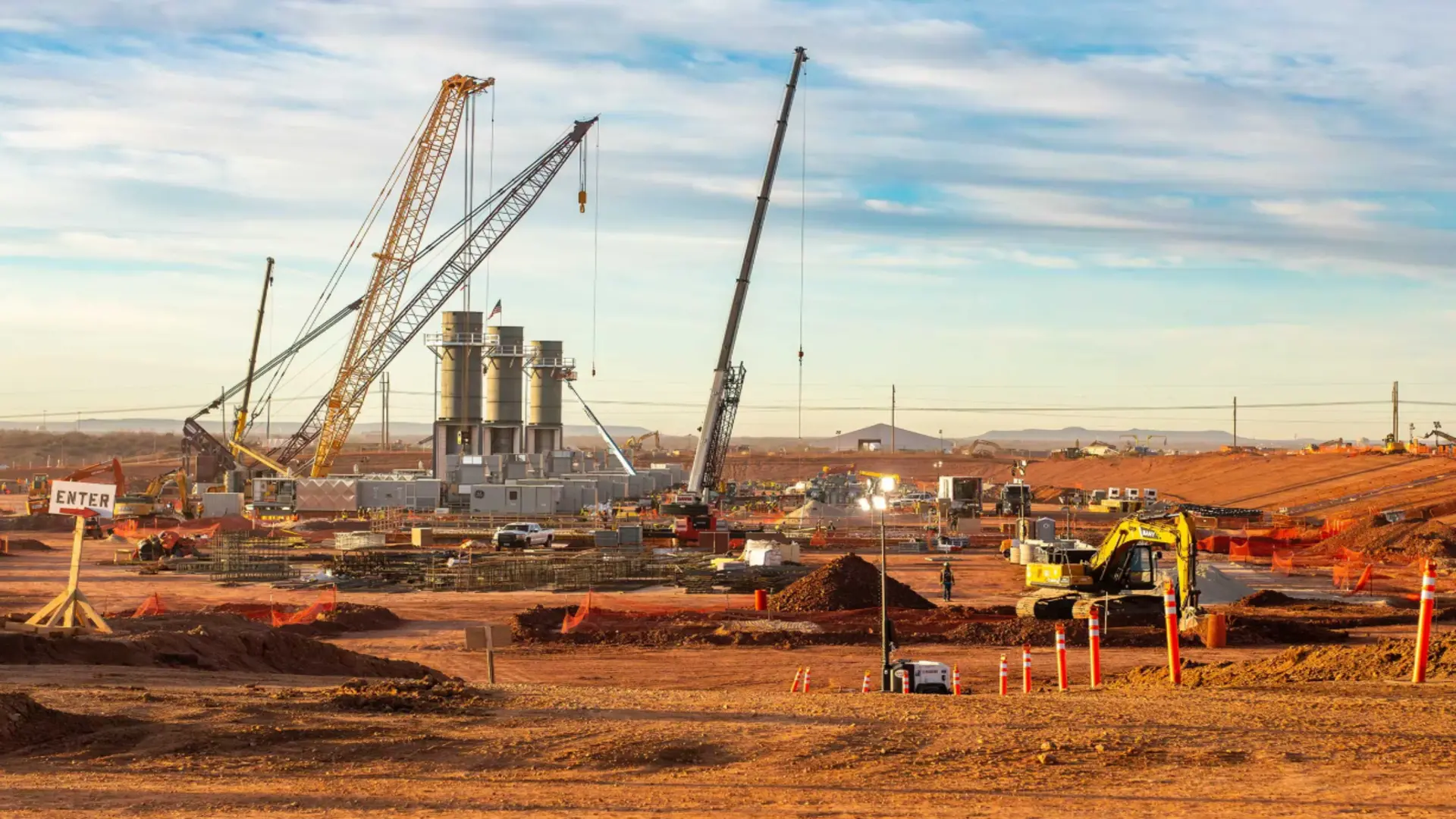
Texas has long been the promised land for American data center developers. Vast tracts of open land, a deregulated electricity market, and a political culture that welcomes corporate investment have made the state one of the largest homes for cloud computing and artificial intelligence infrastructure in the world. For years, the growth of data centers was framed as a rare point of consensus between business-friendly Republicans and economic development officials. But that consensus is cracking, and the political fallout is being watched from Silicon Valley to Washington.
A crack in the conservative wall
The emerging resistance is not coming from the usual critics. Environmental groups and Democrats have often questioned the resource demands of large data centers, but their objections rarely changed policy in Texas. What is more surprising is that a growing number of Republicans are now raising similar concerns. Local county judges and state legislators from conservative districts have begun to challenge data center projects that once would have been celebrated as symbols of economic success.
The dispute is not about whether Texas should be part of the digital economy. Even the most vocal Republican critics generally accept that data centers are essential to the future of artificial intelligence, cloud computing, and national digital infrastructure. The question is whether the industry should be able to expand largely on its own terms, consuming electricity, water, land, and local government resources while being shielded from stricter scrutiny by the state's reputation for deregulation.
Why the Republican coalition is splitting
Texas Republicans have historically been united around a simple economic message: reduce taxes, limit regulation, and let private capital decide where to invest. This message has made the state a magnet for data center operators, who often need huge parcels of land and enormous amounts of power. But the message is colliding with another part of the conservative coalition: rural landowners and local officials who are increasingly distressed by what the data center boom is doing to their communities.
These tensions were manageable when data centers were relatively rare. A few hundred projects scattered across the state did not profoundly change the character of most counties. That era is ending. The digital demands of the AI boom have increased the size and number of facilities needed to serve everything from search engines to generative AI models. Modern data centers can consume as much electricity as a small city, and a single hyperscale campus may contain multiple buildings spread over hundreds of acres. For residents in the path of this construction, the abstract promise of innovation can feel much more concrete in the form of diesel generators, electrical substations, and long transmission lines.
Some conservative officials argue that data centers do not create enough permanent local jobs to justify their impact. A data center may employ a handful of engineers and security personnel compared with the thousands of workers associated with traditional factories or industrial plants. Supporters counter that the facilities create construction jobs, generate tax revenue, and attract specialized service businesses. But the jobs argument is harder to make as communities see more megawatts go online than local jobs are created.
Electricity, ERCOT, and the limits of growth
The biggest source of tension is electricity. Texas runs its own power grid, managed mostly by the Electric Reliability Council of Texas. The grid has been under strain in recent years during extreme heat and winter storms, and projections for future electricity demand have risen sharply. Data centers are not entirely responsible for that increase, but they are a major part of it. In regions near large population centers, utility officials have warned that new data center campuses could create local bottlenecks and push the grid closer to its limits.
For many Republican leaders, the instinct is still to build more power plants rather than restrict electricity demand. Natural gas developers see an opportunity to supply data centers with around-the-clock generation. Solar and battery companies are also eager to sell power to large technology companies with sustainability commitments. But building new generation takes time and money, and some residents are questioning why they should pay the cost of a transition that benefits distant shareholders.
The debate has opened up an unusual dividing line between producers and consumers. Some conservative lawmakers who represent oil and gas districts want to support data centers because they create new demand for fossil fuels. Other conservative lawmakers, especially those in suburban or exurban areas, are more sympathetic to utility ratepayers who fear that huge industrial loads will raise electricity prices. That split does not fit neatly into the usual left-right political map.
Tax abatements and local resentment
Money is at the heart of the fight. For decades, Texas used tax-incentive programs to lure corporations into the state, and data centers were among the biggest beneficiaries. Local governments would offer temporary property-tax reductions, sometimes lasting ten years or more, in exchange for the promise of capital investment and new jobs. Some communities still see these deals as worthwhile because they bring large investments to rural areas with limited other opportunities. Others have concluded that the incentives are too generous, especially when a company would have invested without them anyway.
That change in attitude is gaining strength in conservative communities. When a school board or county commissioner approves a tax abatement for a data center, the decision can mean less local revenue for schools, roads, and emergency services. Residents see a large, highly profitable industry receiving preferential treatment while their own property taxes continue to rise. The result is a grassroots Republican pushback against what is sometimes described as corporate welfare.
Data center developers say it is a mistake to focus only on the abatement period. They point out that after the incentive expires, the buildings will be assessed at their full value and will generate billions of dollars in long-term taxable value. They also note that data centers can be beneficial for a local tax base because they require relatively few public services compared with homes or retail buildings. The challenge is that these benefits arrive slowly, while the costs of infrastructure appear much faster.
Big tech finds itself on the defensive
For technology companies, Texas is not just one market among many. It is one of the largest data center regions in the United States, along with northern Virginia. Major platforms, AI startups, and cloud providers have announced enormous investments in Texas in the past few years. The availability of land and power in the state has made it a key element of their plans to build out the computational capacity needed for artificial intelligence.
Now those companies are being forced to explain themselves to some of the same politicians who once gave them a warm welcome. Tech executives and their lobbyists argue that data centers are the backbone of the modern economy and that slowing them down would jeopardize American competitiveness. They also emphasize that they are among the largest corporate buyers of renewable energy in Texas, helping to finance wind farms and solar installations. But this message does not land as well as it used to in areas experiencing rapid change.
The AI boom has made the stakes even higher. Many of the largest tech companies are engaged in a race to build out new data center capacity ahead of their competitors. A political backlash in Texas could delay projects that are already expensive and difficult to complete because of supply chain constraints and long waits for new high-voltage power lines. For big tech, time is money, and political uncertainty is a new and unwelcome risk.
Trump and the national stakes
The former president has positioned himself as a champion of American energy dominance and technological superiority. He and his political allies have called for more domestic AI infrastructure and fewer obstacles to the construction of power plants and data centers. After all, if the United States wants to lead the world in artificial intelligence, it will need the physical infrastructure to support that goal. That is why the Texas intraparty fight is so concerning to Trump's circle: Texas has been treated as a model for conservative state policy, but now it is becoming a battleground over the very future of AI infrastructure.
Trump has often favored business voices in the energy and technology worlds, and many of his donors and supporters in the business community are watching the data center debate carefully. If conservative Texas Republicans begin to demand stronger regulation, it would send a signal to other oil and gas-producing states where similar fights could erupt. That would create a serious problem for a political movement that has long relied on the idea that Republicans, rather than Democrats, are the safer bet for rapid infrastructure development.
Some allies of the former president are pushing for a federal response that would encourage states to ease utility and permitting rules for data centers. But federal policy cannot force a local community to approve a project. In Washington, lawmakers can talk about building hundreds of new power plants, but those plants have to be located somewhere, and the resistance often begins at a county meeting, not on the floor of Congress. This is the new reality for the American technology sector, and it is becoming a political problem for Republicans as well.
What the Texas split foreshadows
The disagreement over data centers is unlikely to disappear quickly. Artificial intelligence is adding extraordinary new demand for electricity and computing capacity, and every state in the country will have to make difficult choices about whether to accommodate that demand. Texas may be the first major battleground because it grew so quickly and because its political culture has allowed fewer questions to be asked.
What is happening in Texas is a sign of what happens when a pro-growth ideology meets a finite set of resources. Republicans across the country have often defended property rights, local control, and limited government. In the data center fight, these values are pointing in different directions. Property rights suggest that a landowner should be free to sell to a data center developer. Local control suggests that residents should have a say in what happens in their county. Limited government suggests that public officials should not pick winners and losers. But every regulatory decision effectively picks a winner or the loser.
The instinct of many national politicians will be to support data centers as an essential industry for American security and economic strength. The instinct of many local Republicans will be to protect their constituents from rising utility bills, changing landscapes, and overburdened infrastructure. Bridging that gap will require new policy designs that give communities a reason to say yes. It may require data centers to pay market rates for grid upgrades, commit to more meaningful local hiring, and be more transparent about their environmental and energy impacts.
As the debate unfolds, the relationship between Texas Republicans and the technology industry is being rewritten. The era of blank-check expansion may not be over, but it is definitely being challenged. For big tech and its allies in the national political arena, Texas is no longer an entirely safe assumption. That shift alone is enough to send alarms through boardrooms and campaign offices, because it suggests that the contest over artificial intelligence infrastructure will be fought not just on the pages of Washington policy papers, but in the politics of ordinary communities. The outcome in Texas will shape the way data centers are developed across the rest of the country.
Source:TechRadar News