

What counts as cheating? That question has long sparked heated debates between partners. But now a new survey suggests that a slim majority of Americans are drawing a clear line when artificial intelligence is involved. A recently released poll found that 50.5% of American adults say that forming a romantic relationship with an AI—including activities like flirting, emotional confessions, or simulated sexual conversations—can be considered cheating on a real-life partner.
The finding is striking, not only because it puts the number just above the halfway mark, but because it shows how rapidly AI has moved into deeply personal spaces. Dating apps, social media, and texting already changed how couples communicate. Now, the arrival of sophisticated chatbots and AI companions has created a new frontier in the age-old question of fidelity.
The New Landscape of AI Companionship
Artificial intelligence has gone far beyond answering questions or setting alarms. In recent years, a whole ecosystem of AI companion apps has emerged, offering users simulated friendships, romantic partners, and even virtual therapists. Through personalized conversation, voice simulation, and increasingly realistic emotional responses, these programs can forge genuinely intense bonds with their users.
Apps such as Replika, Character.AI, and various generative AI chat platforms allow people to design a partner that never argues, never sleeps, and always says the right thing. For many, that is appealing. Loneliness has been described as a public health crisis by U.S. Surgeon General Vivek Murthy, and millions of people are looking to ease that ache with digital presence. In this environment, the line between a harmless fantasy and a threatening betrayal becomes harder to see.
Psychologists point out that humans are wired to connect. When an AI convincingly responds with affection, empathy, or sexual language, the brain often reacts as though it is interacting with another person. That means emotional attachment can develop quickly, years before the technology was advanced enough to sustain it. The survey’s result suggests that many Americans now see that attachment as a violation of an exclusive commitment.
What the Numbers Tell Us About Attitudes
While 50.5% of respondents see AI romance as cheating, that number also reveals a deeply divided nation. Nearly half of those polled—49.5%—believe that a relationship with an AI does not rise to the level of infidelity. That split indicates a difficult cultural negotiation still in progress.
The issue is partially generational. Older adults, who did not grow up with internet relationships, are more likely to view any form of digital flirtation as betrayal. Younger people, raised with texting, online gaming, and social networks, often have a more fluid definition of intimacy. They may separate physical acts from emotional ones, or see AI romance as a private fantasy that does not involve a third human being.
Gender also plays a role, with research into other forms of digital infidelity consistently showing that women are more upset by emotional affairs while men tend to focus on physical acts. When an AI relationship involves words only, it may be perceived differently depending on one’s expectations. But the fact that a majority now says AI counts as cheating signals a shift in how society defines a rival. A machine can now be a rival in the eyes of a partner.
That’s Emotional Labor and Attachment at Work
To understand why so many Americans view AI romance as cheating, it helps to look at what people actually do in these digital relationships. Users often spend hours each day talking with their AI companion. They share secrets, describe sad childhood memories, ask for advice about work and family, and even exchange goodnight messages. Many design their AI’s appearance, personality, and tone. The result is a highly personalized bond that can feel more emotionally responsive than a human partner at times.
The issue becomes especially complicated when real couples begin to involve AI in their own relationship. Some use chatbots together for novelty or therapy. Others one-sidedly turn to a virtual partner out of boredom or unhappiness. That is where the feeling of betrayal arises, according to relationship experts.
Dr. Katherine Hertlein, a couple and family therapist who has researched infidelity and technology for years, argues that the core issue is the sharing of intimate resources. “Cheating does not depend on the physical form of the other person or program,” she says. “It is about dividing attention, sharing emotions, and focusing energy outside the partnership. If the AI becomes the go-to person for emotional support and romantic validation, a human partner is justified in calling that cheating.”
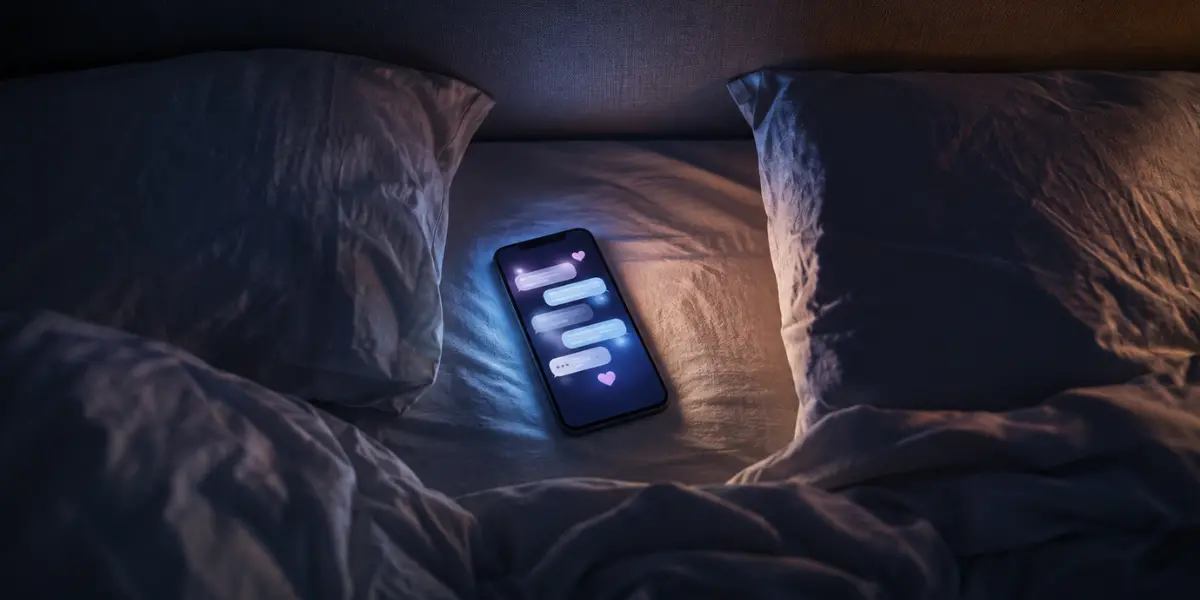
Therapists warn that the secrecy often surrounding an AI romance can be as painful as the relationship itself. When a partner discovers that someone’s phone lights up all night with messages from an AI named “Amara” or “Daniel,” the response can mirror the shock of discovering a text affair with a human. That is because the emotional connection is real, even if the other entity is not.
The Philosophical and Ethical Debate
There is also a significant philosophical argument over whether an AI can be loved or can return affection. Opponents of the stigma against AI relationships argue that because a machine cannot consent, cannot feel, and cannot break promises, no infidelity has occurred. The only relationship that exists is the one in the user’s head, they claim, and fantasy has historically not been considered betrayal.
However, many relationship researchers reject that logic. They note that most couples already place limits on real-world friendships. Partners routinely agree not to share certain emotional intimacies with others, such as saying “I love you” or talking about ongoing marriage problems. Once those boundaries are crossed, the physical identity of the receiver matters little.
The ethical conversation becomes even more complicated when discussing AI models trained on the data of real people. Some startups already offer “digital twins” where a grieving spouse or divorced individual can talk to a replica of an ex or a lost loved one. If one partner uses such a service to recreate an old flame, the sense of betrayal could feel enormous. The survey was taken before the wider deployment of such tools, but their appearance makes the cheating question even more urgent.
What This Means for Couples
As AI tools continue to improve and become embedded in everyday devices—smartphones, desktop apps, even virtual reality headsets—the opportunity for secret AI relationships will only grow. Experts advise couples to talk openly about how they intend to use technology before a problem occurs.
Some practical recommendations have emerged from counselors. First, couples should ask each other whether flirting with ChatGPT or another AI would be acceptable in their relationship. Second, partners should share their expectations about emotional boundaries rather than assuming the other has the same view. Finally, if one partner feels hurt by an AI relationship, that pain deserves the same seriousness as any other infidelity, even if the other partner dismisses it by saying, “It’s not a real person.”
Technological readiness appears to be outpacing social rules. A decade ago, no one had to decide whether a chatbot exchanging sweet messages with one half of a marriage represented a breach. That is a problem for modern couples, but also for the companies building these AI systems. Many have added safeguards against intimate content, while others market their products explicitly as “virtual girlfriends” or “boyfriends.” Those product decisions shape human behavior and create moral dilemmas for users who are trying to do the right thing in relationships.
Looking at Both Sides of the Divide
Those who answered “no” in the survey often argue that an AI cannot satisfy the need for physical intimacy or shared life milestones. A machine cannot hold hands, cook dinner, or help raise children. Some go further, suggesting that time spent with an AI could actually reduce cheating rates by allowing people to explore fantasies without involving another human being.
There is some evidence for that view. Japan has seen a growing trend of people retreating from traditional relationships entirely, choosing virtual dates with holographic singers and AI conversation partners instead. In extreme cases, real-world infidelity declines simply because fewer people are pursuing partners at all. But that does not necessarily provide comfort to a person already in a committed relationship who discovers that their partner has shared a secret emotional connection elsewhere.
Survey researchers point out that the narrow 50.5% margin shows society has not reached any clear consensus. They expect the debate to intensify as AI becomes more natural, more emotionally intelligent, and more widely used. Every improvement to AI realism will force couples, lawyers, and ethicists to revisit the meaning of loyalty and romantic partnership.
Already, divorce attorneys say they are beginning to see AI-related conflicts appear in family court cases. A spouse may act unusually secretive, one partner may run up charge cards for subscription fees, and records of thousands of private messages with a chatbot emerge in the discovery process. How those cases are judged will set lasting precedent. For now, the legal system treats these situations case-by-case, leaving couples uneasy about what the future holds.
Beyond the Single Statistic
The survey’s headline number of 50.5% stands as a milestone in public opinion, marking the first time a majority of Americans have been identified as viewing human-AI romance as infidelity. Yet the deeper meaning may lie in the many concerns behind that percentage. People worry about isolation, about technology supplanting genuine human connection, and about the vulnerability that comes from telling a stranger-like machine the most intimate details of one’s life.
Some researchers note that the same fears accompanied the rise of the telephone, the television, and the internet. Each new technology introduced new forms of connection and new threats to relationships. In that sense, the current hand-wringing over AI romance is part of a longer story about how humans define intimacy while adapting to changing communication tools.
As millions of Americans now hold strong opinions on AI and cheating, the conversation is no longer about the distant future. It is about things many people have already done or already found on a partner’s phone. The answer to whether an AI romance is a betrayal depends on the couple, but the growing consensus is that the feelings behind it are real and should not be ignored.
Moving forward, the technology will keep asking the same basic question: what do we owe to the people we love? Artificial intelligence has only changed how that question appears, not the human responsibility to find the answer together.
Source:AI News News