

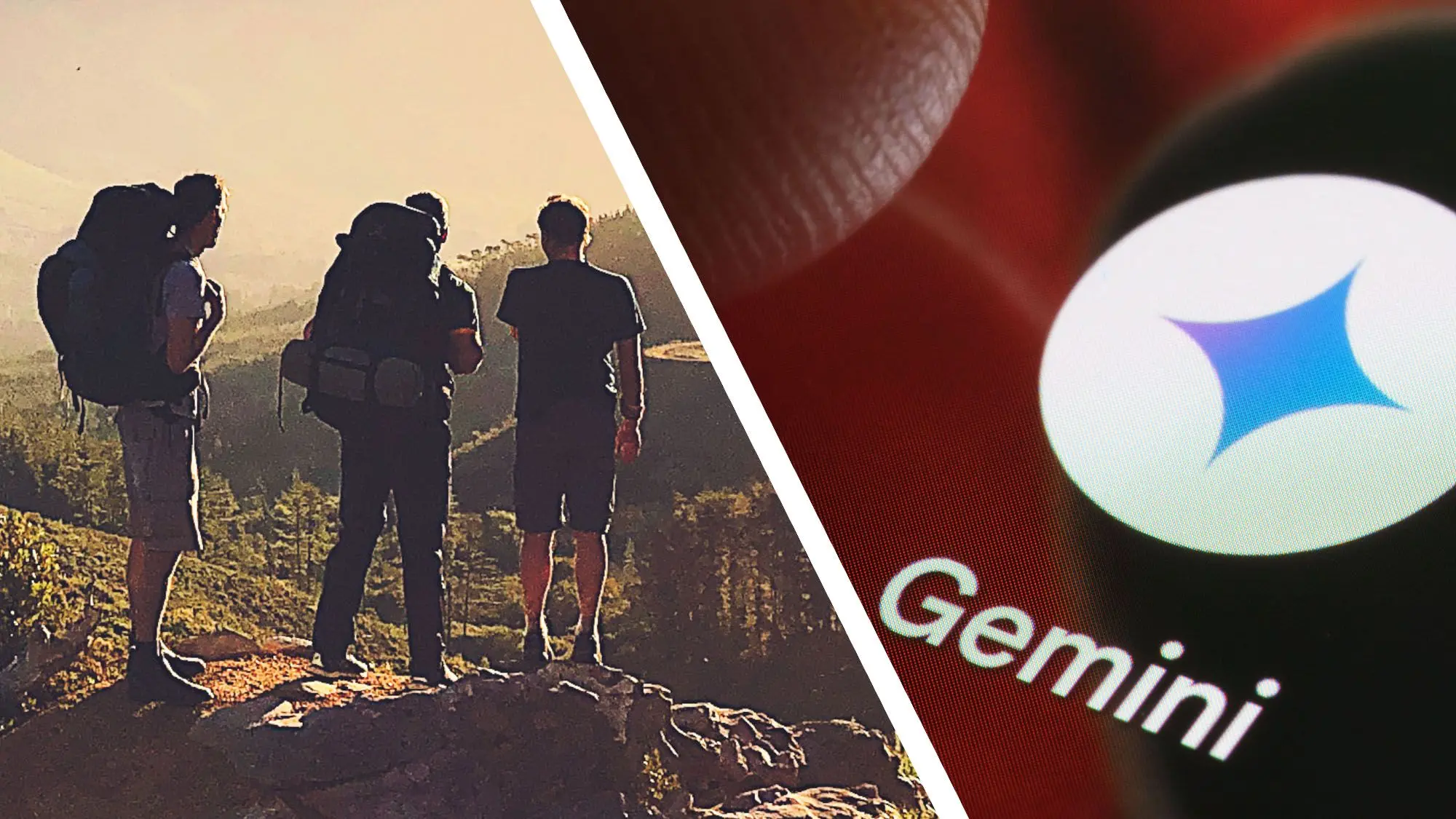
A group of climbers planning to summit California’s Mount Shasta found themselves stranded high on the mountain after following directions produced by Google’s Gemini artificial intelligence tool. The climbers later acknowledged that they had relied too much on AI as the ascent went badly wrong. The incident has since raised urgent questions about the limits of AI-generated route planning and the dangers of treating algorithmic advice as a substitute for real-world mountaineering expertise.
The climbers were attempting to reach the 14,179-foot summit of Mount Shasta, a massive stratovolcano in Northern California whose snow-covered slopes attract thousands of visitors each year. What they thought would be a manageable climb turned into an ordeal that required search-and-rescue personnel to intervene. The exact details of the team’s intended route and the specific Gemini instructions remain unclear, but the climbers said the error left them stranded and unable to continue safely.
What went wrong
According to preliminary accounts, the group entered details about their planned ascent into Google Gemini and relied on the system’s suggested path to guide them during the climb. Mount Shasta is not a simple walk-up. Although some routes are relatively non-technical in summer conditions, the mountain is still a serious alpine environment with sudden weather shifts, deep snow, exposed ridges, and crevassed glaciers. A route that appears reasonable on a screen can be wildly unsafe on the ground, especially when conditions change hour to hour.
The team reportedly followed Gemini’s guidance until they realized they were no longer on a viable climbing line. They became disoriented, unable to locate the next safe section of the ascent, and eventually recognized that they had to stop. At that point, they triggered an emergency response. Rescuers familiar with the area noted that mistakes in AI-generated directions often stem from the systems’ inability to assess snowpack stability, glacier cover, route finding hazards, and the physical endurance of the people following them.
No serious injuries were reported, but the outcome could have been far worse. Mount Shasta’s high elevations require climbers to move with confidence, carry proper gear, and know when to turn around. The climbers were found in a condition that allowed them to be escorted down after the incident, but their admission that they had trusted AI over their own judgment served as a stark reminder of the risks presented by generative AI in outdoor settings.
Why Mount Shasta punishes preparation mistakes
Mount Shasta is one of California’s most iconic mountains. It dominates the landscape around the towns of Mount Shasta and Weed, and rises more than 10,000 feet above the surrounding valleys. Its slopes feature steep snowfields, ice-covered rocky ledges, and weather that can cycle through sunshine, high winds, and whiteout conditions within minutes. Even experienced guides treat the mountain with respect.
Common routes include Avalanche Gulch, which starts at the Bunny Flat trailhead and climbs through steep snow and rock, and the Hotlum-Bolam Ridge route, which is longer and more remote. Each route demands different skills and decisions depending on the season. In spring, snow conditions can make glissading possible but also increase avalanche danger. In summer, melting snow exposes fissures and rockfall hazards. In winter, temperatures can drop far below freezing, and storms can bury a team in deep powder in a very short period.
Emergency responders on Mount Shasta have seen many incidents over the years involving climbers who lacked sufficient knowledge of the terrain. Some were too inexperienced to identify dangerous slopes. Others were overconfident because they had followed maps from mobile apps or websites. The rise of conversational AI tools has introduced a new layer of risk: climbers can ask a question and receive a polished, confident answer that may omit essential caveats or contain outright false routing information.
The California climbers’ experience is especially concerning because they apparently trusted Gemini to make decisions that should have been supported by a printed route guide, a topographic map, a compass, and ideally guidance from people who had climbed the mountain before. Mountain rescue volunteers often say that technology is useful only when it enhances situational awareness; it becomes dangerous when it replaces it.
AI hallucination and the outdoor industry
The term “AI hallucination” has become familiar to anyone who follows artificial intelligence. It refers to instances in which a language model generates plausible but false information. These mistakes can be harmless in casual conversation, but they can become serious when used for navigation. Google Gemini, OpenAI’s ChatGPT, and similar tools are not spatial reasoning engines. They are statistical language models that predict the next word based on patterns in their training data. They do not truly “know” a route; they assemble text that may mimic descriptions of a route. That process can produce directions that are shifted, blended, missing critical transitions, or completely invented.
Several technology commentators and outdoor recreation experts have warned that AI route planning should never be accepted without verification. National parks and climbing organizations have published advisories instructing visitors not to rely on ChatGPT or Gemini for trail and route information. They recommend using official paper maps, trailhead signs, and guidance from rangers and local outfitters. Some adventure-focused AI products attempt to use GPS data and established trail databases to improve accuracy, but even those tools struggle with dynamic mountain conditions such as avalanche debris, recent rockfall, melting out creeks, and temporary closures.
For a large mountain like Mount Shasta, route precision matters. A small error in a turn, a ridge crossover point, or an estimate of snow slope steepness can put climbers in a completely different drainage. The group involved in the recent incident may have been lucky to avoid a deadly fall or prolonged exposure. Their ability to call for help and be reached by rescuers is likely what saved them.
Rescue response and the human cost
Search and rescue teams historically respond to many calls on Mount Shasta. The Siskiyou County Sheriff’s Office coordinates with volunteers, Ski Patrol, and other agencies. In a typical year, rescuers handle stranded climbers, injured hikers, and people caught in unexpected weather. Each operation carries costs and risks, both for the subjects and the responders. When climbers are rescued from high elevations, helicopters may be required, and rescuers may need to travel along treacherous terrain at any hour.
In this latest incident, the climbers’ admission about using AI has circulated widely because it represents a new version of an old problem: people venturing beyond their abilities with incomplete preparation. In the past, a climber might have relied on a poorly chosen guidebook page or a vague memory of a friend’s route description. Now they can rely on an AI-generated itinerary that sounds authoritative but lacks the warnings and judgment calls that an experienced human would provide.
Those involved said they understood, after the experience, that they should have used more traditional planning methods. They also said they hoped other climbers would learn from their mistake. By speaking candidly about the role Gemini played, they may help prevent similar accidents. Even so, rescuers and climbing rangers worry that the broader trend toward AI-assisted adventure planning will continue to produce emergencies.
Experts warn against using general-purpose AI for route planning
Mountain guides who have reviewed AI-generated route descriptions often find that the technology produces directions that are superficially correct but dangerously incomplete. It may reference the correct trailhead and summit names while omitting crucial waypoints, recommended gear, time estimates, hazards, or alternate descent routes. On a mountain the size of Mount Shasta, an omission can mean the difference between reaching the summit and ending up lost in a remote basin at night.
Some experts have compared AI route planning to receiving directions from a stranger who has never walked the road. The stranger may have read about the road and can describe its general direction, but cannot warn you about construction zones, washed-out bridges, or areas where the pavement disappears. A mountaineering guide offers far more: years of personal experience, weather knowledge, physical training, and the ability to make real-time decisions based on observation.
Climbing organizations have increasingly suggested that AI tools should be used only during the early research phase, and only alongside sources created by humans who know the region. A climber might ask Gemini for a list of possible Mount Shasta routes, but then study official route descriptions, check current snow reports, consult recent trip reports from other climbers, and speak with rangers before making a commitment. That kind of multi-layered preparation greatly reduces the risk of being led into danger by an algorithm.
Technology and outdoor judgment
Technology is not inherently bad for outdoor experiences. GPS navigation, satellite messengers, avalanche transceivers, and weather apps have saved countless lives. Many climbers carry mobile phones with downloadable maps, emergency beacons, and communication devices that allow rescue teams to locate them quickly. These tools work best when used as additions to human skill. A GPS unit can tell a climber where they are on a map, but it cannot tell them whether the snow ahead is stable. A satellite messenger can summon help, but it cannot make the terrain less dangerous. The critical decisions remain human responsibilities.
The advent of generative AI has created a temptation to outsource planning and judgment. People ask AI to build their training plans, choose their gear, and design their climbing routes. That convenience can feel empowering, but it can also encourage passivity. If climbers stop practicing navigation, they lose the ability to detect errors before they become emergencies. The recent Mount Shasta incident demonstrates what can happen when that reliance goes too far.
AI tools can also produce authoritative warnings that contradict reality. In some cases, Gemini and ChatGPT have fabricated emergency phone numbers, invented permits, or described trails that do not exist. A climber who has no prior knowledge may not be able to tell the difference. This is why outdoor educators insist on teaching map reading, compass use, weather interpretation, and basic snowcraft. Those skills forming the foundation of safe mountaineering cannot be replaced by a chat interface.
What climbers should do before attempting Mount Shasta
Anyone planning to climb Mount Shasta should begin by choosing a route that matches their experience level. First-time summit seekers are usually encouraged to join a commercial guide service or climb with experienced partners. They should understand that altitude can affect judgment and physical strength. Acclimatization strategies, proper hydration, and rest are essential parts of a safe climb. They also need the right equipment, including mountaineering boots, crampons, ice axe, helmet, sunscreen, extra layers, headlamp, food, water, and a means to communicate beyond a phone that may have no signal.
Before setting out, climbers should check the latest conditions with the Mount Shasta Ranger District or climb in a designated wilderness permit area. They should read the avalanche forecast and understand the snowpack history. They should identify turn-around points and decide in advance that they will turn back if conditions do not match expectations. Using AI as a starting point is not necessarily disqualifying, but it should never be the final authority.
Those who do bring a phone or GPS device should also carry paper maps and a compass. Batteries can die in cold weather, screens can crack, and satellite coverage can disappear in steep terrain. A paper map does not require a signal. More importantly, the act of plotting a route on a map forces a climber to study the terrain carefully, notice important features, and think critically about how the mountain will look from ground level.
Learning from the Mount Shasta incident
The stranded California climbers have become unintended ambassadors for safe mountaineering. Their experience shows that even seemingly simple planning mistakes can have serious consequences when they occur at high altitude on a complex peak. They were willing to admit that they placed their trust in the wrong place, and that honesty may serve as a useful warning to other adventurers.
Mount Shasta will remain a magnet for climbers from all over the world. Its beauty is undeniable, and its rewards for careful climbers are very real. But the mountain also demands respect. Every year, it tests the preparation of everyone who attempts its slopes. Those who come unprepared, whether because of overconfidence, inexperience, or blind faith in AI, risk becoming another statistic in the long history of rescue operations.
The growing use of general-purpose artificial intelligence in outdoor recreation is not likely to decline. People will continue asking their phones for route advice, gear suggestions, and weather forecasts. Yet this incident offers a powerful reminder: a language model can generate words, but it cannot feel the instability of a snow bridge or see the looming clouds behind a ridge. Human judgment, honed by training and grounded in the physical world, remains the most important tool any climber can carry. The climbers who walked down from Mount Shasta after their rescue discovered that truth the hard way. Their hope now is that others will learn it without having to endure the same frightening wait on the mountain.
Source:TechRadar News