

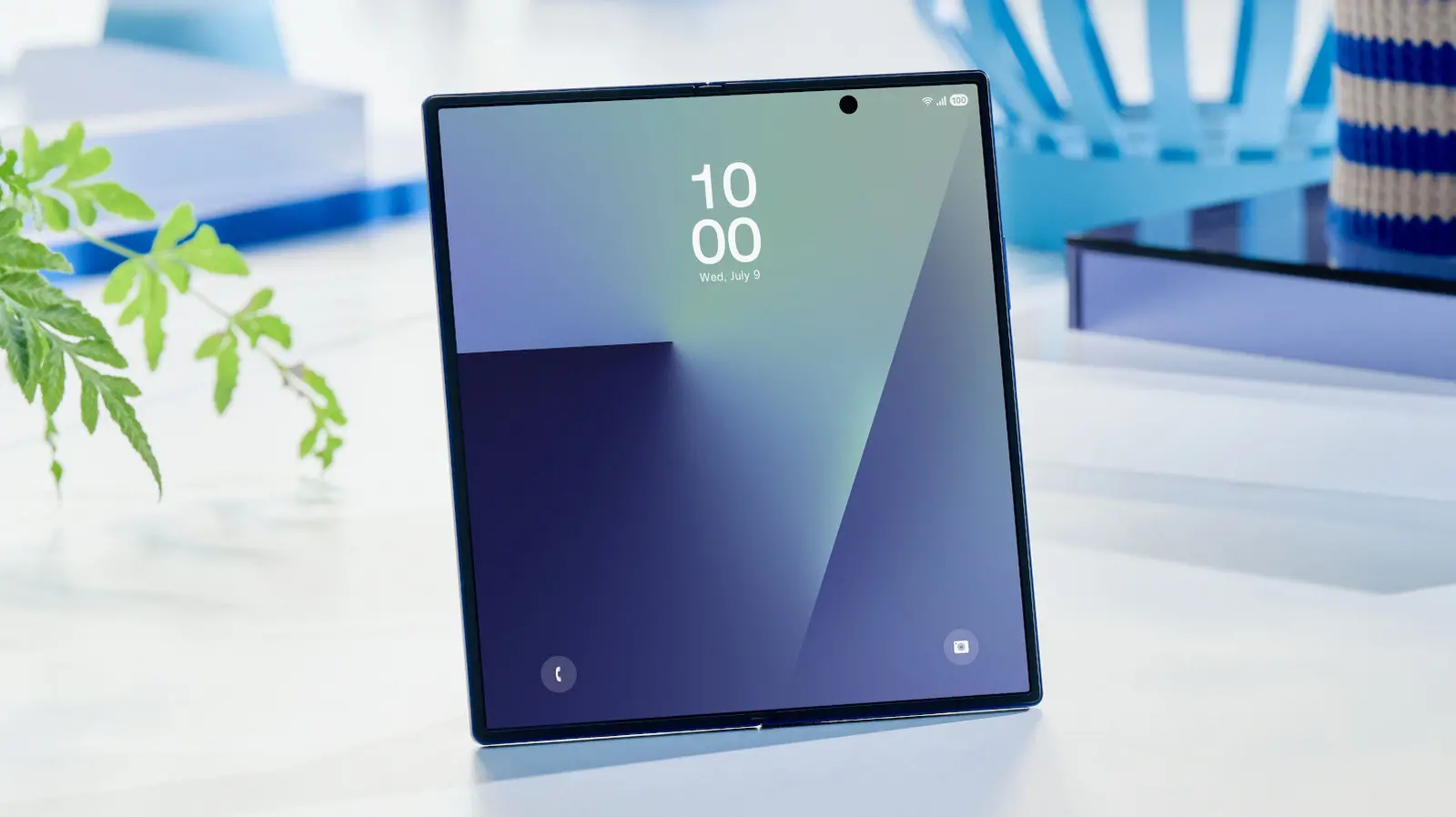
Samsung has introduced its new Flex Titanium display technology, which will debut with the next generation of Galaxy foldable devices. It features a new structure that uses material advancements to offer a more durable display with a less noticeable crease. The company says it was built on 'seven generations of foldable innovation and engineering expertise,' suggesting it will launch with the Galaxy Z Fold 8 and Flip 8. Samsung is expected to unveil the new foldables at its upcoming Unpacked event on July 22.
The company developed two components for the new display technology. One of them is a titanium alloy film that sits beneath the OLED panel, giving the display 20 times greater mechanical stiffness. Underneath that is a titanium plate, which provides stable support when the device is unfolded and retains the flexibility the phone needs to withstand repeated folding. The new titanium plate eliminates 'air gaps between the module and [its] adhesive through advanced hole processing technology.' Kyung-Jin Yoo, EVP for Samsung Display, said the 'micro-patterned holes' in the folding section of the titanium plate provide 'flexibility with robust durability.'
We only have a few days left before we can see for ourselves whether the next generation of Samsung devices truly have less visible folds. At CES earlier this year, however, we did see Samsung's 'seamless' foldable display exhibit, which showed a device with an invisible crease at the center. It made the Samsung phone with an older display tech, showcased beside it, look messy by comparison, with a very visible crease. 9to5Google also spotted a leaked video of what's purported to be the Galaxy Z Fold 8 Ultra, which shows a very smooth screen that has no visible crease.
The foldable smartphone market has evolved rapidly since Samsung launched the original Galaxy Fold in 2019. That first-generation device suffered from display failures, forcing Samsung to delay the release and redesign the hinge. Subsequent generations saw improvements in durability, water resistance, and crease management. The Galaxy Z Fold 3 introduced IPX8 water resistance, while the Fold 4 brought a lighter, thinner design. The Fold 5 refined the hinge to reduce the crease, but it remained visible. The Flex Titanium technology aims to finally eliminate that visual annoyance entirely.
Samsung's use of titanium is not entirely new; the Galaxy S24 Ultra featured a titanium frame, but this is the first time titanium has been used in the display layer itself. Titanium alloys are known for their high strength-to-weight ratio and corrosion resistance. By applying a titanium alloy film beneath the OLED, Samsung addresses a key weakness of foldable displays: the tendency for the screen to deform at the crease over time. The 20x increase in mechanical stiffness means the display is far less likely to show permanent creasing, even after hundreds of thousands of folds.
The titanium plate beneath the film adds a rigid base that prevents sagging or buckling when the device is open, while the micro-patterned holes allow it to bend smoothly when closed. This dual-layer approach is a significant departure from previous designs that relied on plastic or steel backplates. The advanced hole processing technology uses laser drilling to create precise patterns that distribute stress evenly, reducing the risk of material fatigue.
Competitors have also been working on reducing the foldable crease. Huawei's Mate X series uses an outward-folding design that inherently reduces crease visibility, but at the cost of screen protection. Oppo's Find N family uses a waterdrop-shaped hinge that creates a slight curve, making the crease less noticeable. However, Samsung's approach targets the root cause: the mechanical properties of the display stack itself.
The implications of this technology extend beyond smartphones. Samsung Display is a major supplier of flexible panels to other brands, including Google's Pixel Fold and various Chinese OEMs. If the Flex Titanium proves successful, it could become a standard component in future foldable devices from multiple manufacturers. Additionally, the technology could enable new form factors, such as tri-folding tablets or rollable displays, where durability is paramount.
Samsung's Unpacked event on July 22 is expected to showcase the Galaxy Z Fold 8 and Galaxy Z Flip 8, along with the Galaxy Watch 7 series and possibly new Galaxy Buds. The Fold 8 is rumored to feature a larger cover display, improved cameras, and the Snapdragon 8 Gen 4 processor. The Flip 8 may see a thinner design and larger battery. But the most anticipated feature is the new screen, which could make the crease a thing of the past.
Consumers have consistently cited the visible crease as a downside of foldable phones. In surveys, many potential buyers said they would consider a foldable if the crease were less prominent. With Flex Titanium, Samsung may finally address that concern, potentially accelerating the adoption of foldable devices in the mainstream market.
From a manufacturing standpoint, integrating titanium into the display stack is challenging. Titanium is difficult to work with due to its hardness and tendency to crack under certain conditions. Samsung's Display division likely developed new fabrication processes to create the ultra-thin alloy film and precisely drill the micro-holes in the plate. These innovations could give Samsung a competitive edge in display technology for years to come.
Furthermore, the Flex Titanium technology is not just about the crease. The increased stiffness also improves impact resistance, making the screen less likely to break if dropped. Combined with the existing Armor Aluminum frame and Gorilla Glass Victus 2 on the cover, the new foldables could be among the most durable ever made.
As the July 22 date approaches, anticipation builds. Tech enthusiasts and industry analysts will be watching closely to see if the leaked videos and CES exhibits hold true. If the Galaxy Z Fold 8 and Flip 8 deliver on the promise of an invisible crease, it could mark a turning point for the foldable category.
In the competitive landscape, Apple has yet to release a foldable iPhone, though rumors persist. Samsung's continued innovation in foldable displays keeps it ahead in this segment. The Flex Titanium technology represents a significant step, leveraging materials science to solve a persistent problem. With the Unpacked event just days away, the world will soon see if Samsung has truly perfected the foldable display.
Source:Engadget News