

A Promising Start with a Different Reality
Robinhood, the commission-free trading platform that democratized stock investing for millions, took a bold step into blockchain technology on July 1, 2026, with the launch of Robinhood Chain. Positioned as an Ethereum layer-2 scaling solution, the chain was meant to host tokenized stocks and other real-world assets (RWAs) within a regulated environment. The vision was clear: offer a bridge between traditional finance and decentralized finance, allowing users to trade fractional ownership of equities on a fast, low-cost network.
Yet, just two weeks after its launch, Robinhood Chain has taken on a life of its own. While the network has attracted roughly $312 million in total value locked (TVL) and processes an impressive 3.6 million daily transactions, the vast majority of this activity is not what its creators intended. Instead of tokenized Apple or Tesla shares, the chain is buzzing with memecoins — speculative tokens often based on internet jokes or animal mascots — and stablecoins used for trading pairs. According to on-chain data, the tokenized real-world assets that were the chain's raison d'être account for a mere $12.8 million of the total value, or about 4%.
The Memecoin Takeover
The most prominent asset on Robinhood Chain so far is a memecoin called $CASHCAT, which alone commands a market value of over $50 million. Other similarly themed tokens have sprung up, drawing traders looking for quick gains in a hot market. This phenomenon is not unique to Robinhood Chain. Throughout the crypto industry, new blockchains — especially those with low fees and fast finality — often become playgrounds for speculators before they attract more serious use cases. Solana and BNB Chain both experienced memecoin mania in their early days before finding product-market fit in DeFi and NFTs.
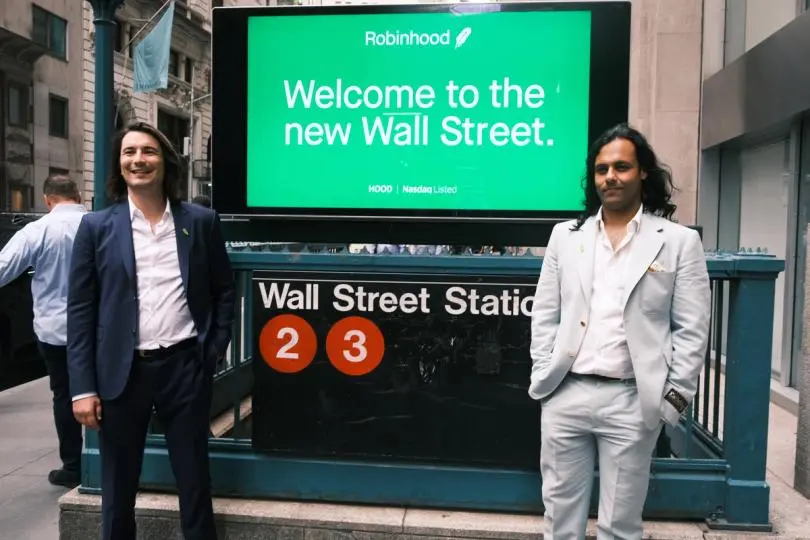
However, Robinhood's situation is particularly striking because the chain was explicitly marketed as a regulated venue for tokenized stocks. Robinhood had positioned itself as a compliant gateway between crypto and traditional finance, even securing licenses in several jurisdictions to issue tokenized equities. The company's co-founders, Baiju Bhatt and Vlad Tenev, had repeatedly emphasized that the chain would prioritize real-world assets over speculative tokens. In a blog post announcing the launch, they wrote: "We believe the future of finance is tokenized assets — not dog coins." Yet, the market has spoken, and it seems dog coins are very much the present.
Understanding Tokenized Stocks
Tokenized stocks represent ownership in real companies — like Apple, Tesla, or Amazon — recorded on a blockchain as digital tokens. Each token typically corresponds to a share of the underlying stock, redeemable through a regulated custodian. Proponents argue that tokenization can reduce settlement times from two days to near-instant, enable 24/7 trading, and allow for fractional ownership without traditional brokerage overhead. Robinhood's move into this space was seen as a natural extension of its mission to lower barriers to investing.
Several other platforms, including Backed and Swarm, have issued tokenized stocks on Ethereum, but none have achieved the kind of mainstream adoption that Robinhood envisaged. The challenge lies not in technology but in demand. Retail investors, especially those already in crypto, often prefer the high volatility and potential 1,000% returns of memecoins over the steady, single-digit growth of blue-chip stocks. Moreover, regulatory hurdles persist: while Robinhood secured permissions in some jurisdictions, tokenized stocks are still treated differently across countries, limiting their global appeal.
Stablecoins as the Backbone
Another major category of assets on Robinhood Chain is stablecoins — tokens pegged to fiat currencies like the US dollar. These serve as the primary trading pair for memecoins and facilitate liquidity within decentralized exchanges (DEXs) operating on the chain. According to recent data, stablecoins represent roughly $200 million of the $312 million TVL, providing a stable base for the speculative activity above them. While stablecoins are certainly a legitimate use case for any blockchain, their dominance here suggests that users are not yet holding long-term positions in tokenized stocks but are instead passing through to trade memes.
The presence of stablecoins is also double-edged. On one hand, they provide reliable liquidity and attract traders. On the other, they concentrate risk: should a major stablecoin depeg or face regulatory action, the entire ecosystem could suffer. Notably, Robinhood Chain does not yet have its own native stablecoin, relying instead on bridged versions of USDC and USDT from Ethereum mainnet. This reliance on external assets could pose challenges for network sovereignty in the long run.
800,000 Addresses and Counting
Since its launch, Robinhood Chain has onboarded over 800,000 unique addresses, a figure that includes both active wallets and less frequent users. This rapid adoption demonstrates the network's technical appeal: transaction fees are a fraction of a cent, and block times are under one second, making it one of the fastest Ethereum-compatible chains available. The chain uses a rollup architecture that batches transactions onto Ethereum for security while processing them off-chain for speed.
Much of this address growth can be attributed to airdrop farming — users interacting with the chain in hopes of receiving future governance tokens. Robinhood has hinted at potential token incentives but has not confirmed any specific plans. Nonetheless, the speculation has driven activity similar to that seen on other new L2s like Arbitrum and Optimism during their early farming phases. The question is whether these users will stick around once incentives dry up, or if organic use cases will take hold.
Implications for Robinhood's Strategy
The divergence between Robinhood's intended use case and actual on-chain activity raises strategic questions for the company. Should the firm embrace the memecoin culture and reposition the chain as a general-purpose L2 with additional RWA features? Or should it impose restrictions — such as mandatory KYC for asset issuance — to steer the ecosystem back toward its original goal? So far, Robinhood has taken a hands-off approach, allowing the market to decide. This laissez-faire attitude has worked for other chains, but it also risks diluting the brand's regulatory reputation.
Robinhood's core business — stock and crypto trading through its app — remains strong. The chain is still in its infancy, and many blockchain projects take years to find their stride. Ethereum itself was initially dominated by ICOs and later by DeFi and NFTs before evolving into a mature settlement layer. Similarly, Robinhood Chain may eventually attract institutional participants seeking to issue tokenized bonds, real estate, or private equity. But for now, the chain is a microcosm of the broader crypto market: speculative, fast-moving, and unpredictable.
Competitive Landscape
Robinhood Chain enters a crowded field of Ethereum layer-2s, including Arbitrum, Optimism, Base, and zkSync. Base, launched by Coinbase in 2023, has followed a similar trajectory: initially touted as a platform for on-chain finance, it became a hotspot for memecoin trading during the 2024 bull run. Base currently holds over $2 billion in TVL, with memes still accounting for a significant share. Robinhood's chain could learn from Base's evolution, which gradually attracted more DeFi protocols and even real-world asset platforms like Ondo Finance.
However, Robinhood has one advantage Coinbase lacks: a massive retail user base already familiar with stock trading. By integrating its chain with the main Robinhood app — allowing users to deposit, trade, and withdraw tokenized stocks seamlessly — the company could catalyze adoption. So far, such deep integration has not been announced, leaving the chain somewhat isolated from Robinhood's existing 23 million funded accounts.
Future Prospects
The fate of Robinhood Chain likely hinges on two factors: regulatory clarity and user education. If tokenized stocks gain clearer legal status in major markets like the US, EU, and Asia, institutional money may follow. Meanwhile, if Robinhood can educate its existing traders on the benefits of tokenized equities — such as 24/7 trading, instant settlements, and lower fees — the demand side may shift. Until then, memecoins will continue to drive activity, much to the chagrin of the chain's architects.
In the short term, speculative energy can be a double-edged sword. It brings liquidity, developers, and attention, but it also attracts scam projects and pump-and-dump schemes. Robinhood will need to enforce some level of quality control, perhaps by requiring smart contract audits or flagging suspicious tokens. Some chains have implemented memecoin taxes or anti-whale mechanisms, but Robinhood has yet to announce any such measures.
Ultimately, Robinhood Chain is still in its honeymoon period. The next few months will reveal whether it can mature into the regulated asset platform its founders envisioned, or whether it will remain just another blockchain overrun by meme-driven speculation. The industry will be watching closely.
Source:Coindesk News