

A new research report has shed light on a startling vulnerability in modern navigation systems: a solar storm caused GPS errors severe enough that self-driving cars relying on the signal could have crashed. The study, presented by a team of space weather and autonomous vehicle researchers, suggests that even moderate solar activity can significantly degrade the precision of global positioning systems, with potentially dangerous consequences for the growing fleet of driverless vehicles on our roads.
What Happened During the Solar Storm
The solar storm in question was not an extreme event like the Carrington Event of 1859, which caused telegraph systems to fail and sparks to fly from equipment. Instead, it was a moderate geomagnetic storm triggered by a coronal mass ejection (CME) that struck Earth’s magnetic field. During the storm, the ionosphere—the upper atmosphere layer that GPS signals pass through—became turbulent and unpredictable. This turbulence caused the GPS signals to slow and bend in erratic ways, leading to position errors that grew from centimeters to several meters over a short period.
For most everyday uses, a few meters of error is a nuisance—perhaps making a mapping app place a driver on the wrong street. But for autonomous vehicles, which operate within tightly defined lanes and require precise positioning to avoid obstacles, pedestrians, and other vehicles, a multi-meter error can be catastrophic. The researchers modeled how a self-driving car would respond to such a sudden GPS jump. In their simulation, the vehicle misinterpreted its location and veered into an adjacent lane, forcing a simulated collision scenario that would have resulted in a crash had there been no human driver to intervene.
How GPS Is Vulnerable to Space Weather
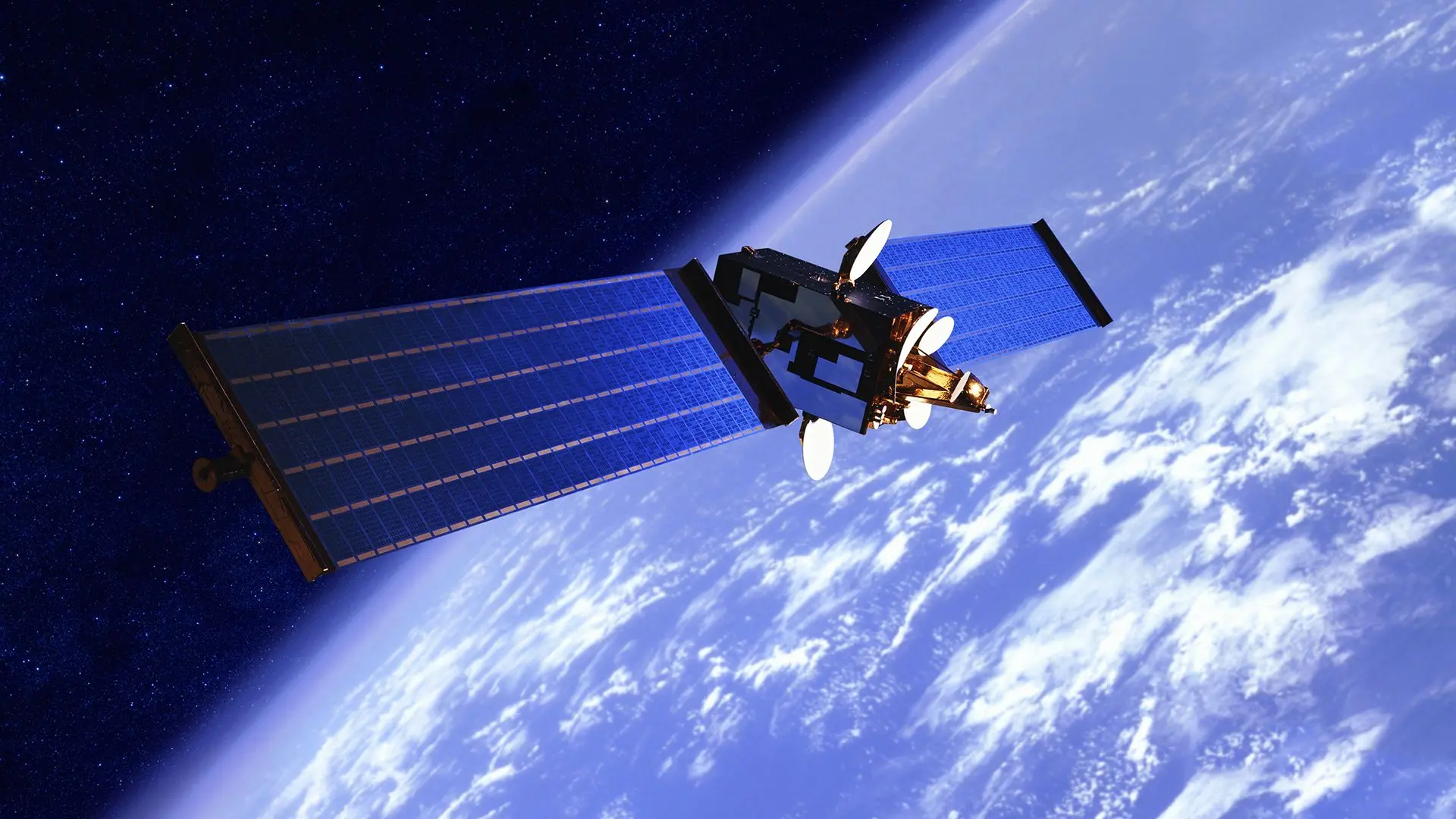
GPS satellites orbit about 12,550 miles above Earth, transmitting signals toward the ground. These signals travel through the ionosphere, a layer of charged particles that extends from roughly 60 to 600 miles above the surface. Normally, the ionosphere is relatively stable, but solar storms disturb it in ways that alter the speed and path of radio waves. This is known as scintillation and total electron content (TEC) variation. When TEC changes rapidly, GPS receivers have difficulty locking onto a stable position fix.
The problem is especially pronounced in high-latitude regions, where solar particles funnel along magnetic field lines. However, the new research found that mid-latitude regions—where many major highways are located—are also vulnerable. Even a relatively modest solar storm can produce enough ionospheric disturbance to degrade GPS accuracy below the safety threshold required for autonomous driving.
The Growing Dependence of Autonomous Vehicles on GPS
Self-driving cars use a suite of sensors: cameras, lidar, radar, and ultrasonic units. But GPS remains a critical component for global navigation and route planning. For a vehicle to know which lane it is in, it needs positioning accuracy of about 30 centimeters or better. This is typically achieved using a technique called real-time kinematic (RTK) positioning, which uses a fixed ground station to send correction data to the vehicle. RTK dramatically improves accuracy, but it still depends on the same GPS satellites and ionosphere. When the ionosphere is disturbed, the correction signals themselves become unreliable.
Moreover, autonomous vehicles often use high-definition maps that are geo-referenced to GPS coordinates. If the vehicle’s GPS says it is in a different position than the map believes it to be, the system may match its lidar scans to the wrong map elements, leading to confusion. In the researchers’ report, they described how a self-driving test vehicle forced to rely on a degraded GPS signal began to “jump” from one map position to another, causing the planning algorithm to command sudden steering corrections.
Past Incidents and Precursors
This is not the first time that space weather has affected modern technology. In 2003, a powerful solar storm damaged several satellites and caused airliners on transcontinental flights to be rerouted due to increased radiation exposure. In 2011, a significant solar flare disrupted GPS signals used by tractors in the U.S. Midwest, causing precision farming equipment to shut down. More recently, in 2017, a solar storm caused GPS outages for autonomous navigation systems in some agricultural and mining operations.
The aviation industry has been aware of space weather hazards for decades, with pilots given warnings and backup radio navigation aids. But self-driving cars have so far not integrated such redundancies. Most development testing has occurred during a period of relatively low solar activity, meaning that the vulnerability has gone unnoticed.
Implications for the Future of Autonomous Driving
As automakers like Tesla, Waymo, and others push toward fully autonomous vehicles, the new findings pose a serious question: should self-driving cars be allowed on public roads if they can be confused by a phenomenon that occurs several times per year? The solar minimum is currently approaching, but as solar cycle 25 ramps up, the frequency and intensity of geomagnetic storms will increase. Experts predict that over the next few years, we will see many more storms capable of causing GPS disruptions.
The researchers emphasize that their report is not meant to doom any particular company but to serve as a wake-up call for the industry. They recommend that autonomous vehicle manufacturers develop robust fallback systems that do not rely solely on GPS. For example, vehicles could be equipped with inertial navigation systems (INS) that measure acceleration and rotation, allowing them to bridge short gaps in GPS coverage. Visual odometry, which tracks the movement of features in camera images, can also provide relative position information. Additionally, vehicles could use cellular-based positioning signals or dedicated short-range communication (DSRC) with roadside infrastructure as a complement to GPS.
The Role of Government and Regulation
Government agencies, particularly in the United States, are beginning to take notice. The Federal Aviation Administration has long operated a network of GPS ground stations that monitor space weather and issue alerts for aviation. Similar systems are now being proposed for ground transportation. The National Oceanic and Atmospheric Administration (NOAA) already provides space weather forecasts and warnings, and its data could be integrated into autonomous vehicle systems. For instance, a car could receive a real-time alert that GPS accuracy is degraded, and then shift to a more conservative driving mode or pull over to a safe location.
However, such safeguards are not yet part of any mandatory standard. Regulatory bodies like the National Highway Traffic Safety Administration (NHTSA) have issued guidelines for autonomous vehicles, but they do not yet include specific requirements for resilience to space weather. The researchers argue that this must change in order to ensure the safety of self-driving vehicles.
How to Prepare for a Solar Storm
For today’s human drivers, a GPS glitch is easily managed by using landmarks and road signs. But as we transition to a future with more autonomous vehicles, we must prepare for the unpredictability of space weather. The research group suggests several steps: first, expand real-time monitoring of the ionosphere over land regions where autonomous vehicles will operate. Second, develop better models to predict how solar storms will degrade GPS signals at specific locations. Third, encourage the automotive industry to adopt multi-sensor fusion that can gracefully handle GPS loss. Finally, educate the public and policymakers about the risks.
The solar storm that triggered this report was observed by ground-based GPS networks in North America. The researchers were able to analyze the data afterward and reconstruct the events. Their work underscores the fact that our dependence on satellite navigation extends far beyond finding the nearest coffee shop. It is now a safety-critical infrastructure for the emerging era of self-driving cars.
Looking Ahead: Solar Cycle and Autonomous Vehicle Testing
The next few years will be a test bed for autonomous vehicle technology, with hundreds of thousands of partially automated vehicles already on the roads. As solar activity increases, there will undoubtedly be more incidents like the one described in the report. The researchers note that autonomous vehicle testing should be restricted during periods of severe space weather until the industry has implemented adequate redundancies. Some companies have already begun to use “simulated solar storms” in their testing environments, intentionally degrading GPS signals to see how their vehicles respond.
The report concludes with a clear message: the threat is real, but it is manageable. With proper planning, engineering, and regulation, self-driving cars can be made resilient to the Sun’s tempests. But without these measures, a solar storm could cause more than just a glitch—it could cause a catastrophe.
Source:TechRadar News