

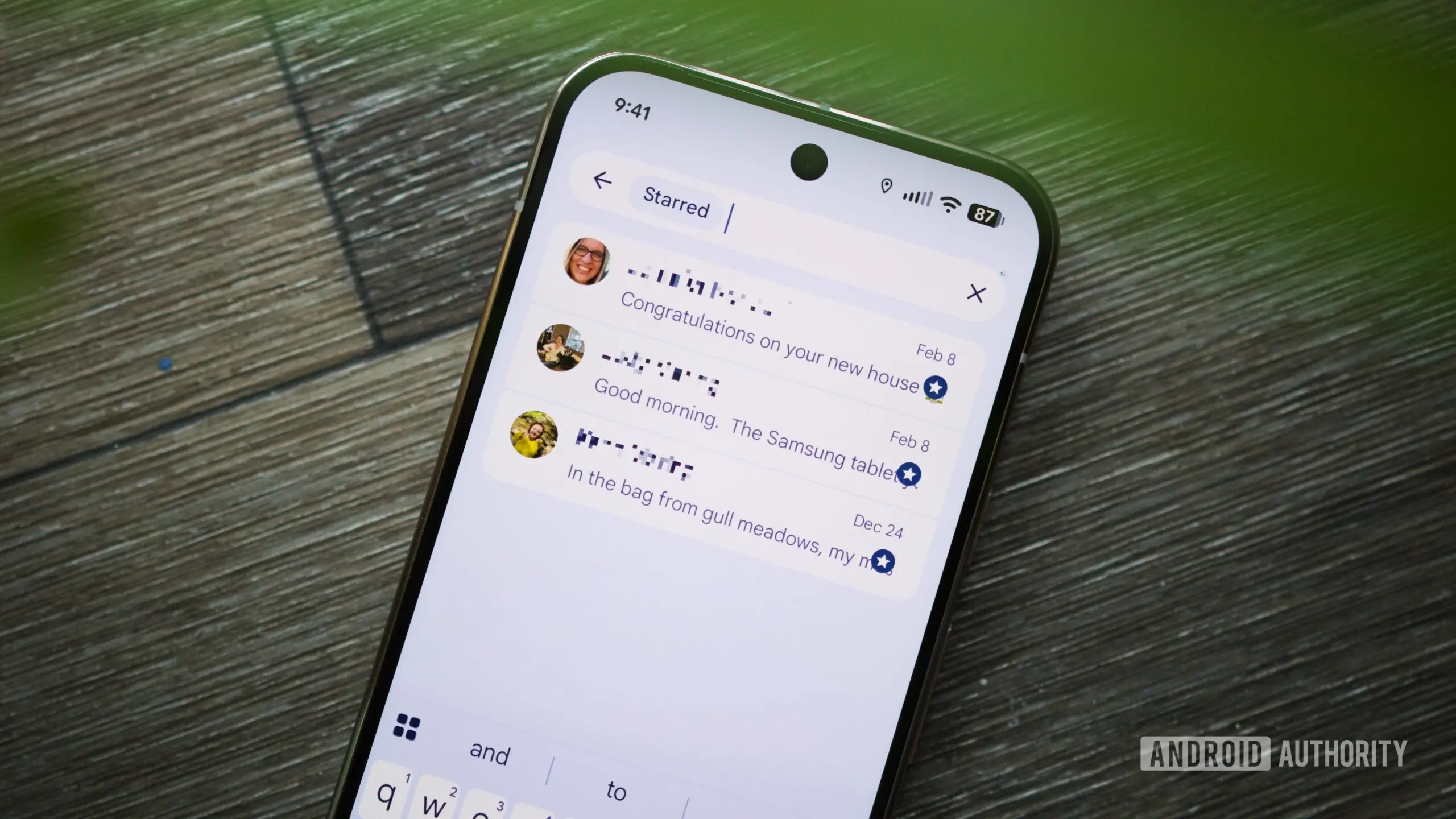
The GSMA has officially published the specifications for RCS Universal Profile 4.1, a significant update that prioritizes backend reliability, end-to-end encryption interoperability, and overall platform stability. While the previous version brought eye-catching features like native video calls and rich text formatting, this iteration focuses on the behind-the-scenes infrastructure that makes modern messaging fast, secure, and dependable. For consumers, the most tangible benefits are new privacy controls for profile sharing and a leaner transport protocol that cuts battery drain and speeds up message delivery.
RCS, or Rich Communication Services, is the modern messaging standard designed to replace traditional SMS. It enables features like read receipts, typing indicators, high-resolution media sharing, and group chats across different carriers and platforms. Universal Profile is a set of specifications developed by the GSMA to ensure interoperability among RCS implementations. Version 4.1 builds on that foundation with targeted improvements that address lingering weaknesses in cross-platform performance and user control.
Key facts at a glance
- GSMA has released RCS Universal Profile 4.1 specifications, focusing on backend reliability and E2EE interoperability.
- Native profile-sharing controls allow users to choose explicitly who can view their name and profile picture in individual or group chats.
- An optimized gRPC connectionless transport protocol offers faster message delivery, reduced battery drain, and improved connection stability.
- The update follows Universal Profile 4.0, which introduced native video calls and rich text formatting.
- Cross-platform RCS messaging between Apple and Google devices should become less prone to backend glitches.
A shift toward backend reliability
The GSMA's announcement clarifies that Universal Profile 4.1 is largely about addressing the "plumbing" of modern texting. Prior updates focused heavily on user-facing features, but the industry has recognized that a messaging protocol is only as good as its underlying infrastructure. This update therefore includes refinements to End-to-End Encryption interoperability, ensuring that encrypted messages work seamlessly across different services and operating systems. It also aims to reduce backend glitches that have historically plagued cross-platform RCS communication.
This shift is a response to real-world challenges. As RCS adoption has grown, so have the complexities of maintaining consistent performance across networks, devices, and messaging apps. Backend failures, message routing errors, and synchronization problems are among the most common complaints from users. By focusing on reliability, the GSMA is addressing the core issues that can undermine confidence in RCS as a viable SMS replacement.
Granular privacy controls for profile sharing
One of the most consumer-visible improvements in Universal Profile 4.1 is the introduction of native profile-sharing controls. Previously, profile details such as your name and profile picture were often shared indiscriminately or not at all, depending on how a particular RCS client handled them. With the new spec, users can display their name and profile picture directly in group and individual chats, sourced from their Google, Apple, or carrier account.
What makes this feature particularly noteworthy is the granular level of control it provides. Users can explicitly choose who gets to see their profile details and who does not. This means you can share your name and photo with close contacts while remaining anonymous to strangers in large group chats. The privacy toggles are designed to be intuitive, allowing users to manage their visibility in a way that aligns with their comfort level. This addresses long-standing concerns about privacy in messaging applications, where profile information is often shared with the entire contact list by default.
The ability to control profile visibility is also a step toward aligning RCS with the privacy features found in popular over-the-top messaging apps like WhatsApp and Signal. However, the GSMA's approach is more flexible, as it allows for per-chat or per-group customization rather than a one-size-fits-all setting. This is particularly useful in business messaging contexts, where a user might want to share their profile with a trusted customer service representative but not with a promotional broadcast list.
Faster, lighter messaging with gRPC transport
Another major technological advancement in Universal Profile 4.1 is the adoption of gRPC, a high-performance remote procedure call framework originally developed by Google. The spec transitions messaging and signaling data to an optimized, connectionless gRPC transport protocol. Unlike traditional HTTP-based approaches that maintain bulky persistent connections, this connectionless model moves data more efficiently and with lower resource consumption.
For end users, the benefits are substantial. The lighter transport mechanism reduces battery drain because devices no longer need to keep a constant network connection open just to wait for incoming messages. Instead, the connectionless approach allows for more efficient use of network resources, resulting in faster message delivery and improved reliability in group chats or business RCS interactions.
Network stability is also enhanced. Because the transport protocol is more resilient to connection interruptions, messages are less likely to get stuck or arrive out of order. This is especially important in low-bandwidth environments or when moving between Wi-Fi and cellular networks. The GSMA's decision to embrace gRPC reflects a broader industry trend toward efficient, scalable communication protocols that can handle increasing data volumes without sacrificing performance.
The evolution of RCS Universal Profile
RCS Universal Profile 4.0, released earlier, introduced several user-facing features that brought RCS closer to modern messaging apps. Native video calls allowed users to initiate video conversations directly from their default messaging app, while rich text formatting enabled bold, italic, and strikethrough text in messages. Those features helped position RCS as a feature-rich alternative to proprietary messaging platforms.
With version 4.1, the GSMA is building on that momentum. While the changes may not be as flashy as video calls or text formatting, they are arguably more important for the long-term viability of RCS. A messaging protocol that is unreliable or insecure cannot compete with established players like iMessage or WhatsApp. By strengthening the backend and introducing robust privacy controls, the GSMA is demonstrating a commitment to quality and user trust.
The timing of this update is also significant. Apple and Google have been working to unify mobile messaging around the RCS standard, with Apple adding RCS support in iOS and Google expanding RCS availability to more Android devices. As the two dominant mobile platforms converge on a single messaging standard, the need for interoperability and reliability becomes paramount. Universal Profile 4.1 aims to deliver exactly that, ensuring that an encrypted text sent from an iPhone to an Android device—or vice versa—works flawlessly.
Why E2EE interoperability matters
End-to-end encryption has become a baseline expectation for messaging apps. Users want to know that their conversations are private and secure from prying eyes, including telecom operators and malicious actors. RCS has lagged behind in this area, with encryption often implemented inconsistently across different carriers and clients. Universal Profile 4.1 addresses this by refining E2EE interoperability across platforms.
This is not a simple technical challenge. Implementing E2EE across a diverse ecosystem of carriers, device manufacturers, and software developers requires coordination and standardized protocols. The GSMA's specifications provide a framework for how encryption keys are managed, how messages are authenticated, and how encrypted sessions are established. With 4.1, the organization aims to make these mechanisms more robust and compatible, reducing the risk of security loopholes or failed encryption handshakes.
The focus on E2EE interoperability also benefits businesses that use RCS for customer communication. A financial institution sending sensitive account alerts, for example, needs certainty that those messages are secure regardless of the customer's device or carrier. The strengthened encryption standards in Universal Profile 4.1 will help maintain that trust.
Impact on group chats and business messaging
Group chats are among the most demanding scenarios for any messaging protocol. They require efficient synchronization of messages across multiple recipients, ensuring that everyone receives messages in the correct order and without duplicates. Network hiccups can quickly turn a group conversation into a frustrating experience. The connectionless gRPC transport introduced in Universal Profile 4.1 directly addresses these issues by reducing the overhead associated with maintaining persistent connections.
Business RCS interactions, such as customer support chats or appointment reminders, also stand to benefit. These use cases often involve a mix of automated systems and human agents, and they require reliable, low-latency communication. The improved transport protocol helps ensure that messages are delivered promptly, even in high-volume environments. Additionally, the granular privacy controls give customers the ability to share their profile details with businesses they trust while withholding them from unwanted marketing communications.
The broader landscape of mobile messaging
The messaging industry is highly competitive, with dozens of apps vying for attention. However, RCS has a unique advantage: it is built into the default messaging experience of most Android devices and is now supported by Apple's iPhone. This ubiquity means that RCS has the potential to become the default standard for rich communication across all mobile users, eliminating the need to download a third-party app.
But ubiquity alone is not enough. Users expect features and reliability comparable to the best messaging platforms. The update to Universal Profile 4.1 signals that the GSMA recognizes this and is willing to invest in the infrastructure needed to make RCS competitive. The combination of privacy controls, efficient transport, and improved encryption interoperability positions RCS as a modern messaging standard that respects user preferences and delivers a seamless experience.
With these refinements, RCS Universal Profile 4.1 represents a significant step toward a future where mobile messaging is fast, secure, and truly interoperable. Consumers have new tools to manage their digital identity, while the underlying technology ensures that messages travel efficiently and reliably. As Apple and Google continue to embrace RCS, the importance of such backend updates cannot be overstated. The focus on stability and privacy will help RCS fulfill its promise as a universal messaging standard for the modern era.
Source:Android Authority News