

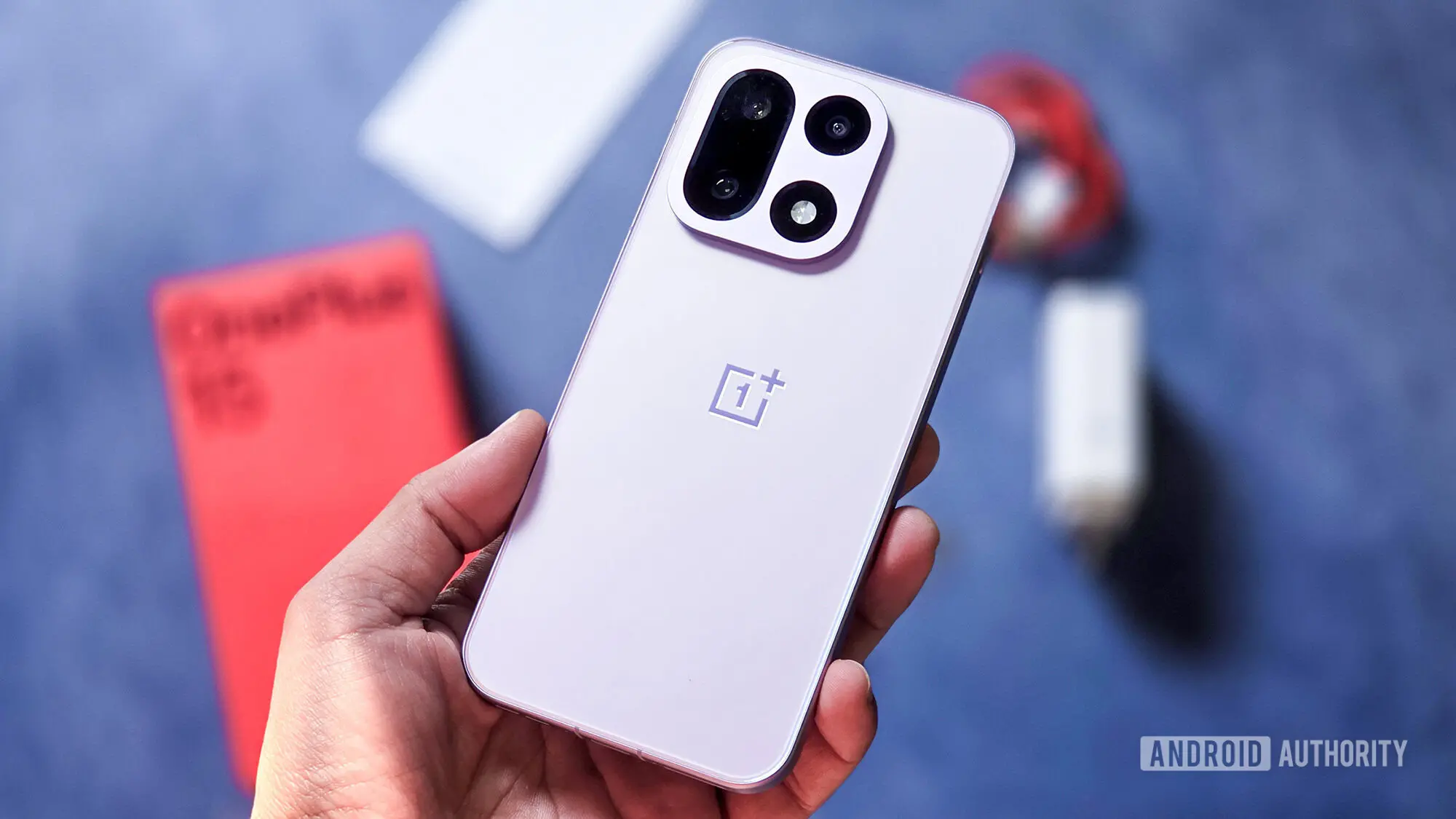
OnePlus has officially confirmed that the OnePlus 16 is real. The news arrives just months after the company announced it would no longer sell its smartphones in North America and Europe, making this the first flagship from the brand after that decisive strategic shift.
OnePlus's Changing Strategy
For those unfamiliar with OnePlus's history, the company was founded in 2013 as a challenger brand, offering flagship-level hardware at aggressive prices. Its early tagline, “Never Settle,” helped it build a loyal fanbase in North America, Europe, and its home market of China. Over time, though, the brand scaled back its ambitions. It merged with OPPO, and its product lines began to blur with those of its parent company. Even so, the OnePlus flagship remained a fixture for Android enthusiasts.
Earlier this year, OnePlus announced a major restructuring. The company said it would stop selling its phones in North America and Europe, focusing instead on markets where it believed it could achieve sustainable growth. The move was a blow to fans in those regions, many of whom had stuck with the brand since its early days. However, the announcement also clarified that OnePlus had no intention of shutting down its research and development or ending its flagship lineup. The OnePlus 16 is proof of that commitment.
OnePlus 16: Official Confirmation
The official confirmation of the OnePlus 16 came when OnePlus executive Liu Baoyou attended the Snapdragon Gaming Technology Awards in China. According to a company post on Chinese social media, Liu used the occasion to reveal that the OnePlus 16 is indeed under development. An accompanying slide reportedly outlined several key specifications, including a 165Hz screen and a pair of gaming-related features that build on the foundation laid by the OnePlus 15.
This announcement was little surprise to industry watchers. Several leaks had already pointed to the phone's existence, with specifications and possible release windows floating around the web. Still, having the company itself acknowledge the device adds a layer of credibility. The slide reportedly used at the event listed the 165Hz display, a technology that OnePlus calls the “Wind Chaser” gaming core, and a triple-chip design tailored for mobile gaming.
A Display Built for Speed
The 165Hz screen is a notable upgrade. The OnePlus 15, the company's most recent flagship, featured a display with a lower refresh rate. While many modern smartphones offer 120Hz or 144Hz panels, 165Hz is less common and is generally reserved for gaming-focused devices. A higher refresh rate means more frames per second can be displayed, which can make fast-moving games feel smoother. For esports titles that support high frame rates, the difference is tangible. OnePlus appears to be betting that its audience cares about these details, particularly in markets like India and Southeast Asia, where mobile gaming is extremely popular.
Gaming-Centric Technologies
In addition to the display, OnePlus will bring over its “Wind Chaser” gaming core. The feature was previously branded as the OP Gaming Core on the OnePlus 15. It is essentially a chip-level gaming engine that works with the processor to optimize performance, reduce frame drops, and manage thermals. The company describes it as a suite of software and hardware-level optimizations. On the OnePlus 15, this system was well received by reviewers who tested demanding games like Genshin Impact and PUBG Mobile. The OnePlus 16's version is expected to be even more sophisticated.
A Triple-Chip Design
The triple-chip setup is another pillar of the OnePlus 16's gaming focus. According to details shared at the award ceremony, the phone will combine the Snapdragon 8 Elite Gen 6 Pro processor with a dedicated Wi-Fi chip and a touch-response chip. Each component plays a specific role. The Snapdragon chip is the main engine, handling raw performance. The dedicated Wi-Fi chip aims to improve connectivity, reducing latency and maintaining a stable connection during online gaming sessions. The touch-response chip, meanwhile, is meant to make touch input faster and more precise, which is critical for competitive gameplay.
This is not the first time OnePlus has used a triple-silicon solution. The OnePlus 15 had a similar architecture, combining its flagship Snapdragon chip with complementary components. The fact that OnePlus is iterating on this approach suggests that the company believes the strategy is working. For gamers, the benefit could be noticeable in terms of network stability and input lag.
What Else to Expect
Beyond the confirmed features, leaks and reports have illuminated some of the other hardware expected from the OnePlus 16. The phone is tipped to launch with the Snapdragon 8 Elite Gen 6 Pro chipset, which would be in line with the gaming focus. A massive 9,000mAh battery is also rumored, which would be a significant jump from most current flagships. Large batteries are essential for gaming phones because high-refresh-rate displays and powerful processors drain energy quickly. The OnePlus 16 is also reportedly going to feature a 200MP periscope camera, which would be a major improvement over previous OnePlus camera systems.
It's worth noting that some of these details are unofficial. OnePlus has not confirmed the camera or battery specifications. However, the company has a history of outfitting its flagships with generous batteries and capable camera hardware. If these leaks are accurate, the OnePlus 16 will be a well-rounded device that appeals to gamers and general users alike.
Launch Window
OnePlus executives have said that the OnePlus 16 will launch in the second half of the year. That is a relatively wide window, but a more concrete date has emerged from leaks. Multiple sources have pointed to an October release. If that holds, it would mean the phone arrives around the same time as other flagship launches from competing brands. The timing is notable because it positions the OnePlus 16 as a direct challenger to whatever Apple, Samsung, and other Android manufacturers have planned for the holiday season.
Should You Import the OnePlus 16?
Because the OnePlus 16 will not be sold officially in North America or Europe, interested buyers in those regions will need to consider importing. Importing a phone can be appealing, especially if the device offers hardware that is not available locally. Some online retailers specialize in importing Chinese-market devices. However, potential buyers should keep a few things in mind. Importing may void the warranty, and network compatibility could be an issue. OnePlus typically supports a wide range of LTE and 5G bands, but not every model works on every carrier. It is always wise to check band compatibility before making a purchase.
Another factor is software. The Chinese version of OnePlus phones often runs a different firmware, and unlocking the bootloader or switching to a global ROM can come with complications. Some importers prefer to wait for community-developed stable ROMs. Others simply use the phone with its original software, which usually includes Google Play services in recent years, though not always in the same way as global models.
For enthusiasts who have followed OnePlus since its early days, the confirmation of the OnePlus 16 is a reminder that the brand's engineering ambition remains intact, even as its retail strategy has shifted. The phone may not be available in every market, but it is clearly still designed to compete at the highest level. With a 165Hz screen, gaming-centric technologies, and powerful internals, the OnePlus 16 is shaping up to be one of the more interesting Android flagships of the year — at least for those willing to get it into their hands.
Source:Android Authority News