

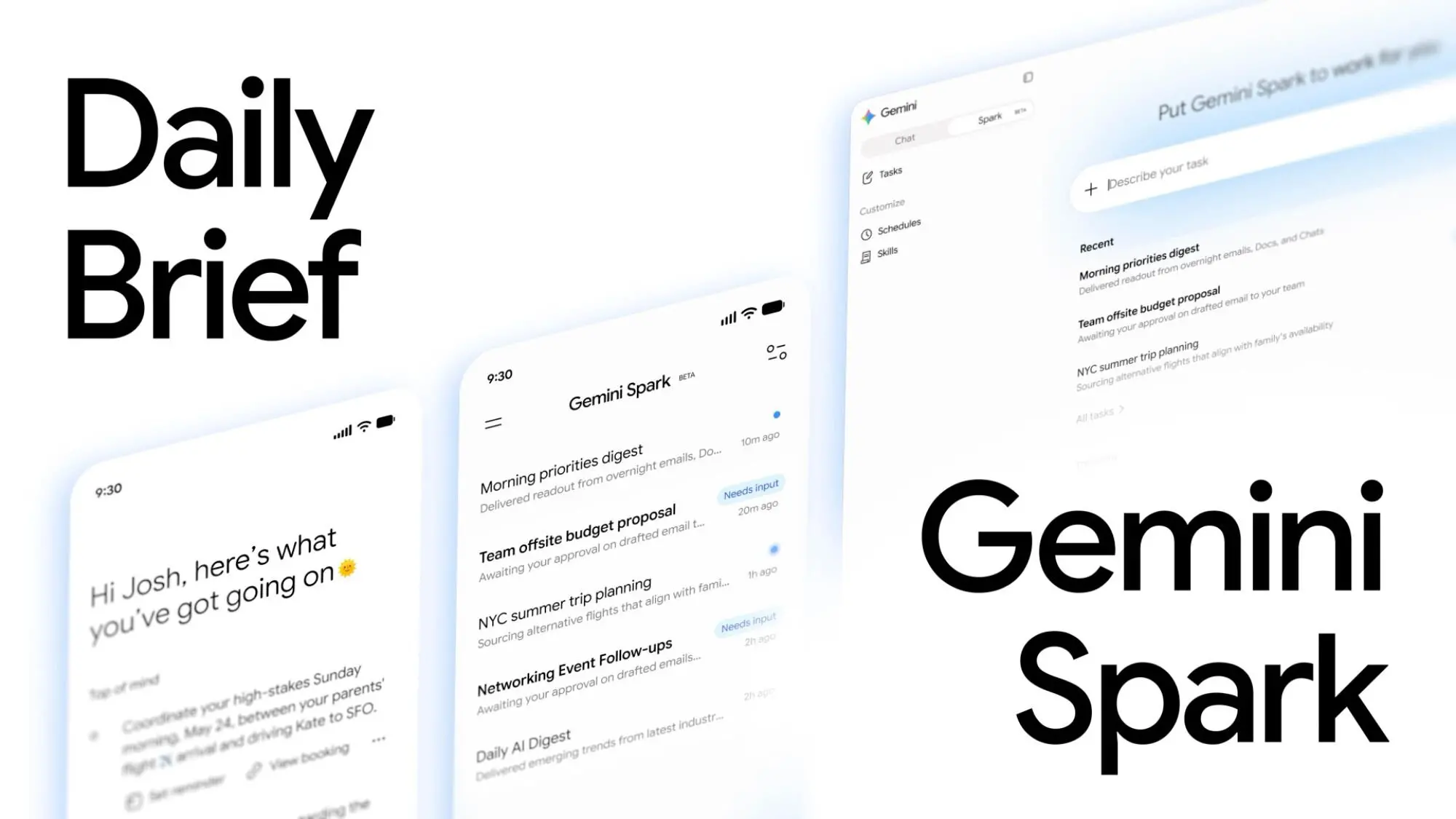
Google's Gemini Spark is now integrated with Chrome, marking a significant step forward in the company's vision for AI-driven web automation. The new feature allows the assistant to tap into your signed-in accounts and saved credentials to perform repetitive online tasks on your behalf, with your explicit permission. From browsing apartment listings to comparing flight options, Gemini Spark aims to streamline digital busywork and save users precious time.
This development comes at a time when AI assistants are increasingly moving beyond simple query-answering and into proactive task execution. With Chrome's deep integration into daily web usage, Gemini Spark is positioned to become a central hub for managing personal and professional online activities. However, the feature also raises important questions about privacy, trust, and the trade-offs between convenience and control.
Key facts about Gemini Spark's Chrome integration
- Gemini Spark can now use your signed-in accounts and saved credentials from Chrome to automate web tasks, but only with your permission.
- Sensitive actions, such as making a payment or finalizing a booking, require explicit user approval before the AI proceeds.
- The feature includes built-in protections against prompt injection attacks to reduce the risk of malicious manipulation.
- Web automation is initially rolling out in the United States, with a broader international expansion planned for the future.
- Google is also making Gemini Spark available to Google AI Pro subscribers in more than 160 additional countries.
How Gemini Spark uses Chrome to automate tasks
The new Chrome integration works by giving Gemini Spark access to the browser's existing user data, including login status, saved passwords, and stored credentials. When a user permits, the AI can navigate websites, fill out forms, and even interact with web applications to complete multi-step tasks. For example, if you have bookmarked several apartment listings, Gemini Spark could email landlords to inquire about availability, or it could compare flight prices across multiple travel sites and present you with a shortlist.
What makes this different from earlier AI tools is the level of access. Instead of relying on manual inputs or separate integrations, Gemini Spark works directly within the Chrome ecosystem you already use. The assistant can leverage cookies and session data to act as though you were performing the actions yourself. This allows for a more seamless experience, but it also requires a higher degree of trust in the AI's ability to behave responsibly.
The process is designed to be user-controlled. Before Spark takes any action, it communicates what it intends to do and requests permission. For routine tasks like gathering information or drafting messages, the AI operates autonomously once approved. However, for actions that carry financial or legal consequences, Spark pauses and asks for explicit confirmation. This layered approval system is intended to give users peace of mind while still delivering meaningful automation.
Privacy and trust: The double-edged sword of AI access
For many users, Chrome is more than just a browser—it is a repository of sensitive personal data. Saved passwords, stored payment methods, browsing history, and always-logged-in accounts make it a prime target for both legitimate automation and potential abuse. By granting Gemini Spark access to this treasure trove, users are effectively trusting the AI not only with their data but also with their digital identity.
This is where opinions diverge. Productivity enthusiasts see this as a natural evolution, where an AI agent handles the mundane chores that distract from more meaningful work. They point out that the technology is opt-in, and users can revoke access at any time. On the other hand, privacy advocates warn that even with safeguards, the risk of a security breach or misuse remains. If an AI has access to your email, social media, and banking credentials, a single vulnerability could have devastating consequences.
Google has sought to address these concerns by implementing strict permissions and transparency features. Users can see exactly what Spark is doing in real time, approve every sensitive action, and limit the types of tasks the AI is allowed to perform. Additionally, the company has invested in prompt injection defense measures. Prompt injection is a technique where malicious websites or emails attempt to trick an AI into executing unintended commands. By filtering such attempts, Google aims to prevent hackers from hijacking Gemini Spark to perform actions the user never authorized.
Despite these safeguards, the question remains: How much convenience are users willing to trade for privacy? The answer likely varies from person to person. Some will gladly hand over control to save half an hour a day, while others will view the access as an unacceptable encroachment on their personal digital space.
The broader evolution of AI web agents
Gemini Spark's Chrome integration is not occurring in a vacuum. It is part of a larger trend in the tech industry toward AI agents that can operate beyond simple chat interfaces. Competitors like OpenAI and Microsoft have introduced similar features in their own ecosystems, allowing AI to browse the web, manage emails, and interact with third-party services. What sets Gemini Spark apart is its tight coupling with Chrome, which holds a significant share of the global browser market.
By leveraging Chrome's existing infrastructure, Google gains a unique advantage. The browser already stores a wealth of context about user preferences, frequented websites, and saved passwords. This allows Gemini Spark to make more informed decisions and act with a level of personalization that third-party apps might lack. At the same time, it deepens Google's already substantial influence over users' online experiences, raising antitrust and ethical questions about data monopolies.
The introduction of AI web agents also forces a reevaluation of how we define operating systems. Historically, the browser has been the gateway to the web, but now it is becoming a foundation for autonomous software. With an AI layer on top, Chrome can function as a virtual assistant that understands your habits and anticipates your needs.
What this means for everyday users
For the average person, the most immediate benefit of Gemini Spark's Chrome integration is time savings. Consider a common scenario: planning a vacation. You need to compare flights, check hotel availability, and read reviews—all tasks that can consume a significant chunk of an evening. With Spark, you could simply describe your preferences, and the AI would gather the necessary information, present a concise comparison, and even start the booking process, stopping only when payment is required.
Similarly, job seekers might ask Spark to search for positions, fill out application forms, and send follow-up emails. Small business owners could automate customer service responses or inventory checks. The potential applications are vast, constrained only by the user's imagination and the AI's capabilities.
There are also accessibility benefits. People with disabilities that make typing or navigating web pages difficult may find a significant ally in an AI that can operate Chrome on their behalf. Voice commands could replace tedious clicks, opening up the web to a broader range of individuals.
However, adopting this technology requires a learning curve. Users must understand what it means to grant access, how to set boundaries, and how to monitor the AI's actions. Google has promised to provide clear onboarding materials and controls, but the responsibility ultimately falls on the individual to stay informed.
Rollout and availability
Google has begun rolling out the Chrome automation feature to users in the United States. This phased approach allows the company to gather feedback, iron out bugs, and refine security protocols before expanding further. In parallel, Gemini Spark itself is becoming available to Google AI Pro subscribers in over 160 additional countries. This expansion significantly broadens the reach of the AI assistant, bringing its capabilities to a global audience.
The expansion into new markets is a clear signal that Google sees AI-powered web automation as a core component of its future product strategy. By bundling Spark with AI Pro subscriptions, the company is also creating an incentive for users to upgrade to paid tiers, which could become a significant revenue stream. At the same time, it puts pressure on competitors to match the feature set or risk losing tech-savvy users.
As the rollout proceeds, key metrics to watch include user adoption rates, accuracy of task completion, and the incidence of security incidents. Google will need to demonstrate that Spark can handle real-world tasks reliably and safely, especially as it gains access to more sensitive data over time.
Weighing the trade-offs of AI automation
Ultimately, the arrival of Gemini Spark in Chrome is a watershed moment for AI integration into daily life. It presents an opportunity to offload mental clutter and focus on higher-value activities, but it also requires a leap of faith. Trust is the currency of such systems, and it will take time to build. Users must decide whether the benefits of automation outweigh the risks of sharing their digital lives with an AI.
For some, the decision will be easy. If they trust Google with their email, search history, and cloud storage, granting Chrome access to an AI may not feel much different. Others might take a more cautious approach, using Spark only for low-stakes tasks and disabling access when dealing with sensitive matters. Either way, the genie is out of the bottle. AI web agents are here to stay, and Chrome integration is just the beginning.
The coming months will likely see more updates, more fine-tuning, and more debates about the appropriate boundaries of AI automation. As the technology matures, it will become an integral part of how we interact with the web. Those who embrace it early will benefit from the conveniences it offers, while those who delay will have the opportunity to learn from others' experiences. The choice between convenience and privacy is a personal one, but the conversation around it is now more relevant than ever.
Source:Android Authority News