

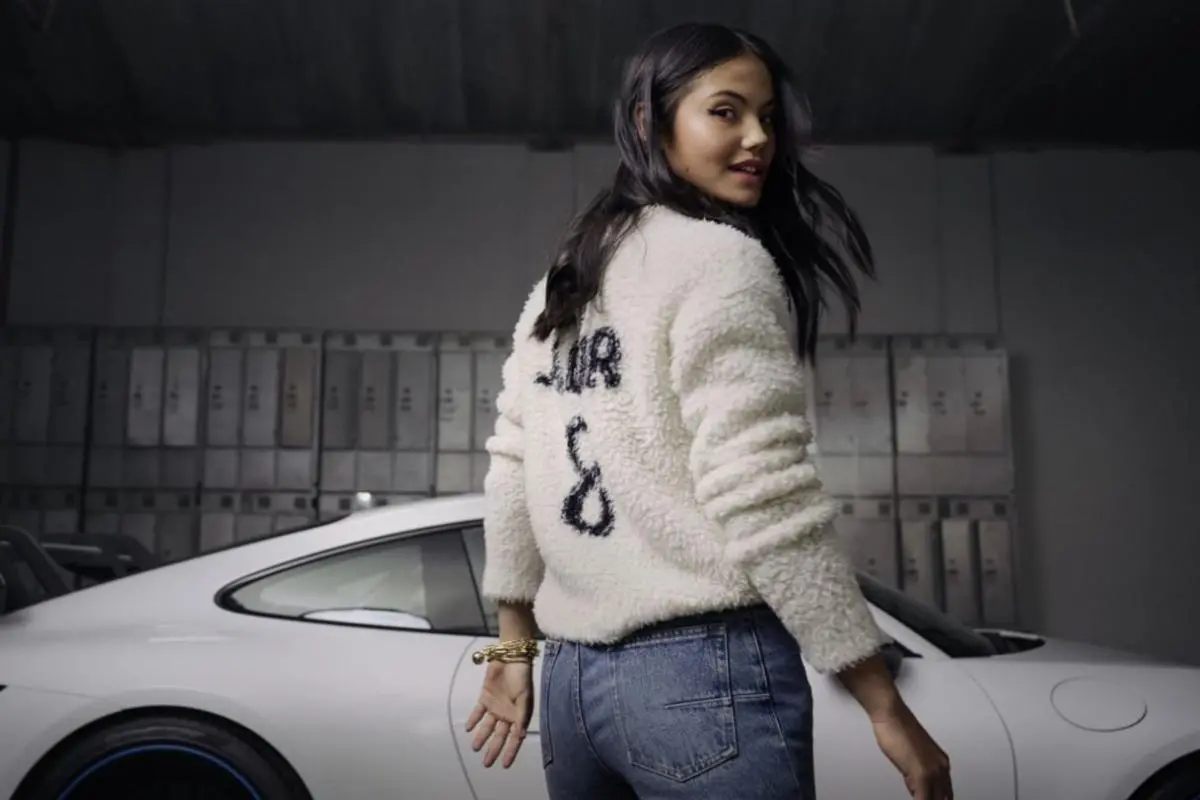
Emma Raducanu’s life on the tennis court has been a study in contrasts since her miraculous run to the 2021 US Open title. While her results have become increasingly inconsistent—most recently a second-round exit at the WTA 1000 in Miami at the hands of Katerina Siniakova (3-6, 6-4, 7-5)—her commercial portfolio has gone from strength to strength. Two days before that Miami loss, the 19-year-old announced a new sponsorship deal with German luxury carmaker Porsche. It is the latest in a string of high-profile partnerships that include brands such as Tiffany & Co., Dior, Evian, and British Airways. The disconnect between her on-court performance and off-court earnings raises fascinating questions about modern sports marketing, the power of a single iconic victory, and the unique marketability of a young, telegenic champion in a global sport.
Raducanu’s breakthrough at Flushing Meadows was the stuff of fairytales. She became the first qualifier in history to win a Grand Slam singles title, doing so without dropping a set. Her run captured the imagination of fans worldwide, not only because of the sheer improbability but also because of her composed and articulate demeanor. Born in Toronto to a Romanian father and Chinese mother, she moved to England as a toddler. Her multicultural background makes her a perfect ambassador for a global game. At 18, she was already a sponsor’s dream: young, beautiful, well-spoken, and with a story that transcended tennis. Within weeks of her victory, she signed with IMG for global marketing representation and began fielding offers from some of the world’s most prestigious brands.
Since then, her tennis career has followed a less linear path. She changed coaches several times, struggled with minor injuries, and often lost early in tournaments. In 2022, she has yet to win consecutive matches. Critics point out that her game, so solid during those magical ten days in New York, has been exposed by opponents who have had time to study her. Her serve, once a weapon, has become erratic. Her groundstrokes lack the sustained power of top-ranked players. Yet none of this has deterred sponsors. Why? The answer lies in the nature of the modern endorsement market. Brands are no longer solely interested in consistent winners. They want personalities with reach, relatability, and future potential. Raducanu’s social media following exploded after the US Open, and she now has millions of followers across platforms. Her face appears on billboards from London to Shanghai. For a luxury brand like Porsche, associating with Raducanu is not about her current ranking (she sits outside the top 10) but about aligning with the idea of excellence, ambition, and a global breakthrough story.
Porsche has a long history of sponsoring tennis players, including Maria Sharapova and Serena Williams. The partnership with Raducanu includes her being an ambassador for the brand and driving a Porsche Taycan. The financial terms were not disclosed, but industry insiders estimate it is a multi-year deal worth several million dollars. This follows reports that Raducanu’s total endorsement income in 2021 exceeded $10 million, placing her among the highest-earning female athletes despite her modest prize money. The Forbes list of highest-paid female athletes often includes players who win regularly—like Naomi Osaka, Serena Williams, and Ash Barty—but Raducanu’s earnings are remarkable given that she has not repeated her Grand Slam success. This phenomenon has historical precedents. Other athletes who won a single major title at a young age, such as tennis’s Gabriela Sabatini or golf’s John Daly, parlayed that victory into long-term careers partly because of their marketability. However, the scale of Raducanu’s deals is unprecedented in the modern social media age.
To understand her commercial power, one must look at the business strategy behind the deals. Contracts with Porsche, Dior, and Tiffany & Co. are not event-specific; they are long-term brand-building partnerships. Dior appointed Raducanu as a house ambassador for fashion and beauty. Tiffany & Co. features her in its “Not Your Mother’s Tiffany” campaign. These brands are betting that she will grow into her potential—both as a tennis player and as a global icon. They are willing to overlook current results in exchange for exclusivity and the right to be part of her journey. Moreover, her schedule is managed by IMG to maximize her exposure without overexposing her. She balances media commitments, photo shoots, and tournament appearances with precision. Even when she loses early, the cameras still follow her. That is the value of a compelling narrative.
There is also a darker side to this rapid commercialization. Some critics argue that the constant off-court demands distract from her tennis development. Her training has often been interrupted by sponsorship obligations. After the US Open, she embarked on a whirlwind tour of public appearances and commercial shoots, which left little time for practice. Her coach at the time, Andrew Richardson, parted ways soon after—reportedly because of differing views on her schedule. Since then, she has worked with several coaches, none lasting more than a few months. This instability has certainly not helped her results. Furthermore, the pressure to justify her endorsements with wins adds emotional strain. At just 19, Raducanu is navigating a level of fame that few athletes experience, especially at such a young age. She has handled press conferences with remarkable poise, but the weight of expectation is immense.
Comparing Raducanu to other young stars who struggled after a breakthrough—like Jennifer Capriati or Martina Hingis—offers some perspective. Capriati burned out before making a successful comeback. Hingis won multiple Slams but also faced early burnout. Raducanu’s story is still being written. Her talent is undeniable; the question is whether she can develop the physical and mental resilience needed to compete consistently at the top level. If she does, her brand value will only increase. If she does not, she may join the ranks of one-hit wonders who still enjoy lucrative careers because of their early fame. The sports marketing world is full of such examples: take the soccer player Iker Casillas, who after his peak still earned from endorsements based on his legacy. However, in women’s tennis, the drop-off can be quicker. Players like Belinda Bencic or Bianca Andreescu both won big titles early but then struggled with injuries for years. They still retain sponsors, but not at Raducanu’s level.
The business narrative around Raducanu is also shaped by the broader economics of tennis. The WTA has increasingly embraced marketability as a key metric. Stars like Naomi Osaka and Serena Williams have shown that activism and personality can be more lucrative than titles alone. Sponsors are now willing to invest in athletes who represent diversity, youth, and cultural relevance. Raducanu ticks all those boxes. Moreover, the British market is a huge factor. As the first British woman to win a Grand Slam since Virginia Wade in 1977, Raducanu is a national treasure. The BBC, the Lawn Tennis Association, and British media have built her up as a symbol of multicultural success. This patriotic sentiment increases her appeal to domestic sponsors like British Airways and Evian. The combination of national pride and global appeal makes her a unique asset.
In addition, the metrics used to evaluate endorsement deals have changed. Brands now look at engagement rates, media impressions, and sentiment analysis. Raducanu generates a massive amount of buzz even when she loses. Her matches are televised worldwide; her press conferences go viral; her social media posts receive millions of likes. The return on investment for sponsors is not directly tied to her win-loss record but to the visibility she provides. For instance, the announcement of her Porsche deal was covered by every major sports outlet, generating millions of dollars in equivalent advertising value. This phenomenon is common in influencer marketing but rare in traditional sports sponsorships. Raducanu is essentially an influencer who happens to be a professional athlete. That allows her to transcend the typical constraints of sports endorsements.
Looking ahead, the sustainability of this model will depend on her on-court trajectory. If she can win another major or break into the top 10, her earnings will skyrocket into the top tier of female athletes (alongside Osaka and Williams). If she remains a middling player, she will still earn millions from existing deals but may find it harder to renew them at the same value. Sponsors often include performance clauses in contracts, so consistent poor results could trigger reductions. However, the clauses are rarely punitive in the early years of a contract; they are more often tied to achieving certain ranking milestones. Given her youth, brands are willing to be patient. They are investing in the story, not the current scoreline.
Off the court, Raducanu has also shown business acumen beyond her years. She turned down a multi-million dollar offer from a rival bid to stay with Nike, and she has carefully curated her brand to avoid clutter. She has not signed with any fast-food or low-end brands, choosing instead to align with premium luxury labels. This strategy ensures she remains aspirational and exclusive. It is a long-term play reminiscent of Roger Federer’s approach. Federer, despite being at the very top, never oversaturated the market. Raducanu appears to be following a similar path, albeit at a much earlier stage in her career. The challenge will be to maintain that discipline while also performing on the court.
In conclusion, Emma Raducanu’s story is a modern paradox: an athlete who wins little but earns much. It is a testament to her personal appeal and the changing dynamics of sports marketing. Brands now invest in potential and personality as much as performance. Raducanu has the former in abundance, and she is working tirelessly to develop the latter. The next few years will determine whether she becomes a consistent champion or a cautionary tale. For now, she is a business machine operating at full throttle, even when her tennis engine sputters. That is the reality of the 21st-century superstar: you don’t always have to win to be valuable—you just have to matter.
Source:L'Équipe News