

The trial to establish responsibility for the death of Diego Maradona has entered its final phase, and it is as chaotic and passionate as the man himself. Since April 14, the courtroom in San Isidro, north of Buenos Aires, has been the scene of insults, tears, and dramatic confrontations that mirror the intense love and controversy that surrounded the Argentine football legend throughout his life.
Seven healthcare professionals—including a doctor, a psychiatrist, a psychologist, and nurses—are accused of negligence that allegedly contributed to Maradona's death in November 2020. The 60-year-old former star died alone in a rented house in Tigre, where he was recovering from brain surgery. The prosecution argues that the medical team provided inadequate care in an improperly equipped facility, leaving the idol to suffer a fatal heart attack without proper monitoring.
A Courtroom of Chaos
The small, poorly soundproofed courtroom has become a stage for theatrical outbursts. The lead defendants, Dr. Leopoldo Luque—Maradona's personal physician—and psychiatrist Agustina Cosachov, have attended nearly every hearing. Luque, in particular, has repeatedly interrupted proceedings to defend himself, presenting audio recordings, scientific articles, and even projecting a video of Maradona's autopsy. That move backfired spectacularly: Maradona's daughter Gianinna, present in the room, burst into tears, shouted insults at Luque, and stormed out. Her lawyer, Fernando Burlando, followed. The judge suspended the session.
"It's impossible to stop them, like children! We can't work like this," Judge Alberto Gaig once exclaimed after a heated exchange between lawyers. Gaig, presiding alongside assessors Pablo Rolón and Alberto Ortolani, has acted more like a referee than a judge, often struggling to maintain order.
The personal animosity between Burlando and Francisco Oneto, Luque's lawyer, is palpable. They sit just a few meters apart and do not hide their mutual disdain. Burlando, known for his slow, deliberate speech, is constantly interrupted by Oneto, who speaks loudly and abruptly. Their verbal sparring has escalated into insults: "Go back to elementary school!" shouted Burlando. "Get a dictionary!" retorted Oneto, a former lawyer for Argentine President Javier Milei. The two nearly came to blows in the hallway during a break, separated only by a prosecutor and a police officer.
Strange Interludes: Snacks and a Model House
Amid the tension, bizarre moments have provided relief. One morning, a defense lawyer arrived with a jute bag full of alfajores—chocolate-covered cookies filled with dulce de leche—and distributed them to everyone in the courtroom. A month earlier, another defense lawyer brought chipás, small Paraguayan cheese breads, in pink boxes from his wife's bakery. These gestures of culinary diplomacy were, for once, unanimously appreciated.
Another unexpected protagonist is a miniature model of the house where Maradona died. Built by architecture students from the University of Belgrano, the model measures about two meters wide and one meter high, requiring four people to move it. It is brought into the courtroom whenever a witness needs to describe the layout of the rooms. The toy house has become a silent witness to the proceedings.
Maradona: More Than a Footballer
To understand the intensity of this trial, one must understand Diego Armando Maradona's place in Argentine culture. Born in 1960 in Villa Fiorito, a poor neighborhood in Buenos Aires, he rose from poverty to become arguably the greatest footballer of all time. His performance in the 1986 World Cup in Mexico, where he led Argentina to victory and scored the infamous "Hand of God" goal, cemented his legend. But his career was also marked by battles with addiction, weight problems, and controversies: his time at Napoli, his cocaine use, and his ever-troubled personal life.
After retiring, Maradona remained a powerful figure. He managed the Argentine national team in 2010 and later took charge of clubs around the world. His health declined in the 2010s, with hospitalizations for excessive weight, alcohol abuse, and hepatitis. In November 2020, he underwent surgery to remove a subdural hematoma. He was discharged to a rented house in Tigre, where a team of healthcare professionals was assigned to care for him. The day he died, he was found in his bed, alone, having suffered a heart attack.
The question the trial must answer: was this a tragic but unavoidable event, or did negligence—from insufficient medical supervision to an unsuitable environment—lead to his premature death?
A Previous Trial Annulled
This is actually the second trial. In 2025, a first trial was annulled after two and a half months when it emerged that one of the three judges had secretly participated in producing a documentary about the case, featuring herself. The highly irregular situation forced a restart, delaying justice for the Maradona family and fueling further controversy.
The current trial is expected to conclude in August, with a verdict to follow after deliberation. Until then, the courtroom in San Isidro will continue to host daily dramas that, as one journalist put it, are "Maradonesque"—a mix of genius, madness, and raw emotion.
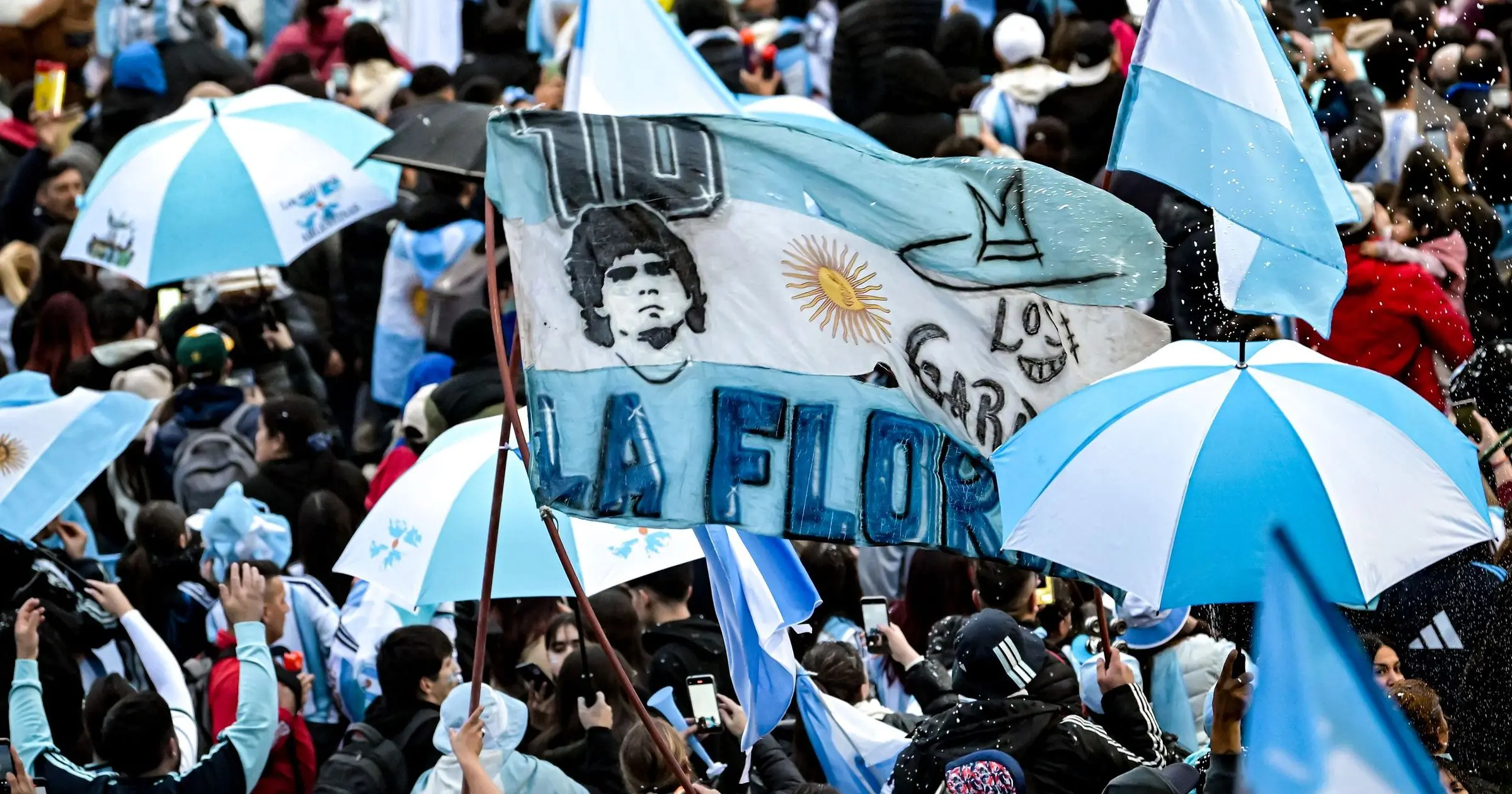
Outside the court, fans and journalists gather daily, hoping for a glimpse of the Maradona sisters or the accused doctors. The passion for "El Diego" remains undimmed. Murals of his face cover walls throughout Buenos Aires, and every mention of his name brings cheers or tears. This trial is not just a legal process; it is a national catharsis, allowing Argentines to relive the love and pain that defined their relationship with their most beloved—and most troubled—sports idol.
As the health professionals await the verdict, the world watches a microcosm of Argentina's soul: loud, passionate, conflicted, and never indifferent.
Source:Eurosport News