

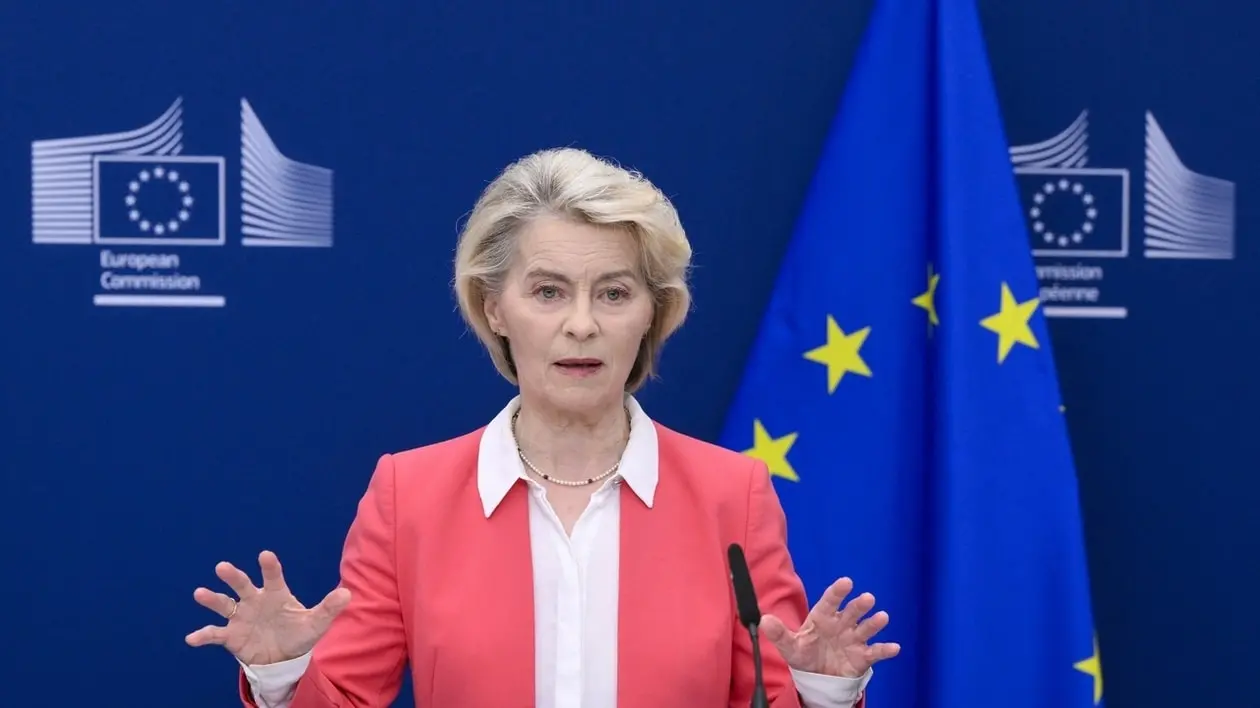
European Commission President Ursula von der Leyen has urged the European Union to adopt a unified response to the migration crisis in Ceuta, emphasizing the need for reinforced border controls at the bloc's most exposed points. Her remarks, made on Monday 3 August 2026, come after a significant influx of migrants into the Spanish enclave, which also triggered a diplomatic row between Spain and Morocco.
Key facts:
- Von der Leyen called for a "common European response" to consolidate EU borders.
- She stressed that the Ceuta crisis showed the need to "go further to strengthen our borders at the most sensitive points."
- The migrant surge in Ceuta caused diplomatic tensions between Spain and Morocco.
A Call for European Solidarity
In a missive addressed to EU leaders, von der Leyen outlined the need for a coordinated approach to border management. According to extracts cited by international agencies, she described the situation in Ceuta as a clear demonstration of the pressures facing Europe's external frontiers. She wrote: "This episode clearly shows that we must go further to strengthen our borders at the most sensitive points." The Commission president also stressed the importance of "a common European response" to address what she termed a shared challenge, rather than leaving individual member states to deal with the fallout alone.
The Strategic Enclave of Ceuta
Ceuta is an autonomous Spanish city located on the northern coast of Africa, sharing a land border with Morocco. Along with Melilla, it represents one of the European Union's two land borders with the African continent. For decades, these enclaves have been flashpoints for irregular migration, with thousands attempting to cross into EU territory each year. The border is physically demarcated by high double fences, yet migrants and refugees often attempt to climb over, swim around, or hide in vehicles. The strategic location makes Ceuta a symbol of broader EU migration challenges.
Historically, Spain has relied on close cooperation with Moroccan authorities to control the flow of migrants. Morocco's role as a gatekeeper has been crucial, but it has also been a source of diplomatic leverage. When bilateral relations sour, border controls often loosen, leading to sudden and dramatic surges in crossings. This pattern was evident in May 2021, when thousands of migrants entered Ceuta after Morocco appeared to relax border enforcement during a diplomatic dispute over Western Sahara. The 2026 crisis appears to follow a similar dynamic, though specific triggers remain unclear.
The 2026 Crisis and Diplomatic Fallout
The latest surge in Ceuta has been described as overwhelming for local authorities, with migrants arriving in large numbers over a short period. Spanish officials reported that emergency shelters were stretched beyond capacity and called for additional resources from the national government and the EU. The crisis quickly escalated into a diplomatic confrontation between Madrid and Rabat, with Spanish authorities accusing Morocco of insufficient border vigilance. Morocco, in turn, denied any deliberate policy shift and cited external factors such as regional instability and the impact of the pandemic on migration routes.
The tension saw Spain summon its ambassador to Morocco for consultations and demand an explanation. Meanwhile, opposition parties in Spain criticized the government's handling of the crisis, while the European Commission was urged to intervene. Von der Leyen's statement represents the EU executive's first major response to the situation, and it signals a willingness to centralize border management at the European level. Her call for "reinforcing frontiers" suggests a move toward greater support for Spain and other frontline states through Frontex, the European Border and Coast Guard Agency.
EU Border Policy and the New Pact on Migration
The Commission has long advocated for a comprehensive approach to migration, balancing security, humanitarian obligations, and burden-sharing among member states. The New Pact on Migration and Asylum, proposed in 2020, sought to create a flexible framework for solidarity and responsibility. However, implementation has been slow due to political disagreements among member states. Von der Leyen's new emphasis on border reinforcement may reflect a pragmatic shift, acknowledging that immediate control measures are necessary even as longer-term reforms continue to be negotiated.
Specific measures that could emerge from her call include increased funding for border infrastructure, deployment of additional Frontex officers and equipment to Ceuta, and stronger returns procedures for those without legal rights to remain. Additionally, the EU might seek a formal agreement with Morocco on migration management, offering economic incentives and visa facilitation in exchange for better border cooperation. Such agreements have been tried before, but their effectiveness remains contested, as they often hinge on Morocco's internal political calculus.
Humanitarian and Legal Dimensions
Beyond the security aspect, the Ceuta crisis raises serious humanitarian concerns. Migrants attempting to enter irregularly face risks of injury, drowning, and exposure. Local aid organizations have documented overcrowding and inadequate sanitation in makeshift camps. Human rights groups often criticize the EU's heavy-handed border enforcement, arguing that it violates international law and undermines the right to asylum. Von der Leyen's statement did not directly address these concerns, but any "common response" will need to balance security with fundamental rights commitments.
The legal framework governing returns and readmissions also complicates border reinforcement. Spain's expulsion of migrants from Ceuta has been challenged in courts, and the European Court of Human Rights has issued rulings limiting rapid pushbacks without individual assessments. Therefore, while the Commission president calls for stronger frontiers, the practice must comply with EU treaties and the Geneva Convention. This tension between deterrence and legality is a recurring theme in European migration policy.
Regional and Geopolitical Implications
The Ceuta crisis is not isolated; it reflects broader geopolitical pressures across the Mediterranean and the Sahel. Political instability, economic hardship, and climate change continue to drive migration northward. The Sahel region has seen a rise in conflict and food insecurity, pushing more people toward coastal states like Libya and Morocco. At the same time, the war in Ukraine has shifted EU attention eastward, potentially reducing resources for southern border management. Von der Leyen's call may signal a renewed commitment to the southern neighborhood, but the EU's capacity to act will depend on political will and financial resources.
Diplomatically, the row between Spain and Morocco risks undermining EU-Morocco relations, which are already complex. Morocco is a key partner in counterterrorism, trade, and migration control, but its actions are often driven by its own national interests. The EU has walked a delicate line, offering support while urging restraint. Von der Leyen's "common response" could provide a framework to de-escalate bilateral tensions by shifting the discussion from Spain's individual complaint to a collective European endeavor.
In a related development, several EU interior ministers voiced support for the Commission's position. Germany's interior minister stated that "solidarity with Spain is not optional," while France called for an urgent meeting of the Justice and Home Affairs Council to address the situation. These reactions indicate that the crisis has become a test for European cohesion. However, some Eastern member states remain skeptical of any proposals that could be seen as encouraging migration, reflecting the deep divisions that have plagued reform efforts.
As the situation in Ceuta stabilizes, attention will likely shift to preventive measures. The EU is expected to review its operational cooperation with Spain and Morocco, and to examine new funding proposals for border surveillance technology. Von der Leyen emphasized that the episode is a "wake-up call" for Europe, insisting that "we cannot afford to be reactive any longer; we must be proactive in protecting our borders and managing migration in a dignified way."
The coming weeks will determine whether her words translate into concrete action. The European Council is set to discuss the matter at its next session, and internal documents suggest that the Commission is preparing a comprehensive plan for southern border hotspots. Whether this plan will satisfy both pro-migrant and anti-migration factions remains uncertain, but the pressure is on to deliver. As von der Leyen noted in her letter, "what happens in Ceuta does not stay in Ceuta; it affects the whole of Europe."
Source:Ouest-France.fr News