
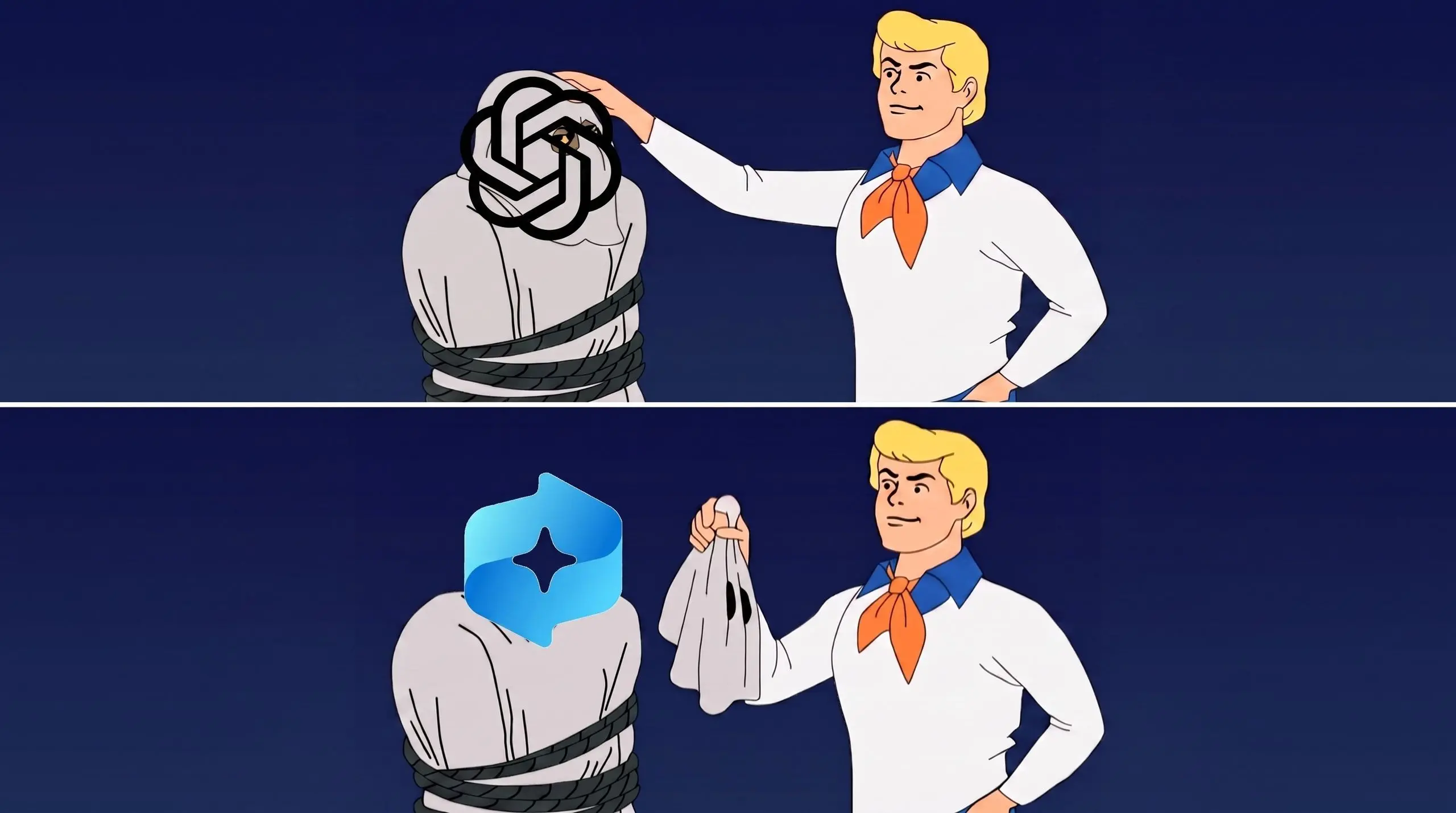
OpenAI has reportedly begun rolling out a new feature to ChatGPT on Mac that many Windows 11 users have come to despise. The feature in question is a promotional banner that appears within the app, nudging users toward OpenAI's Plus, Pro, or Team subscription plans. This is eerily similar to the controversial recommendations and ads that Microsoft has embedded throughout Windows 11, from the Start menu to the Settings app, and which have become one of the most hated aspects of the operating system. Now, ChatGPT users on Mac are wondering if they are about to face the same annoyance, and whether OpenAI is making a strategic mistake by copying Microsoft's approach.
The feature appears as a dynamic banner inside the ChatGPT interface, sometimes sliding up from the bottom or appearing near the top of the conversation list. It encourages users to upgrade their account, showcasing benefits like faster response times, access to GPT-4o and o1 models, and advanced data analysis. Early reports suggest that the banner is not persistently visible but emerges during specific actions, such as when users hit message limits or when they attempt to use advanced voice mode. Still, the very presence of such promotional content has triggered memories of Windows 11's Start menu 'Recommended' section, where users are frequently shown app suggestions and Microsoft-365 adverts instead of their own content.
Why Windows 11's Feature Became So Hated
To understand why ChatGPT users are nervous, it helps to revisit why Windows 11's version of this feature earned so much scorn. Microsoft has repeatedly used the Windows OS as a vehicle for its own services and subscriptions. The Start menu, a place where users expect to launch their applications, has become a place where Microsoft pushes OneDrive backup prompts, Edge browser offers, and even ads for other Microsoft products. System settings pages sometimes include banners on the page. In 2023, Microsoft even began showing full-screen pop-ups in Windows 11 to promote the Bing AI chatbot. Users have repeatedly complained that these intrusive prompts feel like a betrayal, turning a paid operating system into an advertising platform.
What makes Windows 11's approach particularly galling is the lack of an easy way to permanently disable these recommendations. Users often have to navigate through multiple settings menus, and even then, some ads return after updates. The feeling of being tracked and marketed to inside your own operating system has driven many users to seek out debloating tools or switch to alternative operating systems like Linux. Microsoft's justification has always been that these features are meant to help users discover new tools, but the execution has left a bitter taste in the mouths of many.
How OpenAI's Implementation Differs
OpenAI's approach on Mac is not identical to Microsoft's. For one, ChatGPT is a free service, and OpenAI has a legitimate business model that relies on converting free users to paid subscribers. Unlike Microsoft, OpenAI is not plugging a third-party ecosystem or trying to cross-sell unrelated products. The banner is specifically tailored to the ChatGPT experience, and it appears in a context that is relevant to the user's current session. For example, if a user has just exhausted their free message quota, a subtle banner explaining the benefits of Plus seems less intrusive than a random ad for a different app.
Another key difference is that OpenAI has generally been more restrained with in-app promotions. The banner is reportedly dismissible, and there are settings to limit these kinds of notifications. Moreover, the design is cleaner and more minimalist than Windows 11's often-cluttered promotional elements. OpenAI seems to be aware that users are sensitive about being marketed to, so they have attempted to make the banner feel like a natural part of the interface rather than a desperate sales pitch. Early user screenshots show the banner blending into the company's signature dark theme, with descriptive text and a clear 'Upgrade' button, rather than an obnoxious flashing ad.
Potential Backlash and User Sentiment
Despite the differences, the backlash is already brewing. Social media platforms, particularly X (formerly Twitter) and Reddit, have seen an uptick in complaints from ChatGPT Mac users. Some users have called the banner a 'slippery slope,' fearing that OpenAI will follow the same path as Microsoft and gradually increase the frequency and invasiveness of these prompts. Others have expressed disappointment because they had chosen ChatGPT specifically for its clean, clutter-free interface, which was a refreshing change from other bloated consumer software. There is a sense of betrayal, as many Mac users are accustomed to premium, ad-free experiences, especially from apps that are often praised for their design.
However, it is worth noting that the backlash is not universal. Some users have defended OpenAI, pointing out that the company needs to make money, and that a subtle banner is a far friendlier way to monetize than a strict paywall. Others have noted that ChatGPT already had upsell prompts from the very beginning, such as the 'Try ChatGPT Plus' button that appeared after the release of GPT-4. The new banner is just a more prominent version of what has existed for years. In fact, the company has to be more careful than Microsoft because OpenAI's reputation is built on building user-centric AI tools, not on being a traditional software giant with decades of incumbency.
The Business Case: Why OpenAI Needs This
OpenAI's rationale for adding this feature is simple: the company is burning through cash at an extraordinary rate. Running ChatGPT's large-scale AI models requires massive computing infrastructure, and the costs of serving free users are substantial. OpenAI's revenue primarily comes from subscriptions and API access, but a large chunk of its user base remains on the free tier. By prompting Mac users to upgrade, OpenAI can increase its conversion rates and generate more predictable revenue. This is especially important as the company faces increasing competition from Google's Gemini, Anthropic's Claude, and Meta's open-source Llama models. In this context, a small banner is a low-friction way to remind users of the value proposition of the paid tiers.
Apple users, in particular, are often viewed as a high-value demographic. They tend to have more disposable income and are more willing to pay for quality software. Thus, targeting the Mac app for this experiment makes strategic sense. OpenAI may also be testing the waters before rolling out a similar feature to Windows, Android, and iOS in a more aggressive manner. If the backlash on Mac becomes overwhelming, they can always pull back or adjust the frequency. Microsoft, on the other hand, has often ignored user feedback, continuing to push ads even after widespread criticism.
Contextualization: The Evolution of ChatGPT Monetization
This isn't the first time OpenAI has experimented with in-app monetization strategies. In the early days of ChatGPT, there was no official advertisement, but the web interface had a 'Helpful?' prompt at the end of each response, which some users found tedious. The introduction of the shareable links and the ChatGPT Store allowed users to explore third-party prompts, but those also served to keep users inside the ecosystem. The launch of the API created a separate revenue stream. Over time, OpenAI has become more aggressive in pushing its paid tiers, with the appearance of 'GPT-4o' labels and the deprecation of the older GPT-3.5 for free users being just a few examples.
The Mac app itself is relatively new, having launched fully in late 2023 after an initial waitlist. It offered a seamless experience with a keyboard shortcut to quickly query ChatGTP from any application. Because the Mac app is often used by professionals and power users who rely on ChatGPT for coding, writing, or research, the conversion rate for these users could be high. This new banner may simply be an attempt to capitalize on that productivity-driven use case. If a user is in the middle of a long task, hitting a message limit at that moment could be enough to convince them to upgrade.
Comparing to Other Software 'Nags'
It's also useful to place this in a broader context of software 'nagging.' Many popular apps, from Evernote to Slack, have used similar tactics to encourage paid upgrades. Spotify famously nags free users about the benefits of Premium between songs. Adobe's Creative Cloud uses occasional banners inside Photoshop and Illustrator. Even Apple itself has advertised iCloud+ in its system settings. The key is whether the nag interrupts the user's flow without being too annoying. When a watermark appears on a video in a free tool like DaVinci Resolve, users often accept it because they know they're getting a powerful product for free. The same logic applies to ChatGPT: the free tier is genuinely useful, but a small banner is the cost of doing business.
However, the comparison to Windows 11 is apt because Microsoft specifically created a feature that many users view as a violation of trust. Windows 11 is a paid operating system, or at least a heavily monetized platform, and users expect it to be neutral ground. ChatGPT is also a paid service at the high end, but its free tier is a loss leader. OpenAI has to find a balance between creating value for free users and converting them into paying customers. Being too aggressive could push users to abandon ChatGPT altogether in favor of competing AI assistants that have less intrusive prompts, such as Gemini or Claude. On the other hand, being too passive would mean leaving money on the table, which could hamper OpenAI's long-term viability.
Design Philosophy: Apple vs. Microsoft
Another reason the backlash may be different this time is the user base itself. Mac users are generally more sensitive to design and user experience. Apple's Human Interface Guidelines explicitly warn against annoying users with excessive prompts. When a third-party app like ChatGPT behaves like a Microsoft-style nag, it feels particularly alien to the Mac ecosystem. OpenAI might be taking a risk by ignoring these unspoken rules. But so far, the implementation is subtle enough that many users may not even notice it. The banner is not a pop-up; it's an inline element that can be easily dismissed with a small 'X' button. This is the right approach for a Mac app.
Additionally, OpenAI has a history of listening to feedback. When the GPT-4 model was rolled out, there were complaints about the response limits and the way the 'limit reached' screen was displayed. OpenAI eventually shortened the prompt and made it less discouraging. Similarly, when the Mac app was first released, users complained about the lack of a native dark mode, and OpenAI quickly added it. This suggests that if the banner becomes too intrusive, the company will likely tweak it based on user feedback. That's a stark contrast to Microsoft, which has ignored decades of complaints about pushy telemetry and adverts.
The Potential for Feature Misuse
There is, however, a dark possibility. The banner could be a precursor to more targeted advertising. OpenAI now has access to the content of users' conversations, and if they were ever inclined to use that data to serve personalized ads within the app, it would be a massive privacy violation. The banner currently just promotes subscription plans, but the infrastructure could be expanded to show partner offers or sponsored content within chats. This would be a nightmare scenario for privacy-conscious users. Even though OpenAI's privacy policy says they do not train on API data by default, they do use consumer ChatGPT conversations to improve models. A promotional banner is one thing, but mixing advertisements into user conversations would cross a line.
Experts in user experience are watching this rollout carefully. They note that the most successful freemium apps are those that make the premium tier feel so desirable that users willingly upgrade, rather than being badgered into it. The banner should ideally highlight features that the user is already aware of but might have forgotten, such as the ability to upload images, analyze files, or generate images with DALL-E. By showing a value-add message at the exact moment the user hits a limitation, OpenAI is using a behavioral psychology tactic known as 'time-of-need messaging.' This is more effective and less annoying than a generic ad that appears regardless of context. So far, OpenAI seems to have followed this principle, which is a win for user experience.
What the Future Holds
It's too early to say whether the feature will remain on Mac or be rolled out more broadly. But it's clear that OpenAI is willing to borrow ideas from Windows 11, even controversial ones, in order to improve its bottom line. The difference is in the execution. If OpenAI continues to use this feature with restraint, respecting user choice and offering an easy opt-out, it will likely avoid the level of hatred that Microsoft has garnered. If, on the other hand, the banner becomes more frequent, more invasive, or starts promoting unrelated products, the backlash could be even worse because users have higher expectations for OpenAI. The company is at a crossroads where it must balance growth with user retention.
For now, Mac users should be prepared to see occasional prompts to upgrade. They can resist them, ignore them, or simply keep their subscription status. The online conversation about this feature is a good sign that users are watching OpenAI closely. Whether the company listens will determine if this becomes just a minor blip or a major scandal in the AI community. The careful approach taken initially suggests that OpenAI has indeed learned from Windows 11's mistakes, but constant vigilance is required to ensure that history doesn't repeat itself.
Source:Windows Central News