

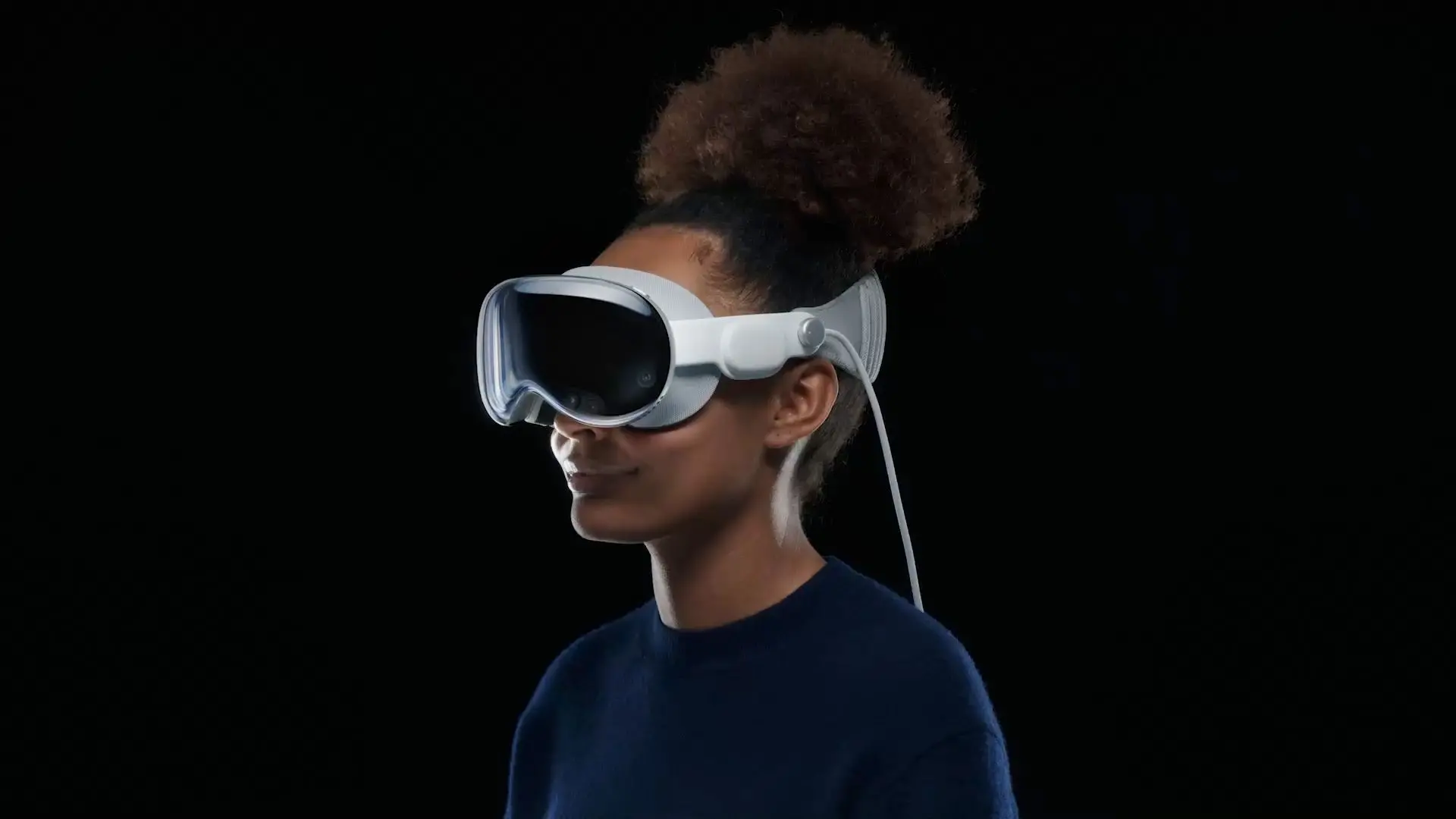
Apple Vision Pro: Key Facts
The Apple Vision Pro is Apple's first spatial computer, blending augmented and virtual reality. Launched in February 2024 with an M2 chip, it received a significant upgrade in October 2025 with the M5 chip. Priced at $3,700 for the base 256GB model, it remains a premium device aimed at early adopters and professionals. This guide extracts the essential facts to help you decide if it's worth the investment.
Should You Buy the Vision Pro?
The Vision Pro is prohibitively expensive for many consumers, costing $3,700. Reviews indicate it does not easily fit into existing workflows for most people, and some users have regretted their purchase. However, it excels for watching movies, viewing 3D videos, and as a Mac display.
- Try before you buy: Apple recommends an in-store demo to assess fit and comfort.
- The M5 model improves comfort with the Dual Knit Band, which reduces neck strain and face pressure.
- Battery life is up to 2.5 hours for general use (3 hours for video), and the device is heavy at over 1.3 pounds.
- Now is a good time to buy because the M5 refresh ensures at least two years before the next update, and a cheaper model is not expected soon.
Key Features
The Vision Pro is a mixed reality headset that uses 12 cameras and five sensors to map your environment and track your eyes and hands. There are no physical controllers; navigation relies on eye tracking, hand gestures, and voice commands.
- EyeSight: An external display shows your eyes to others, indicating whether you are in immersive mode.
- 3D Camera: Capture spatial photos and videos with a top button press.
- Spatial Audio: Built-in speakers deliver immersive sound that adapts to your room.
- Apple Immersive Video: 180-degree 3D 8K content available on Apple TV+.
- FaceTime: Uses a digital Persona that reflects your real-time facial expressions.
- Mac Integration: Use the headset as a private 4K display (Wide and Ultrawide modes available).
Design and Comfort
The Vision Pro resembles ski goggles with a laminated glass front and aluminum alloy frame. A Light Seal blocks out light, and the new Dual Knit Band (included with M5) has two straps for better weight distribution.
- The Dual Knit Band is breathable, cushiony, and stretchable, with a Fit Dial for adjustment.
- Tungsten counterweights in the lower strap balance the headset.
- The headset is not see-through; everything you see is digital, rendered by cameras.
- Zeiss optical inserts are available for prescription glasses ($149) or readers ($99).
- The external battery pack is worn at the hip, connected via a braided cable.
Display and Performance
Two micro-OLED displays deliver over 4K resolution per eye (23 million pixels total). The M5 chip, with a 10-core CPU and 10-core GPU, renders 10% more pixels than the M2 and supports up to 120Hz refresh rates for smoother visuals.
- The R1 chip processes camera and sensor input with 12ms latency for a lag-free view.
- Memory bandwidth is 153GB/s, with 16GB RAM and storage options: 256GB, 512GB, or 1TB.
- The M5 chip enables faster Persona generation and improved AI performance (Neural Engine 50% faster).
- Wi-Fi 6 support (no Wi-Fi 6E).
VisionOS Updates
visionOS 26 (released September 2025) introduced persistent widgets, spatial scenes, and a Jupiter Environment. visionOS 27 (expected September 2026) brings Siri AI, which is a generative AI assistant that can see your surroundings, answer questions, and take actions in apps.
- Siri AI appears as a floating 3D bubble and can hold full conversations.
- Image Playground generates photorealistic or stylized images.
- New accessibility features include face gestures, dwell control, and wheelchair control via eye tracking.
- Mac Virtual Display supports previewing and editing 3D models.
- Travel Mode, Guest Mode, and Vehicle Motion Cues (reducing motion sickness) are included.
Pricing and Availability
The M5 Vision Pro is available in 13 countries including the US, UK, Canada, China, and Japan. Price increased to $3,699 in June 2026 due to the global memory crisis. Zeiss lenses are extra. No trade-in option for the older M2 model.
- Box contents: Dual Knit Band, Light Seal, two cushion sizes, cover, polishing cloth, battery, USB-C cable and adapter.
- Apple does not accept Vision Pro trade-ins.
What’s Next for Vision Pro
Apple has paused development on a next-generation Vision Pro headset, focusing instead on smart glasses. A cheaper headset is rumored for 2028–2029, but current resources are directed to AI smart glasses (no display, similar to Meta Ray-Bans) expected in late 2026 or 2027. Long-term AR glasses with displays are also in development, possibly launching around 2028.
Source:MacRumors News