

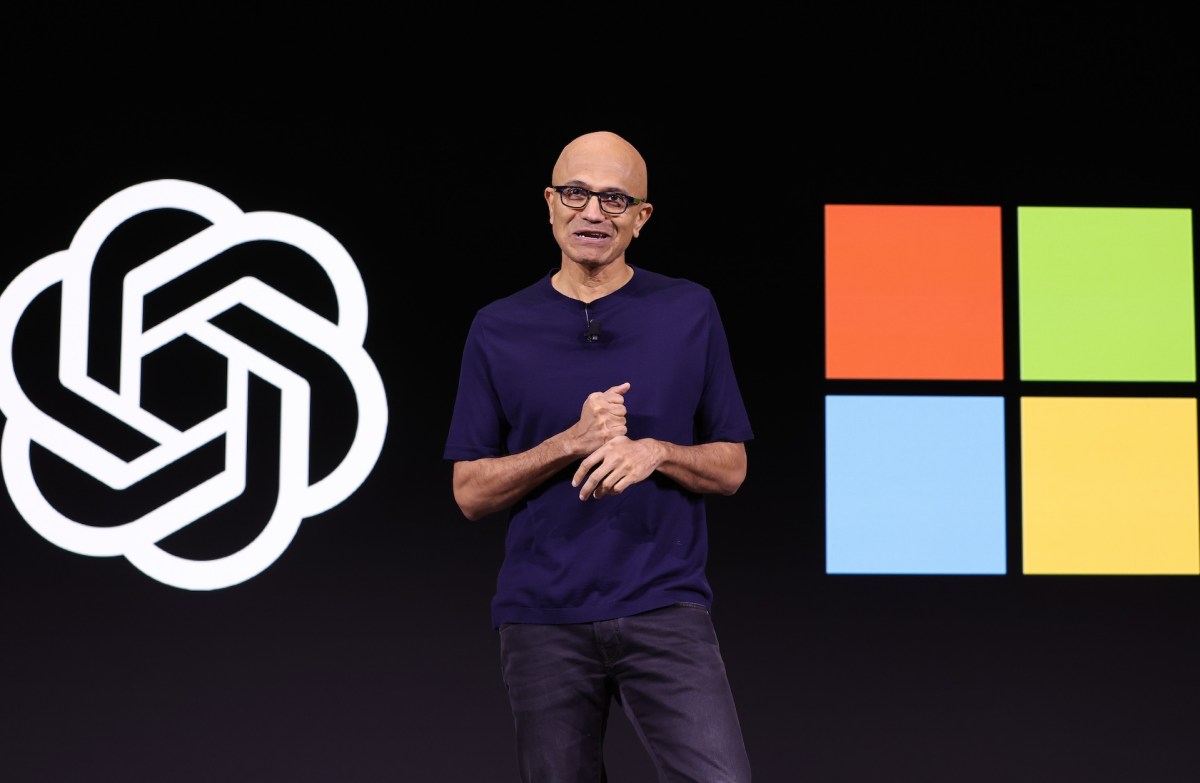
Of all the debates raging about the potential downsides of artificial intelligence, one fear has been causing the most hand-wringing among AI enthusiasts in Silicon Valley: that the giant AI labs selling proprietary models are acting like Trojan horses. The concern is that as startups and enterprises adopt models from companies like OpenAI and Anthropic, these labs gain ever-increasing access to their customers' most sensitive business information. The model makers can then use that knowledge for themselves, potentially becoming competitors. Venture capitalists such as Jason Calacanis and Palantir CEO Alex Karp have voiced similar alarms, but now a surprising new voice has joined the chorus: Microsoft CEO Satya Nadella.
Nadella's Warning: Paying Twice for AI
In a blog post published Sunday, Nadella wrote that AI users — whom he calls "the buyers" — are unknowingly paying twice. They spend money on token usage but also, obliviously, hand over valuable data in the process. He stated, "You essentially pay for intelligence twice, once with money, and again with something even more valuable: the proprietary knowledge you must reveal to make that intelligence useful. The better you want the model to perform, the more of that knowledge you have to feed it!" This loss of intellectual property is especially dangerous because enterprises are literally teaching the AI models the nuances of their businesses. Models learn from 'exhaust' — the prompts people write, the tools agents use, and especially the corrections people make when a model is wrong. Every correction is distilled into institutional know-how, the kind of knowledge a competitor could never buy.
The Rise of AI Distillation and Fair Use
Nadella argued that if AI companies can freely scrape the internet to train their models, then it's only fair that enterprises should be able to study — or "distill" — those models in return. Distillation is the practice of using a model's own outputs to understand how it works and to train a new, often cheaper, model based on those insights. In February, Anthropic accused Chinese open-source models of sending millions of prompts to Claude specifically to improve their own models, urging the U.S. government to crack down on export controls. Nadella's point is that model makers cannot have it both ways: it is hypocritical for them to freely train on the world's data while restricting others from doing the same to their models. He wrote, "While the great innovation that comes from model providers having fair use rights to train models on public data is needed, I find it ironic that the status quo is to then turn around and impose restrictive terms on distillation."
Retaining Ownership of Data
Nadella is particularly concerned when model makers "reserve the right to learn from customer usage and interaction data." His solution is exactly the kind of thing the CEO of a giant cloud provider would suggest. He wants companies to "retain ownership" of their data, including prompts, feedback, and correction data. To do so, he advocates building proprietary learning environments on the cloud — where their data is often already stored and, conveniently, could be on Microsoft's Azure. He also recommends implementing "orchestration layers" that allow seamless switching between AI models from different providers rather than being locked into a single vendor. Tools like AI gateways that enable this have become increasingly popular, and Microsoft is well-positioned to benefit from such a shift.
The Open-Source and On-Premise Shift
While Nadella never explicitly uses the words "open source" as the method for retaining ownership, it is an obvious subtext. Large companies that still maintain their own data centers are already moving to open-source models installed on their own premises. Idit Levine, founder and CEO of Solo.io — which makes networking and security software to help enterprises manage AI systems — confirms this trend. She told TechCrunch that after experimenting with proprietary model makers, her customers start asking: "Can I take an open-source model and run it on-prem? It will do almost 90% of what the big one's doing. It will cost way less." They understand they can control the data and costs better. Solo.io's technology was selected by the Linux Foundation to power the Agentgateway project, and the company counts T-Mobile, ADP, and SAP as clients. Levine sees on-premise open-source models as the next big wave in enterprise AI use.
Such a shift is not isolated. Vercel, a platform for building and hosting websites that recently added AI model-switching tools, and OpenRouter, which helps developers route requests across different AI models, are both seeing a surge in traffic to open-source models. In fact, open models accounted for 29% of all traffic routed through Vercel's gateway last month. This data underscores the growing appeal of staying independent from proprietary model vendors.
Implications for Enterprises and the AI Ecosystem
The warning from Microsoft's CEO carries enormous weight given his company's deep investments in both OpenAI and Anthropic. Microsoft has poured billions into OpenAI and has tightly integrated its models into Azure and Office products. Yet Nadella is now openly cautioning enterprises to be wary of the very models his company sells. This apparent contradiction reveals the underlying tension in the AI market: the need for innovation versus the risk of customer lock-in and data leakage. For enterprises, the message is clear: they must take proactive steps to protect their proprietary knowledge. Building in-house AI capabilities with open-source models and using orchestration layers to switch providers when needed can mitigate the risk. Nadella's blog post, which states, "In consuming intelligence, you are creating intelligence. And what you create should belong to you," is a rallying cry for data sovereignty.
Historically, similar concerns have emerged in the tech industry. In the early days of cloud computing, enterprises feared that cloud providers would mine their data for competitive advantage. Those fears largely evaporated as cloud adoption grew, but AI introduces a new dimension because models are continuously trained on user interactions. The threat is not just about data storage but about the very intelligence that is derived from that data. If a model learns how a company negotiates prices, optimizes supply chains, or develops products, that knowledge becomes embedded in the model itself — and the model's owner can potentially use it to compete against the same company. This is why Nadella's warning resonates beyond the typical security concerns and touches on core business strategy.
Moreover, the regulatory landscape is evolving. The European Union's AI Act imposes transparency and risk-management obligations on high-risk AI systems, but it does not directly address data ownership issues in model training. The U.S. has yet to pass comprehensive AI legislation, though executive orders have urged companies to report safety tests and protect privacy. Nadella's blog post could be seen as an indirect push for clearer rules around data usage and distillation rights. By advocating for a fairer ecosystem where enterprises can reclaim their data, he aligns with the open-source ethos that has long been a pillar of software development. The open-source movement has always championed the idea that code should be freely inspectable and improvable; extending that philosophy to AI models could fundamentally reshape the industry.
In practical terms, enterprises that heed Nadella's advice would need to invest in infrastructure to run open-source models on-premises or in private clouds. This includes hardware (GPUs), software stacks for model serving and monitoring, and skilled personnel to fine-tune and maintain the models. While the upfront cost can be significant, it may be lower than the long-term cost of exposing proprietary data to third parties. The on-premise approach also offers better compliance with data sovereignty regulations, which are especially strict in sectors like finance, healthcare, and defense. As Levine noted, running a model that does 90% of what the big proprietary model does, at a fraction of the cost, is an attractive proposition for many enterprises.
Another key insight from Nadella's post is the concept of "orchestration layers." These middleware tools allow companies to abstract away the underlying AI provider, so they can switch from GPT-4 to Claude to Llama without rewriting their applications. This not only prevents vendor lock-in but also creates a competitive market where model providers must offer better performance, privacy, and pricing to retain customers. Startups like OpenRouter and Vercel are already capitalizing on this, and even Microsoft itself offers Azure AI Gateway, which includes routing capabilities. The orchestration layer may become as essential as cloud infrastructure itself, enabling enterprises to mix and match models for different tasks while keeping control of their data.
The industry is at a crossroads. On one hand, proprietary models offer high-quality, out-of-the-box intelligence backed by massive compute resources. On the other hand, open-source models are rapidly catching up, with communities like Meta's Llama and Mistral releasing increasingly capable versions. The shift toward open-source on-premises deployments is likely to accelerate, driven by the very warning Nadella just issued. If even Microsoft's CEO is telling customers to be careful, then the message should not be ignored. Enterprises must treat their data as the crown jewel that it is and ensure that any AI partner does not become a Trojan horse. By building their own learning environments, using distillation techniques, and adopting open-source models, companies can harness the power of AI without giving away their competitive advantage.
Ultimately, Nadella's blog post is a landmark moment in the AI debate. It signals that even the largest beneficiary of the proprietary AI boom is aware of its inherent risks. The challenge now lies in implementing the vision: creating truly private AI systems that learn from an enterprise's data while keeping that knowledge locked inside the organization. The tools are available, but widespread adoption will require a cultural shift as much as a technological one. For now, the ball is in the enterprises' court: they must decide whether to continue paying twice or to take control of their own intelligence.
Source:TechCrunch News