

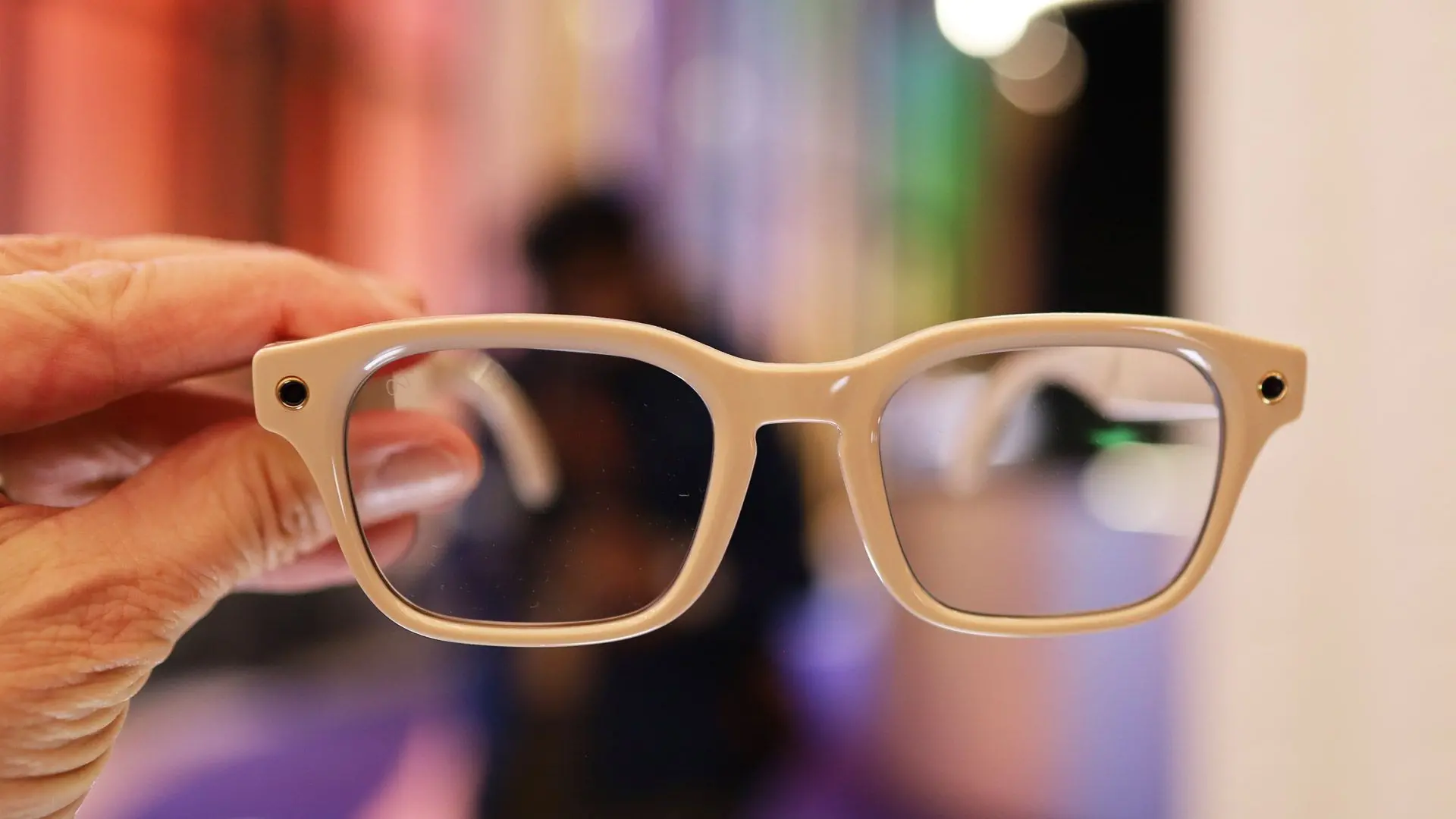
The future of Meta’s Ray-Ban smart glasses in the European Union is hanging in the balance as regulators ramp up pressure over data protection and privacy concerns. The trendy eyewear, which combines classic Ray-Ban styling with embedded cameras, microphones, and Meta’s AI assistant, has become a surprising consumer hit since its launch. But its very functionality—recording the world with a discreet tap or voice command—has put it squarely in the crosshairs of European privacy watchdogs.
At the heart of the debate is a simple question: can a device that silently records video and audio be reconciled with Europe’s strict data protection rules? The answer may determine not only the fate of Meta’s smart glasses in the EU but also the trajectory of an entire category of wearable technology that is only beginning to gain mainstream traction.
EU regulators are asking tough questions
Reports have surfaced that the Irish Data Protection Commission (DPC), Meta’s lead regulator in Europe, has been pressing the company for detailed information about how the Ray-Ban glasses handle personal data. The DPC, along with other European authorities, is concerned about the devices’ ability to collect footage of unsuspecting people in public and private spaces. Under the General Data Protection Regulation (GDPR), individuals have the right to know when and how their personal data is being captured, and for what purpose.
Meta has maintained that the glasses are designed with privacy in mind, including a visible LED light indicator that turns on whenever recording is active. But regulators and privacy advocates argue that the light is too subtle, easily obscured, or placed in a position where it can go unnoticed. They point to cases in the United States where users have reportedly used the glasses to record videos and post them online, raising concerns about consent and harassment.
The EU’s scrutiny is not limited to the hardware itself. Meta’s AI features, which can respond to voice commands and provide contextual information about what the wearer is looking at, add another layer of complexity. Processing visual data through cloud servers raises potential issues about data minimization, purpose limitation, and cross-border data transfers—all core components of GDPR compliance.
A possible precedent for the entire industry
This isn’t just about Meta. Other tech giants, including Google and Apple, are reportedly developing their own smart glasses. If the EU were to restrict or ban the Meta Ray-Bans on privacy grounds, it would send a chilling signal to the entire industry. Regulators would effectively be saying that camera-equipped wearables, however useful, are too invasive unless they meet a higher bar for transparency and user consent.
Some legal experts argue that a ban would not be unprecedented. In 2019, the EU’s Court of Justice ruled that Germany’s data protection authorities could take action against Facebook’s data handling practices, setting the stage for national regulators to act against tech companies even when the lead regulator is in another member state. That decision emboldened data protection authorities across Europe to pursue aggressive enforcement against big tech firms.
How did we get here? The rise of the Ray-Ban smart glasses
Meta first collaborated with EssilorLuxottica, the company behind Ray-Ban, to launch the first-generation smart glasses in 2021 under the name Ray-Ban Stories. The initial release was met with lukewarm reviews, limited functionality, and a palpable sense of unease from privacy experts. But the second-generation version, simply called Ray-Ban Meta, launched in late 2023 and became a viral sensation. Improvements in camera quality, sound, and battery life, combined with the integration of Meta’s AI assistant, made the glasses a practical gadget for content creators, travelers, and social media enthusiasts.
Despite the commercial success, privacy concerns have dogged the product from day one. The glasses can capture up to a minute of video with a single button press, and the microphone can pick up conversations from several feet away. In a crowded bar or a subway car, the wearer could be recording dozens of people who have no idea they are being filmed. Even with the LED indicator, studies have shown that people rarely notice the tiny white light when it appears next to the wearer’s temple.
GDPR compliance is a moving target
The landmark EU regulation, which went into effect in May 2018, was designed to give citizens greater control over their personal data. Its requirements include data protection by design and by default, a principle that mandates companies to integrate privacy safeguards into the very architecture of their products. For a device like the smart glasses, this means ensuring that recording is obvious, that data is stored securely, and that users are regularly reminded about their compliance obligations.
Meta has argued that the glasses are essentially a camera worn on the face, no different from a smartphone in a pocket. But privacy experts counter that the form factor changes the calculus. A phone requires an explicit action to start recording, and its screen is visible to those around you. A pair of sunglasses, on the other hand, is passive and unobtrusive, making it far easier to record surreptitiously.
There is also the question of bystander rights. Under GDPR, individuals can request access to their personal data, including video footage in which they appear. But how would that apply to a video captured by a stranger’s smart glasses? Meta’s terms of service provide some guidance, but the practical ability to identify and extract a single person’s image from a continual stream of footage remains a challenge. Regulators have yet to issue clear guidance on this issue, and the ambiguity is fueling uncertainty.
What a ban could mean for consumers and businesses
If the EU chooses to ban or restrict the sale of Meta Ray-Bans within its borders, the immediate impact would be felt by European consumers who have already purchased the devices. A ban might come with a grace period, but it could also render the glasses unusable if Meta is required to disable certain features via a software update. Such a move would be controversial, potentially eroding consumer trust in all wearable technology.
Businesses that have started to embrace smart glasses for enterprise applications—such as warehouse logistics, remote assistance, and medical documentation—would also be hit hard. Many companies have invested in training and hardware based on the assumption that the trend toward camera-equipped wearables would continue to grow. An EU ban could force them to switch to alternative devices that are more privacy-compliant, or abandon the technology altogether.
On the other hand, a ban could accelerate innovation in privacy-friendly design. Some startups are already working on smart glasses with more visible recording indicators, built-in privacy shutdown modes, and even on-device AI processing that minimizes the need to send data to the cloud. A regulatory push from the EU might give these alternatives a competitive edge.
The international ripple effect
The EU is not the only jurisdiction watching this case closely. The United Kingdom, which has its own version of GDPR, often aligns with EU decisions in this area. In the United States, there is no federal data protection law that directly addresses smart glasses, but state-level initiatives, particularly in California, could follow European developments. China has already imposed strict rules on camera-equipped devices, and Japan and South Korea have shown interest in strengthening their own privacy frameworks.
The outcome in Europe is being viewed as a potential model for the rest of the world. If the EU succeeds in imposing meaningful restrictions on Meta’s smart glasses, other countries may adopt similar measures. Conversely, if Meta manages to reach a compromise, it could set a benchmark for the industry worldwide.
Meta, for its part, has signaled a willingness to cooperate. The company recently announced updates to the Ray-Ban Meta glasses, including a more prominent LED indicator and a new “privacy mode” that automatically pauses recording when the device senses it is in a sensitive location such as a restroom or changing room. But these changes may not be enough to satisfy regulators who believe the basic principle of consent is fundamentally undermined by the discreet form factor.
Beyond Meta: the broader battle over ambient computing
The controversy over the Meta Ray-Bans is a microcosm of a much larger debate about ambient computing. As computers become smaller, more connected, and embedded in everyday objects—headphones, watches, and glasses—the line between the digital and the physical world blurs. These devices are always on, always listening, and always watching, capturing data from the environment in ways that previous generations could not have imagined.
Privacy advocates argue that ambient computing has the potential to create a surveillance society if left unchecked. They point to the gradual normalization of cameras and microphones in public spaces, where people may be recorded dozens of times a day without their knowledge. Smart glasses could be the tipping point, they say, because they make recording so effortless and invisible that consent becomes meaningless.
Industry defenders counter that innovation and privacy are not mutually exclusive. They argue that smart glasses are a natural next step in the evolution of personal technology, just as cameras in phones were once controversial and are now universally accepted. They also note that self-regulation and technological safeguards can alleviate many concerns, and that outright bans could cede leadership in an important emerging sector to countries with less stringent privacy standards.
What happens next?
The European Commission has not officially announced a formal investigation into Meta Ray-Bans, but the mounting pressure from national data protection authorities suggests that action could be imminent. A decision could take months, and any final ruling would likely be subject to appeal by Meta. In the meantime, both sides are likely to be engaged in a high-stakes lobbying battle.
The key question is whether the EU will choose to treat the glasses as a novel product that requires new rules, or as an extension of existing technologies that already fall under GDPR. If the former, the EU may need to develop new guidelines specifically for augmented reality and camera wearables. If the latter, Meta may be forced to make more radical changes to its product and business model.
For consumers who have embraced the Meta Ray-Bans, the uncertainty is unsettling. Thousands of Europeans already own the glasses and have built their daily routines around them. A sudden ban or feature restriction would leave them with an expensive piece of hardware that no longer functions as advertised. Some might welcome the stricter privacy protections, but others would see it as government overreach.
One thing is certain: the world is watching. The outcome of this EU review will shape the future of smart glasses for years to come. Whether the technology flourishes behind a wall of stringent safeguards or is stifled by regulatory overcaution remains to be seen. What is clear is that the era of ubiquitous, camera-enabled eyewear has arrived, and it is forcing societies to grapple with the oldest of questions—where do individual rights end, and where does collective privacy begin?
For now, Meta is continuing to market the Ray-Ban Meta glasses across Europe, but the clock is ticking on their future. If EU regulators decide that the device cannot be made compliant with GDPR, the tech giant will have no choice but to redesign or withdraw the product. And if that happens, the implications will be felt far beyond the fashion-forward frames, touching every device that seeks to bring invisible computing into our lives.
Source:TechRadar News