

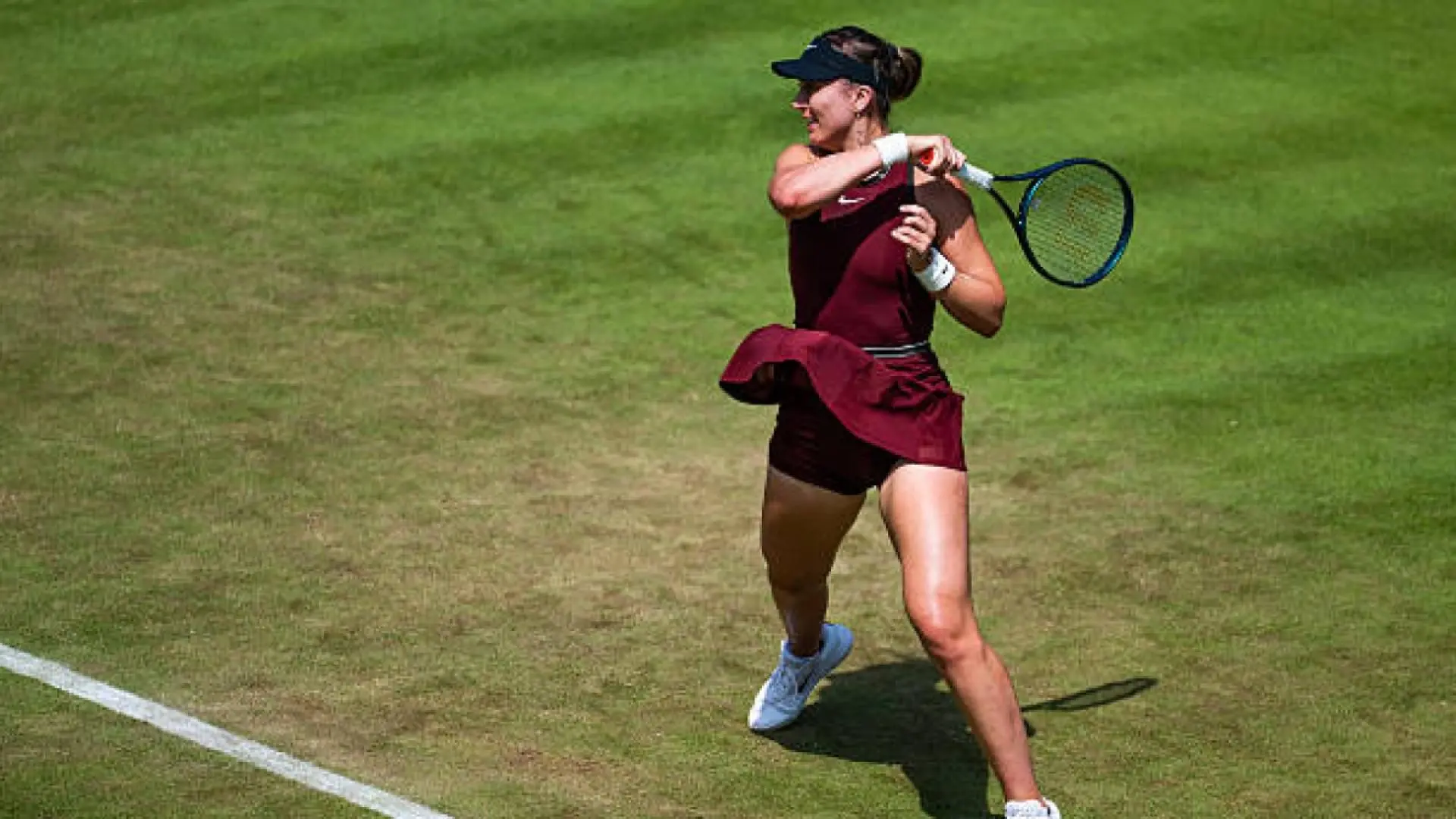
Paula Badosa has been handed a last-minute wild card to the prestigious Berlin Open, offering the former world No.2 a crucial opportunity to end her five-match losing streak and regain momentum on grass. The tournament organizers announced on Thursday that the Spanish star, currently ranked 141st in the WTA rankings, would receive a spot in the main draw, replacing the recently withdrawn Mirra Andreeva.
Badosa, who turned 27 in November, has endured a tumultuous 2025 season. After a promising start that included a semifinal run in Adelaide, she suffered a series of disappointing results: first-round exits in both the Australian Open and Doha, followed by early losses in Dubai, Indian Wells, and Miami. The low point came in April when she lost her opening match in Madrid, her fourth consecutive defeat, after which she announced she was stepping away from the tour to focus on her mental health.
Her decision to skip both the Italian Open in Rome and the French Open in Paris raised concerns about her future in the sport. However, Badosa returned to competition in the first week of the grass-court season at 's-Hertogenbosch, where she lost a tight first-round match to Daria Snigur, 6-1, 7-6(2). Despite the loss, Badosa showed flashes of her old brilliance, holding her own in the second set before succumbing in the tiebreak.
Career Resurgence?
The Berlin Open, a WTA 500 event held on the grass courts of the LTTC Rot-Weiß club, has traditionally attracted one of the strongest fields of the grass-court season. This year's draw features top players such as world No.1 Aryna Sabalenka, defending champion Ons Jabeur, and rising star Coco Gauff. For Badosa, who once reached a career-high ranking of No.2 in April 2022, the wild card represents more than just a chance to play—it is an opportunity to rebuild confidence and accumulate ranking points ahead of Wimbledon.
Badosa has a history of success on grass. In 2022, she reached the semifinals of the Bad Homburg Open and the fourth round at Wimbledon, where she lost to eventual champion Elena Rybakina in three sets. At last year's Berlin Open, she advanced to the quarterfinals before withdrawing from her match against Wang Xinyu due to a back injury. The Spanish player's powerful groundstrokes and aggressive style are well-suited to the fast surface, and she has often expressed a preference for grass over clay.
“I love playing on grass. It suits my game because I can take the ball early and dictate points,” Badosa said in a past interview. “The movement is different, but I feel comfortable sliding and adjusting. Berlin is a great tournament, and I'm happy to have this chance.”
Her game, however, has been plagued by inconsistency over the past two years. After a breakthrough 2021-2022 period in which she won four WTA titles, including the prestigious Indian Wells Masters, Badosa struggled with injuries and a loss of form. A persistent back problem forced her to withdraw from several tournaments in 2023, and her ranking plummeted from the top 10 to outside the top 100. This year, she has managed just six match wins across all levels, well below her standards.
Andreeva's Withdrawal Opens Door
The wild card became available after Mirra Andreeva, who stunned the tennis world by winning the French Open as a 17-year-old last weekend, pulled out of Berlin to rest and prepare for the grass-court major. The Russian teenager's triumph in Paris was a major story, and her absence is a blow to the tournament's star power, but it allowed organizers to invite a name with proven pedigree.
“We are sad to announce that Mirra has withdrawn from our tournament,” tournament director Barbara Rittner said in a statement. “We are very happy to see that she achieved such a great result in Paris, but unfortunately that also means sad news for us. We wish her all the best for the rest of the season and hope to see her again soon.”
“However, we are thrilled to welcome Paula Badosa. She has been a top player in the past and we know she has the talent to compete with anyone on grass. This wild card is a testament to her potential, and we believe she can put on a show for our fans.”
Badosa's presence in Berlin adds depth to an already strong draw. Alongside Sabalenka, Jabeur, and Gauff, the event features Grand Slam champions like Iga Swiatek (who is seeded No.2) and Elena Rybakina (No.3), as well as former champions like Petra Kvitova and Angelique Kerber. The competition will be fierce, but Badosa's history with the tournament and her comfort on grass could be factors.
In her previous appearance at the Berlin Open in 2024, Badosa defeated Daria Kasatkina and Anastasia Potapova before pulling out of the quarterfinal against Wang Xinyu. That withdrawal was a sign of the physical issues that would soon derail her season. Now, after a mental health break and a fresh start on grass, she hopes to write a different story.
Path to Victory
Should Badosa win her first-round match in Berlin—her opponent will be determined in the final draw ceremony—she could potentially face a top seed in the later rounds. The tournament's bracket is notoriously tough, but Badosa's talent has never been in question. What she needs is time on court, positive results, and a chance to rebuild her confidence.
“Every match is important for me right now,” Badosa said in a recent interview. “I've been working hard with my coach and my team to find a way back to my best level. I know I have the game, but I also need to be mentally stronger. This wild card is a gift, and I want to make the most of it.”
The Spanish star's journey back to the top will not be easy. She has fallen so far in the rankings that she now requires wild cards to enter even WTA 500 events. However, if she can secure a few wins in Berlin, she could rise back into the top 100 and earn direct entry into Wimbledon qualifying or even the main draw. The grass season is short, and opportunities like this are precious.
Badosa's case is not unique in women's tennis. Many players have taken time away to prioritize mental health and returned stronger. Notable examples include Naomi Osaka, who took a break after the 2021 season and came back to win the Australian Open in 2023, and Belinda Bencic, who stepped away before winning Olympic gold in 2021. Badosa hopes to join that list.
“I learned that you cannot force things,” she said. “When I was feeling down, I couldn't play my best tennis. So I stepped back, I talked to a therapist, I spent time with my family, and I slowly started to feel better. Now I am ready to fight again.”
The Berlin Open will begin on June 16, with the main draw taking place over the following week. Badosa's first-round match is scheduled for either Monday or Tuesday, depending on the draw. Fans and analysts will be watching closely to see if the former world No.2 can reverse her fortunes on the grass courts of the German capital.
Source:Tennis World FR News