
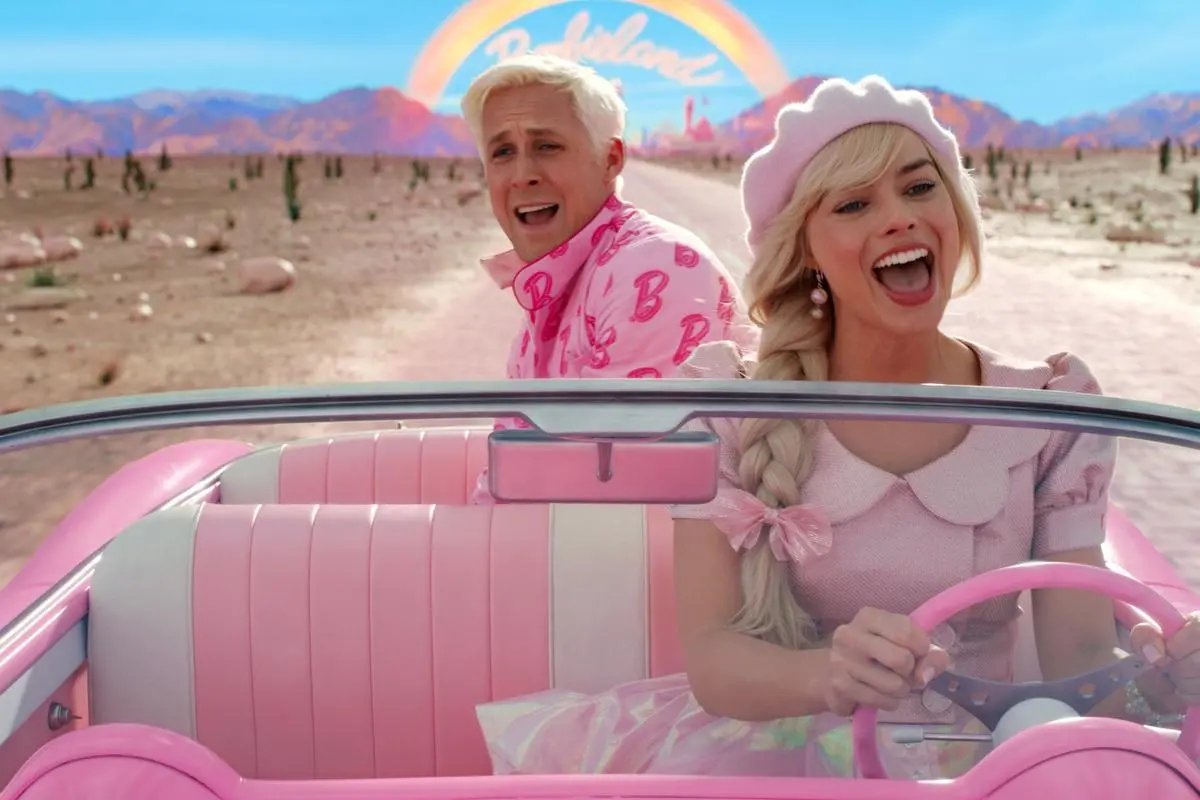
The negotiations have been anything but child's play in the world of Barbie. Following the enormous success of Barbie (2023), director Greta Gerwig and stars Margot Robbie and Ryan Gosling have been engaged in a high-stakes backstage battle with Warner Bros. over a highly lucrative sequel. Reports indicate that despite months of talks, the studio has not yet secured a deal with the team behind the billion-dollar blockbuster.
The original film was a cultural phenomenon, grossing $1.4 billion worldwide on a comparatively modest production budget of $145 million. It turned Barbie, a plastic doll long criticized for promoting unrealistic body standards and consumerism, into a box-office juggernaut. The movie's success also triggered a wider trend of 'dollcore' aesthetics and inspired numerous think pieces about feminism, patriarchy, and femininity in contemporary cinema. For Greta Gerwig, the success solidified her transition from the micro-budget world of independent filmmaking to the high-stakes major leagues of Hollywood.
From indie darling to box-office maven
Before she became the first female director to surpass the $1 billion mark with a solo feature, Gerwig was best known as an icon of the American independent film scene. Her early work, often made in close collaboration with her partner, filmmaker Noah Baumbach, included films like Frances Ha (2012) and Mistress America (2015). These were intimate, dialogue-driven comedies produced on shoestring budgets. Her solo directorial debut, Lady Bird (2017), earned five Academy Award nominations and established her as a formidable storytelling voice. She then crafted Little Women (2019), another critical and commercial success that featured a star-studded cast and was a poignant adaptation of Louisa May Alcott's novel. With Barbie, Gerwig demonstrated that her sensibility could translate to a massive studio franchise, blending humor, satire, and aesthetic flair.
That unique combination has made her imperative to Warner Bros. — but also very expensive. According to sources quoted by industry outlet Variety, the studio is desperate to replicate the success of the first installment, especially after the recent failure of Supergirl, directed by Craig Gillespie. The superhero film, intended to be a summer tentpole, has instead been a major disappointment, leaving Warner looking for reliable revenue. Barbie 2 is seen as a safe bet, but the cost of bringing the original creative team back has become a sticking point.
No sequel clause: a deliberate strategy?
One of the most surprising aspects of the negotiation is that, contrary to industry custom, the principal players did not initially sign contracts that included sequel options. Typically, studios require actors and directors to commit to multiple films from the outset, often locking them into a pre-agreed salary for future installments. However, the Barbie team apparently chose (or were savvy enough to negotiate) deals that excluded such clauses. This decision has placed them in an unusually strong position: they are contractually free to demand a hefty premium for their return.
Ryan Gosling, who played the hilariously deluded Ken, is reportedly asking for a fee of at least $20 million, not including participation in the backend profits. That would put him in the superstar bracket alongside actors like Leonardo DiCaprio or Brad Pitt at the peak of their careers. Margot Robbie, who also served as a producer on the original film through her LuckyChap Entertainment banner, is likely to command an even more complex deal, given that she had a double role as both star and producer. The film's success has also elevated her company, which now has several projects in development.
Greta Gerwig and Noah Baumbach, who co-wrote the screenplay for Barbie, have reportedly rejected six separate offers from Warner Bros. The studio has described the latest offer as 'life-changing money,' but the couple remains unimpressed. They are insisting on a significantly higher share of the profits from what is expected to be an extremely lucrative sequel. Given that the first film generated more than $1.4 billion in box office revenue and countless millions more in merchandise sales, the backend potential is enormous. The couple is said to have a 'new story' they want to tell, but they are keeping any details close to their chest. Industry insiders speculate that the sequel may delve into themes of capitalism, consumer culture, and greed, all refracted through a feminist lens.
A ticking clock: the rights issue
Complicating matters is a deadline. Warner Bros. only holds the film and television rights to the Barbie franchise until the end of 2026. This means that if the studio does not start production on a sequel before December of that year, the rights revert to Mattel, the toy giant that owns the Barbie brand. Mattel has a strong incentive to make a deal happen, as a fresh production with the original team would be far easier and more promising than having to start from zero. If the partnership broke down, Mattel would have to find a new studio, develop a new script, and cast a new Barbie and Ken, which would be a logistical and creative nightmare. Moreover, because of the specific story and characters created by Gerwig and Baumbach, a new studio would be unable to use any elements from the first film, essentially erasing the continuity that millions of fans have embraced.
The clock is ticking, and both sides are well aware of it. The Barbie license is one of the most valuable properties in toy history. Since her debut at the American International Toy Fair in 1959, Barbie has been a perennial bestseller, generating billions of dollars for Mattel. She has also been at the center of numerous cultural controversies, from her anatomical proportions to her role in shaping children's expectations of beauty and gender. The 2023 film effectively rebranded Barbie as a progressive icon, a nod to the label's evolution under the leadership of Mattel executives who encouraged self-referential humor and modern sensibilities. A sequel that preserves that fragile cultural balance is seen as essential not just for Warner Bros., but for Mattel's image as a forward-thinking company.
Hollywood's sequel economics
The standoff between Gerwig, Baumbach, Robbie, and Gosling on one side, and Warner Bros. on the other, is a textbook example of how Hollywood's sequel economy works. Studios love sequels because they represent lower risk to investors, and they often spend heavily to retain the original stars and creative teams. However, when a first film exceeds expectations by a wide margin, the power dynamic shifts. The talent knows that the studio's projected profits are enormous, and they are likely to use every available negotiation tool to maximize their own compensation. This dynamic has played out on many occasions, most notably with the Mission: Impossible franchise, where Tom Cruise has famously negotiated for a share of the gross revenue rather than a higher upfront salary. Similarly, the Fast & Furious franchise saw its cast salaries balloon as the series' global fan base expanded.
Historically, studios have tried to avoid giving talent a percentage of profits, since the accounting methods used by major studios can be notoriously opaque, and they often use 'net profits' definitions that never seem to make a profit. In recent years, however, top stars have demanded 'first-dollar gross' contracts, allowing them to receive a percentage of a film's box office gross from the very first dollar that comes in. The fact that Gerwig and Baumbach are reportedly pushing for a higher percentage on the sequel suggests they are aiming for a contract that recognizes their true creative contribution and the enormous financial success of the first film.
At the same time, Warner Bros. must consider its own fiscal constraints. The studio has incurred heavy losses on other projects, and its parent company, Warner Bros. Discovery, has been focusing on cost-cutting measures. Executives may be reluctant to cede too much ground, but they also understand that a sequel without Gerwig, Robbie, and Gosling could be a catastrophic failure. The public's attachment to this specific iteration of Barbie is enormous, and a half-hearted sequel without its principal creative voices would likely be met with backlash, as seen with numerous other franchises that tried to replace key actors or directors.
For now, the impasse continues. Meanwhile, Gerwig is not waiting around. She is currently in post-production on Narnia: The Magician's Nephew, another ambitious project for Netflix. This adaptation of C.S. Lewis's prequel to The Chronicles of Narnia is scheduled for release on February 12, 2027, and is expected to be another visual and narrative feast. It also demonstrates that Gerwig is in high demand beyond Warner Bros., which gives her even more leverage. If the studio wants her back, it will have to make an offer she cannot refuse. And the same goes for Robbie and Gosling, both of whom have busy schedules and no shortage of offers.
As the clock ticks toward the December deadline, both sides remain far apart. Sources say that the atmosphere has been cordial but tense. Warner Bros. executives are anxious to finalize a deal before the holidays, while Gerwig and Baumbach are playing a waiting game, knowing that time is a strategic ally. The studio could, in theory, threaten to recast or start anew with a different creative team, but that would be a risky move given the brand allegiance audiences feel toward the actors and director. Barbie may be a plastic doll, but the business surrounding her is very real.
Source:Télérama News