

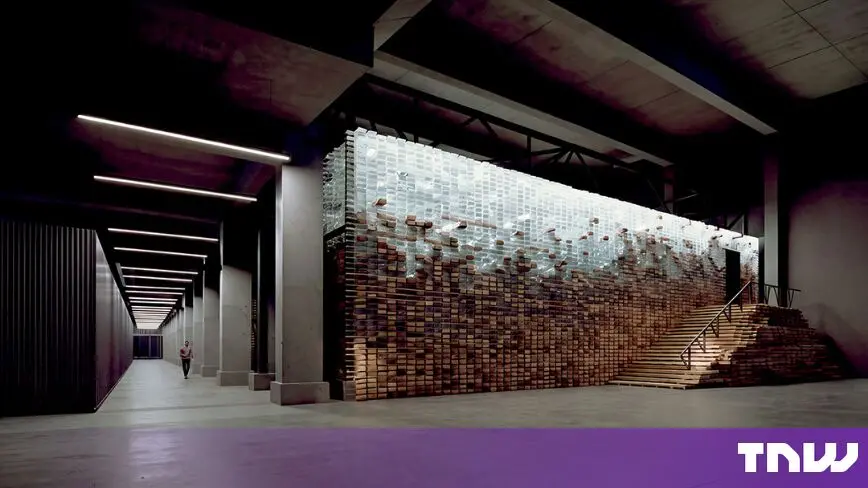
Europe is deepening its push for technological sovereignty in artificial intelligence with the purchase of a €387.8 million supercomputer that will be built by a French state-owned manufacturer and hosted in Finland. The system, named LUMI-AI, will be installed in Kajaani in northern Finland and is expected to deliver roughly ten times the AI capacity of the existing LUMI supercomputer while nearly doubling its conventional high-performance computing capability.
The order is the sixth AI Factory procurement contract signed by the EuroHPC Joint Undertaking, the body coordinating Europe’s publicly funded supercomputing infrastructure. The cost is being split evenly between EuroHPC and the LUMI AI Factory consortium, which includes Finland, Czechia, Denmark, Estonia, Norway and Poland. This pooling of resources reflects the political logic behind the project: the machine will sit on Finnish soil but be available to researchers and companies across the consortium.
A milestone for European high-performance computing
LUMI-AI represents a significant step in Europe’s efforts to build a world-class AI infrastructure. The existing LUMI supercomputer, also located in Kajaani, has been one of the continent’s most established large-scale systems since its deployment. The new machine will complement and expand that capability with a focus on AI workloads, leveraging the latest hardware from AMD and integration expertise from Bull, the French supercomputer maker now wholly owned by the French state.
Bull’s ownership makes the deal particularly significant. Atos completed the sale of its Advanced Computing business to the French state on 31 March 2026, in a transaction with an enterprise value of up to €404 million, including €104 million in earn-outs, making the French government the company’s sole shareholder. The business generated around €700 million in revenue in 2025 and operates Europe’s only supercomputer manufacturing plant in Angers. It also builds the systems used to model France’s nuclear deterrent, giving the business a strategic importance that goes well beyond the commercial supercomputing market and helps explain why the French government was unwilling to see it disappear into foreign ownership.
Inside LUMI-AI: hardware and European innovation
From a technical perspective, LUMI-AI will use AMD Instinct MI430X accelerators and sixth-generation EPYC processors with 256 cores, built around Bull’s BullSequana XH3500 architecture. These components are expected to provide substantial AI compute capacity, suitable for training large language models and other data-intensive machine learning tasks. The hardware choice reflects a broader trend across European supercomputing projects, where American accelerators remain the core compute engine but surrounding technologies increasingly come from within Europe.
Two elements of the system give it a stronger European identity than simply assembling an American-designed machine on European soil. Bull is supplying its BXI interconnect, which links the nodes together, as well as its patented warm-water direct liquid cooling technology, both of which were developed in France. The BXI interconnect is a key part of the system’s performance, enabling high-bandwidth and low-latency communication between computing nodes, which is essential for large-scale parallelism in AI training. The warm-water cooling technology is designed to improve energy efficiency by using higher-temperature coolant, reducing the energy needed for chillers and allowing heat recovery for other uses.
The wider supplier list also reflects an effort to keep more of the infrastructure within Europe. IBM Storage Scale will provide the storage layer, while Nokia is supplying the data centre networking, bringing a Finnish company into a system that will be installed in Finland. This mix of suppliers illustrates a pragmatic approach: while core accelerators come from the United States, European companies are increasingly involved in the system integration, networking, and cooling components that differentiate a modern AI supercomputer.
Quotes and leadership perspectives
Emmanuel Le Roux, Bull’s chief executive, emphasized the significance of the project: “LUMI-AI marks an important milestone for European AI and Bull’s leadership in energy-efficient, complex AI infrastructures.” His comment underscores the strategic importance of the deal for the newly state-owned company, which is positioning itself as a key player in Europe’s technological independence.
Anders Jensen, who runs EuroHPC, presented the purchase as the sixth step in a broader sequence of AI infrastructure investments rather than an isolated project. This framing aligns with the AI Factory initiative, which aims to establish a network of specialized AI supercomputing centers across Europe. The first seven AI Factory sites were selected in December 2024, followed by six more in October 2025. Procurement contracts have been signed progressively since then, with LUMI-AI being the latest.
Kimmo Koski, who runs CSC, the Finnish research organisation that will host LUMI-AI, described the new system as a continuation of what the existing LUMI consortium has already built rather than a project starting from scratch. That existing track record is part of the reason six countries are prepared to pool funding around a facility located in a country that only one of them actually hosts. The Consortium’s willingness to invest in Finnish infrastructure reflects the proven reliability and performance of the original LUMI system, as well as Finland’s unique advantages for such installations.
Finland’s competitive edge
Kajaani also has an advantage that many potential European sites cannot easily reproduce. Finland has abundant relatively cheap, low-carbon electricity and a climate that makes cooling large computing installations considerably easier. The country has spent years developing the infrastructure needed to turn those conditions into a competitive advantage for data centres and supercomputing. With Germany’s Jupiter now joining the European supercomputing landscape, LUMI remains one of the continent’s most established large-scale systems.
The availability of renewable energy is a crucial factor for AI supercomputers, which consume enormous amounts of electricity. Finland’s grid mix is among the cleanest in Europe, with a high share of nuclear, hydro, and wind power. The cold climate also reduces the need for energy-intensive air conditioning, allowing free air cooling for much of the year. Warm-water liquid cooling can also be integrated with district heating systems, providing heat to nearby buildings and further improving the environmental footprint of the facility.
Broader European AI strategy
The decision to buy from a state-owned supplier is perhaps the clearest indication of how much the European approach has changed. Three years ago, government ownership of a major supercomputer manufacturer would have been an unusual detail in a procurement story. Now France owns the vendor, six governments are helping finance the machine, and the accelerators at its core are still made by an American company. That combination captures both the progress Europe has made towards technological sovereignty and the parts of the stack where it remains dependent on foreign suppliers.
Europe’s supercomputing strategy has evolved significantly in recent years. The EuroHPC Joint Undertaking was established to coordinate the development of a world-class high-performance computing ecosystem across the continent. It has co-funded several petascale and pre-exascale systems, including LUMI, Leonardo, MareNostrum, and others. The AI Factory programme is a more recent addition, designed specifically to provide the massive compute resources required for AI training and inference. These factories are intended to be available not only to academic researchers but also to startups and SMEs, fostering an ecosystem of AI innovation in Europe.
The gigafactories were supposed to take that effort to another scale, with a €30 billion programme covering seven much larger sites. Progress on that part of the strategy has been slower, however. The gigafactory programme has been struggling with delays that have frustrated some of the partners it needs, while the projects themselves are considerably more complicated than building an individual supercomputer at an established site. The AI Factories that are now being procured remain relatively small compared with what the biggest private technology companies are building. A €387.8 million supercomputer represents only a fraction of the investment behind a single hyperscaler campus, so Europe’s response to that imbalance has so far relied heavily on pooling resources between governments rather than trying to match the private sector project for project.
This pooling approach has both strengths and weaknesses. On the positive side, it avoids duplication of infrastructure and allows countries with limited budgets to participate in large-scale projects. It also fosters a sense of shared purpose and strengthens political ties between member states. On the negative side, it introduces complexity in terms of governance, cost sharing, and prioritization of workloads. The LUMI consortium, with its established track record, has demonstrated that this model can work effectively for high-performance computing.
Strategic implications of state ownership
Bull’s acquisition by the French state was driven by a desire to keep critical technological capabilities in European hands. The company’s role in modelling France’s nuclear deterrent made it a strategic asset that the government was unwilling to risk losing to a foreign buyer. Beyond that, Bull operates Europe’s only supercomputer manufacturing plant, which gives the continent an independent production capacity for high-end computing systems. This factory in Angers can produce large-scale supercomputers and provide ongoing maintenance and support, reducing reliance on non-European vendors for system integration.
However, the state ownership model also raises questions about competition and efficiency. Some industry observers argue that government-owned enterprises may be less responsive to market demands or may prioritize political objectives over commercial viability. But in the case of supercomputing, the strategic importance often justifies such intervention, especially when private markets are dominated by a few global giants. The French government’s decision is consistent with a broader European trend towards protecting critical technologies, including semiconductors, batteries, and cloud infrastructure.
Looking ahead to deployment
Deployment of LUMI-AI is scheduled for the second half of 2027, which may sound distant for an AI system, but is fairly standard for a major supercomputer procurement. The timeline reflects the complexity of such projects, from finalizing specifications to integrating hardware, testing, and commissioning. It also leaves room for the consortium to prepare the existing infrastructure in Kajaani, including power distribution, cooling systems, and network connectivity.
For researchers and companies across the six participating countries, the availability of LUMI-AI will open up new possibilities in fields such as climate modelling, drug discovery, natural language processing, and computer vision. The system will be accessible through EuroHPC’s call for proposals, supporting both academic and industrial users. The combination of advanced AMD GPUs, Bull’s interconnect and cooling, and Nokia’s networking is expected to provide a competitive platform for AI research in Europe.
The broader picture is that Europe is gradually building up its AI infrastructure, albeit more slowly and on a smaller scale than the largest private players. The LUMI-AI order demonstrates a continued commitment to this goal, with a notable shift towards using a state-owned supplier for a core part of the stack. As the deployment date approaches, the real test will be in translating coordinated procurement into tangible computing capacity that researchers and companies can actually use, thereby solidifying Europe’s position in the global AI landscape.