

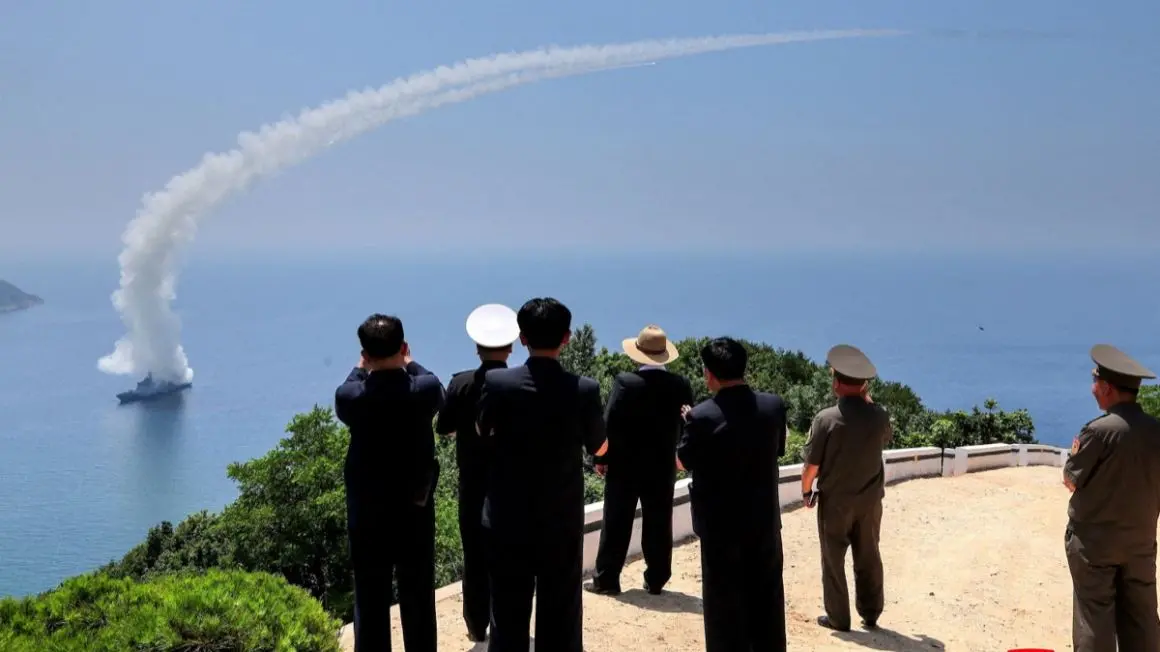
North Korean leader Kim Jong-un personally supervised a series of military tests conducted from the country's newest naval asset, the Kang Kon destroyer, according to state media reports. The tests, which took place earlier this week, involved the launch of cruise missiles and the activation of electronic warfare systems, marking a significant milestone in Pyongyang's ongoing efforts to modernize its military capabilities.
The Kang Kon, a 5,000-ton destroyer, represents a major step forward for the North Korean Navy, which has traditionally relied on smaller, older vessels. The ship's construction and armament are seen as part of Kim's broader strategy to develop a more formidable naval force capable of projecting power beyond the Korean Peninsula. During the tests, Kim Jong-un expressed satisfaction with the performance of the new systems but emphasized the need for continued improvement and vigilance.
Kim's Direct Involvement and Orders
Following the successful completion of the tests, Kim Jong-un issued a direct order to the military leadership to expedite the final testing procedures and ensure the destroyer is fully operational within two months. State news agency KCNA reported that Kim stressed the importance of completing the process "in a responsible manner" and integrating the vessel into the fleet as quickly as possible. This sense of urgency reflects the leadership's desire to rapidly modernize the navy and close the gap with regional rivals.
The Kang Kon was first launched over a year ago in a ceremony that did not go as planned. The initial launch attempt ended in failure, with the vessel experiencing technical difficulties that prevented its successful deployment. Kim Jong-un, who was present at the time, publicly criticized the incident, describing it as an example of "gross negligence" and demanding that those responsible be held accountable. The latest successful tests appear to have restored confidence in the project and allowed the leadership to move forward with fleet integration.
The destroyer's armament includes a variety of missile systems capable of striking both land and sea targets, as well as sophisticated electronic warfare equipment designed to disrupt enemy communications and radar. Analysts believe that the Kang Kon could eventually be equipped with ballistic missiles, further enhancing its strategic value. The ship's design incorporates stealth features that reduce its radar signature, making it harder to detect and track.
Historical Context and Strategic Implications
North Korea has long pursued an aggressive policy of military modernization, particularly in the areas of nuclear weapons and missile technology. The development of a modern navy is crucial for Kim Jong-un's vision of a powerful and self-reliant defense force. The Kang Kon destroyer is one of several new naval platforms being developed, including submarines that can potentially carry ballistic missiles.
The successful tests come at a time of increased regional tensions, as North Korea continues to conduct weapons tests in defiance of international sanctions. The United Nations Security Council has imposed multiple rounds of sanctions prohibiting North Korea from developing ballistic missile technology, yet Pyongyang has repeatedly circumvented these restrictions. The tests also serve as a show of strength to neighboring countries, particularly South Korea and Japan, both of which maintain strong military alliances with the United States.
South Korea's Joint Chiefs of Staff reported that they had detected the launch of multiple cruise missiles from the East Coast of North Korea, but did not provide further details. Cruise missiles, unlike ballistic missiles, are not explicitly banned under current UN resolutions, allowing North Korea to develop them with fewer legal obstacles. However, their capability to carry conventional or nuclear warheads makes them a serious threat to regional security.
Dependence on China and Relations with Russia
While North Korea has recently strengthened ties with Russia, including reports of sending troops to support Russian operations in Ukraine, China remains its most important economic and diplomatic partner. The two countries share a long border and maintain close political coordination. In a gesture of continued support, Chinese President Xi Jinping sent a congratulatory letter to Kim Jong-un on the occasion of the 105th anniversary of the founding of the Chinese Communist Party.
In his letter, Xi expressed willingness to guide both countries toward the full implementation of their important joint agreements and to lead the development of stable and long-term relations between China and the Democratic People's Republic of Korea (DPRK). Xi also reaffirmed China's commitment to the traditional friendship between the two nations, despite international pressure on both countries over human rights and nuclear issues. The exchange of letters reflects the ongoing close ties between the Communist parties of China and North Korea.
China's support has been critical for North Korea's economy and military, providing a lifeline of trade, energy, and technology transfers. Many analysts believe that without Chinese backing, North Korea would face even more severe economic collapse. Despite tensions over North Korea's nuclear program, China has consistently opposed strict enforcement of sanctions and has advocated for dialogue and negotiations. The relationship is mutually beneficial: China gains a strategic buffer state on its border while North Korea receives essential support for its regime survival.
Background on North Korea's Naval Development
The North Korean Navy has traditionally been one of the weakest branches of the country's military, largely due to a shortage of modern vessels and advanced technologies. Most of its fleet consists of small patrol boats, coastal defense craft, and antiquated submarines. The development of the Kang Kon destroyer represents a significant leap forward in naval engineering and shipbuilding capability. The project likely benefited from technology transfers from China and possibly Russia, as well as from indigenous innovations.
Kim Jong-un has made naval modernization a personal priority, frequently visiting shipyards and naval bases to oversee construction and training. He has emphasized the importance of building a "blue-water" navy capable of operating far from the coast, protecting maritime interests, and projecting power across the East Sea (Sea of Japan). The Kang Kon is seen as the first step toward achieving this goal, with plans for additional destroyers and advanced submarines in the works.
The failed launch of the Kang Kon one year ago was a setback for these ambitions, but the recent successful tests indicate that the technical issues have been resolved. The rapid commissioning order suggests that the military is eager to deploy the vessel as soon as possible, possibly for upcoming military parades or exercises. The ship's presence in the fleet could also be used as a bargaining chip in diplomatic negotiations, demonstrating North Korea's willingness to modernize despite sanctions.
Electronic warfare capabilities are another area where North Korea has been investing heavily. The ability to jam or deceive enemy radar and communications systems can provide a significant tactical advantage in any conflict. By equipping the Kang Kon with such systems, North Korea aims to enhance the survivability of its navy against overwhelming technological superiority of adversaries like the United States and South Korea.
International Reactions and Future Outlook
The international community has responded with concern to the latest tests, though reactions have been somewhat muted given the frequency of North Korean weapons launches. South Korea's government issued a statement calling on North Korea to cease provocations and return to denuclearization talks. Japan lodged a protest through diplomatic channels, while the United States reaffirmed its commitment to defending its allies in the region.
The United States has maintained a policy of maximum pressure on North Korea, but recent diplomatic efforts have stalled. The Trump administration held historic summits with Kim Jong-un, but subsequent negotiations failed to produce a comprehensive agreement. The Biden administration has attempted a different approach, combining sanctions with offers of dialogue, but North Korea has shown little interest in resuming talks unless its security concerns and sanctions relief are addressed first.
As North Korea continues to advance its military technology, the region faces an increasingly complex security environment. The deployment of the Kang Kon destroyer, along with other new systems, will likely prompt South Korea and Japan to accelerate their own naval modernization programs. The United States may also adjust its force posture in response to the growing threat. The situation remains fluid, with the potential for further escalation or periods of calm depending on domestic political dynamics in North Korea and the reactions of key stakeholders.
The order to commission the destroyer within two months underscores the urgency with which Kim Jong-un views military development. It also suggests that North Korea is preparing for potential conflict or seeking to strengthen its negotiating position by demonstrating capable military options. Whatever the motivation, the new destroyer adds a significant dimension to the North Korean threat, one that will require careful monitoring and response from neighbors and the international community.
Source:CNEWS News