
Tim Burton, the visionary filmmaker behind iconic works like The Nightmare Before Christmas and Edward Scissorhands, has delivered a blistering condemnation of artificial intelligence systems that clone artistic styles. In a recent interview, Burton stated, "It's like a robot taking your humanity, your soul," directly addressing the proliferation of AI-generated images that mimic his unmistakable gothic, whimsical aesthetic.
The director's frustration reflects a broader anxiety within the creative community about the ethical and legal implications of generative AI. Tools such as Midjourney, DALL-E, and Stable Diffusion have become increasingly capable of producing artwork in the style of specific artists with just a few text prompts. For Burton, whose visual language is deeply personal and autobiographical, this feels like a violation of his identity.
The Rise of AI Art and Its Ethical Gray Areas
Over the past two years, AI image generators have advanced at a staggering pace. Users can now request "a Tim Burton-style portrait of a character" or "a scene from a Burton film reimagined in watercolor," and the software produces results that eerily evoke his distinct blend of melancholy, dark humor, and exaggerated proportions. While some see this as a tool for inspiration, many artists argue that these models are trained on copyrighted works without consent or compensation.
Burton's critique taps into a core philosophical question: If a machine can replicate an artist's style so accurately, what distinguishes original creation from imitation? The filmmaker, known for his hand-drawn sketches and stop-motion animation, emphasized that art is not merely a product but an extension of the human experience. "Every line I draw comes from a memory, a feeling, a nightmare," he said. "To see that reduced to an algorithm is deeply unsettling."
Tim Burton's Unique Artistic Journey
To understand the weight of Burton's words, one must examine his decades-long career. Born in Burbank, California, in 1958, Burton developed a fascination with monster movies and gothic literature as a child. He studied animation at the California Institute of the Arts and later worked as an animator at Walt Disney Productions, though his dark sensibilities often clashed with the studio's family-friendly image.
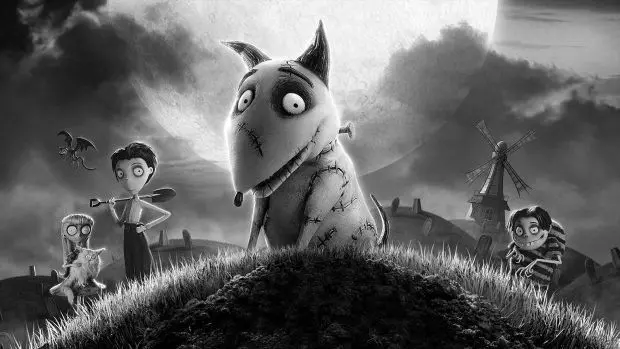
His directorial debut, Pee-wee's Big Adventure (1985), showcased his quirky visual style, but it was Beetlejuice (1988) and Batman (1989) that cemented his reputation. Burton's aesthetic—characterized by spiraling patterns, pale skin, jagged lines, and a palette dominated by black, white, and vibrant accents—became instantly recognizable. He later founded his own production company and championed stop-motion animation with films like Corpse Bride and Frankenweenie.
Throughout his career, Burton has maintained a hands-on approach to design, often sketching characters and environments himself. He has described his art as a form of therapy, a way to externalize inner demons. This personal investment makes the idea of AI replication particularly galling. "The soul of the work is in the imperfections, the mistakes, the accidents," Burton noted. "AI perfects everything, and in doing so, it removes the human element."
The Broader Debate: Ownership and Authenticity
Burton is far from alone in his concerns. In late 2022, visual artists launched a class-action lawsuit against Stability AI, Midjourney, and other companies, alleging that their tools infringe on copyright by using billions of images scraped from the internet without permission. The case, which is still ongoing, argues that these models essentially create unauthorized derivative works.
Photographers, illustrators, and writers have also raised alarms. The Authors Guild filed a similar lawsuit against OpenAI, accusing the company of using copyrighted books to train ChatGPT. Meanwhile, platforms like DeviantArt and ArtStation have seen an influx of AI-generated content, prompting some artists to leave or hide their portfolios.
The legal landscape remains murky. In the United States, the Copyright Office has ruled that works created entirely by AI cannot be copyrighted, but the status of AI-assisted works is still under review. In Europe, proposed AI regulations require training data to be disclosed but stop short of banning style imitation. These ambiguities leave artists like Burton in a precarious position, unsure how to protect their life's work.
Beyond Art: The Deeper Implications
Burton's critique extends beyond aesthetics to the very nature of creativity. He warned that if society continues to embrace AI-generated art without safeguards, we risk devaluing the human imagination. "We're teaching people that creativity is something that can be outsourced," he said. "That's a dangerous path—it erodes the connection between the artist and the audience."
The filmmaker's remarks resonate with educators who see AI threatening the development of new talent. Art schools report that students increasingly rely on AI tools to generate ideas or complete assignments, raising questions about skill acquisition. Traditional techniques like sketching, painting, and sculpture are being sidelined in favor of prompt engineering.
Moreover, the economic impact is measurable. Freelance illustrators, concept artists, and graphic designers have seen a drop in demand for custom work, as clients opt for cheaper, faster AI solutions. A 2023 survey by the Freelancers Union found that 47% of creative freelancers lost income due to AI competition. Burton himself employs hundreds of artisans in his films—model makers, puppeteers, animators—whose expertise could be rendered obsolete if AI animation becomes mainstream.
Industry Reactions and Counterarguments
Not everyone shares Burton's alarm. Proponents of generative AI argue that tools like AI are simply the latest evolution in artistic technology, akin to the camera or the synthesizer. They contend that human creativity is still required to guide the output, and that AI can democratize art by allowing non-artists to express themselves.
Tech companies emphasize that their models are trained on publicly available data and that artists can opt out of future training datasets. However, critics counter that the opt-out process is cumbersome, inconsistent, and often ignored. Moreover, once an image is generated in an artist's style, there is no way to undo the harm.
Some artists have begun using AI to emulate their own styles as a form of protest or parody. For instance, the illustrator Simon Stålenhag released an AI model trained exclusively on his own work, challenging others to copy him. But such responses are rare, and many lack the resources or technical know-how to fight back.
Looking Ahead: Regulation and Resistance
In the absence of clear laws, grassroots movements are emerging. Organizations like the Artist Rights Coalition and Stop AI Theft are lobbying for stronger copyright protections and transparency requirements. Some countries, such as Japan, are considering laws that would explicitly prohibit style imitation without consent.
Burton's public stance adds star power to these efforts. His words carry weight in Hollywood and beyond, influencing public opinion and potentially policy. Already, social media campaigns under hashtags like RespectArtists and NoToAIClonedArt have gained traction, with fans urging companies to develop ethical guidelines.
For now, Burton concluded his remarks with a simple plea: "Let's remember that art is about connection, not replication. The soul of a piece is its humanity. That's something no machine can ever reproduce." His statement serves as a rallying cry for all creators navigating this uncharted territory.
Source:TechRadar News