

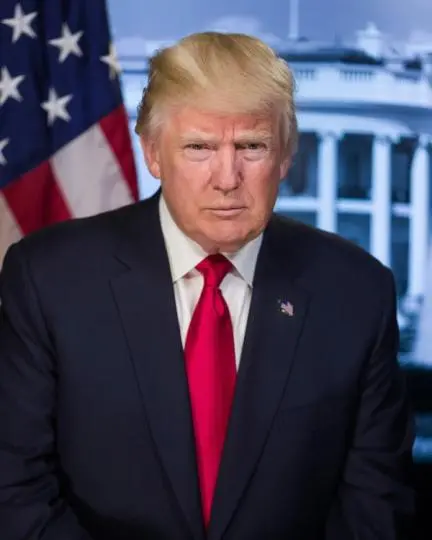
The White House issued twin executive orders on June 23, 2026, to accelerate U.S. development of large-scale quantum computers while simultaneously hardening federal systems against quantum-enabled attacks on encryption. The move comes as quantum computing is increasingly seen as both a transformative technology and a potential risk to cryptocurrencies like Bitcoin, which rely on cryptographic security that could be broken by sufficiently powerful quantum machines.
One order, focused on building capabilities, directs the Department of Energy to host at least one advanced quantum computer and requires the Pentagon to prioritize and field next-generation quantum sensors by 2028. The second order mandates a strict migration to post-quantum cryptography, requiring federal agencies to secure key establishment by 2030. This dual approach reflects a strategic recognition that quantum computing will fundamentally reshape cybersecurity and economic competition.
Background on Quantum Computing and Encryption
Quantum computing leverages principles of quantum mechanics to perform calculations far beyond the reach of classical computers. While current quantum computers are still in early stages, experts predict that within a decade or two, they could break widely used public-key cryptography systems, such as RSA and elliptic curve cryptography (ECC), which underpin Bitcoin and most secure internet communications. Bitcoin's security relies on the difficulty of solving discrete logarithm problems using ECC for digital signatures. A sufficiently large quantum computer could, in theory, derive private keys from public keys, enabling theft of funds and undermining trust in the network.
The cryptographic community has been working on post-quantum cryptography (PQC) for years, developing algorithms resistant to quantum attacks. The U.S. National Institute of Standards and Technology has been leading a multi-year process to standardize PQC algorithms. Trump's executive order accelerates that transition for federal systems, setting a clear deadline of 2030 for key establishment migration. This mirrors similar efforts in other countries, including China and the European Union, which are racing to develop quantum capabilities while protecting existing digital infrastructure.
Historical Context: Quantum Computing and U.S. Policy
The U.S. government has invested heavily in quantum research for decades, but Trump's executive orders mark a significant policy shift by explicitly linking development with defensive measures. Previous administrations focused primarily on funding research through agencies like the Department of Energy, National Science Foundation, and the Pentagon's Defense Advanced Research Projects Agency. The 2018 National Quantum Initiative Act authorized $1.2 billion for quantum research over five years, but did not mandate cybersecurity migration timelines.
Trump's orders reflect growing concerns about China's rapid quantum advancements. Chinese researchers have demonstrated world-record quantum computers and launched quantum communication satellites. The U.S. fears falling behind in a technology that could yield breakthroughs in materials science, drug discovery, cryptography, and artificial intelligence. By directing the Department of Energy to host an advanced quantum computer, the administration aims to provide researchers with access to state-of-the-art hardware, similar to how supercomputing centers support scientific discovery today.
The Pentagon's quantum sensor mandate by 2028 is also notable. Quantum sensors exploit quantum entanglement and superposition to achieve extreme precision, enabling applications such as detecting submarines, mapping underground structures, and improving navigation systems without GPS. Military use cases drive much of the quantum investment, but civilian applications are equally promising. Quantum computers could optimize logistics, model climate change, and accelerate machine learning.
Impact on Bitcoin and Cryptocurrency
Bitcoin's vulnerability to quantum computing has been a topic of debate since the cryptocurrency's inception. Satoshi Nakamoto's original white paper acknowledged the risk but suggested that quantum computers would likely not become practical for decades. Many in the crypto community argue that Bitcoin can upgrade its protocol to use quantum-resistant signatures, as proposed in various Bitcoin Improvement Proposals (BIPs). However, implementing such changes requires widespread consensus among miners, developers, and users, which historically has been slow.
Ethereum and other blockchains face similar challenges, though some projects are already experimenting with quantum-resistant algorithms. The broader worry is that a quantum computer could be used to break current encryption before the transition to PQC is complete, potentially causing a catastrophic loss of value. However, most experts believe that quantum computers capable of breaking Bitcoin's encryption are at least a decade away, giving time for migration.
Trump's executive order may spur private sector action. If federal agencies are required to adopt PQC by 2030, financial institutions and tech companies may follow suit, accelerating development of quantum-safe solutions for cryptocurrencies. Conversely, the push to develop quantum computers could be seen as a threat to Bitcoin's long-term viability, as expressed in the article's original title: "Quantum computing is often seen as a risk to bitcoin. Now Trump wants to develop it." The dual orders acknowledge this tension, seeking to both build quantum capabilities and protect against their misuse.
Broader Implications for Technology and Security
Beyond cryptocurrency, quantum computing poses risks to all forms of digital security, including banking, communications, and government secrets. Adversaries with access to quantum computers could decrypt stored encrypted data, including past communications and classified information. This "harvest now, decrypt later" threat has already prompted agencies to begin planning for quantum-safe transitions.
The White House's twin orders are part of a broader national security strategy. The first order, titled "Strengthening American Quantum Capabilities," expands funding for quantum research through the Department of Energy's Office of Science and directs the National Quantum Coordination Office to develop a national strategic plan. The second order, "Protecting Federal Information from Quantum Threats," establishes the Quantum Migration Task Force, charged with overseeing federal agencies' transition to post-quantum cryptography and setting milestones beyond 2030.
Private sector responses have been mixed. Tech giants like IBM, Google, and Microsoft have invested billions in quantum computing research. IBM already operates several quantum computers via cloud services. Google claimed quantum supremacy in 2019, though its machine was limited in practical applications. These companies likely welcome government funding and mandates that create guaranteed demand for quantum solutions. However, some startups worry that aggressive timelines may force premature adoption of still-evolving standards.
International reactions are also important. The European Union announced its own quantum strategy in 2025, pledging €7 billion in investment. China has reportedly spent even more, with state-owned enterprises building quantum networks and computers. Trump's orders may intensify the global race, potentially leading to a quantum arms race. Critics argue that such competition could lead to security vulnerabilities if rushed, but supporters counter that the U.S. cannot afford to lag behind.
In the crypto world, the news has already affected market sentiment. Bitcoin prices dipped slightly after the announcement, though analysts attribute more to broader macroeconomic factors. Some altcoins focused on quantum resistance, such as QRL (Quantum Resistant Ledger), saw brief price spikes. Over the long term, the executive orders could be a catalyst for faster adoption of quantum-safe blockchain technologies, benefiting projects that prioritize post-quantum security.
The Department of Energy's role in hosting an advanced quantum computer is critical. The department currently operates several of the world's fastest supercomputers, like Summit and Frontier. Quantum computers are fundamentally different, requiring extreme cooling and isolation from environmental noise. The DOE's national laboratories, such as Los Alamos, Oak Ridge, and Fermi National Accelerator, have deep expertise in quantum physics. The executive order likely designates one or more of these labs to house a machine built by a private company or a consortium.
Meanwhile, the Pentagon's quantum sensor mandate by 2028 sets an ambitious timeline. Quantum sensors use properties like atomic interference to measure gravitational fields, magnetic fields, and time with unprecedented precision. The U.S. Navy has already tested quantum sensors for submarine detection. The Air Force is exploring quantum radar. Achieving field-ready sensors in two years may require accelerated prototyping, but could yield major tactical advantages.
Overall, the White House's twin executive orders represent a comprehensive effort to both harness quantum computing's vast potential and mitigate its dangers. While Bitcoin and other cryptocurrencies face risks, the push for quantum resilience may ultimately strengthen them. The next few years will be crucial as governments, companies, and developers work together to build a quantum-safe digital infrastructure.
Source:Coindesk News